The Yarmouth Camp Meeting had its beginnings in the Methodist Episcopal evangelical movement in the late 1700s and early 1800s. Camp meetings were held for group worship and conversion, with preachers addressing hundreds of attendees. The meetings generally lasted about a week in July or August.
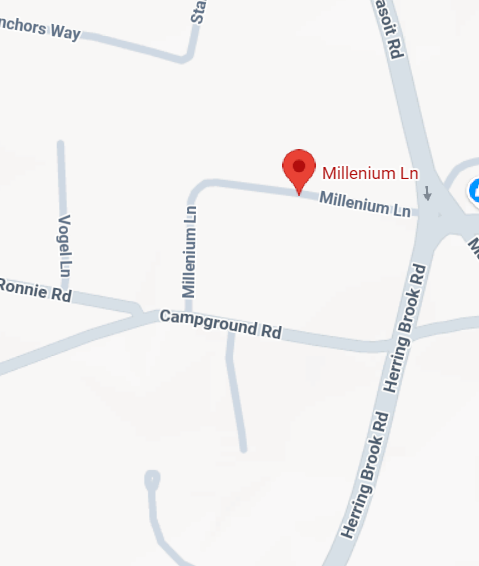
The former location of Millenium Grove.
The earliest camp meeting on Cape Cod was in south Wellfleet in 1819 and became an annual summer event. After a few years the meeting moved to Bound Brook Island, then in 1826 was held in Truro. It settled in Eastham in 1828 due to better accessibility for steamboats and other vessels. One person who took the journey there recorded, “we rode to Barnstable, then went in a vessel to Eastham. From the vessel we were rowed in a boat until it grounded. Then we were carried in a farm cart to shore, and then a walk, about a mile on a sandy road, brought us to the ground.” Land was purchased in Eastham 1836, which became known as Millennium Grove, located where Massasoit Rd and Campground Rd come together at Millenium Lane. Houses now dot the location.
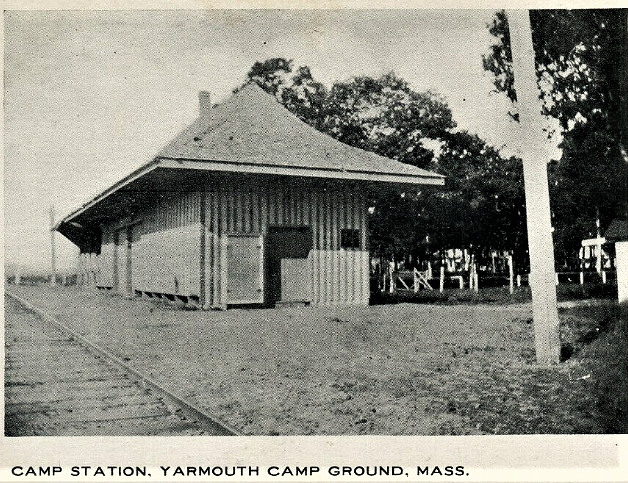
After the railroad came to the Cape in the 1850s, attendees began advocating for a mid Cape location for easier access. Onset, just off Cape, was considered, as was an area near Dennis Pond. In 1862 land on the Yarmouth/Barnstable line was selected that was “away from distracting influences” but close to the rail lines. That land cost $600, then within a few years additional lots were purchased. Between 1863 and 1899 a total of 60 acres was amassed. Willow Street came into being in 1854 when the railroad reached Yarmouth, with a spur to Hyannis, and a whistlestop station house (now gone) was built in the 1860s just for the campground.
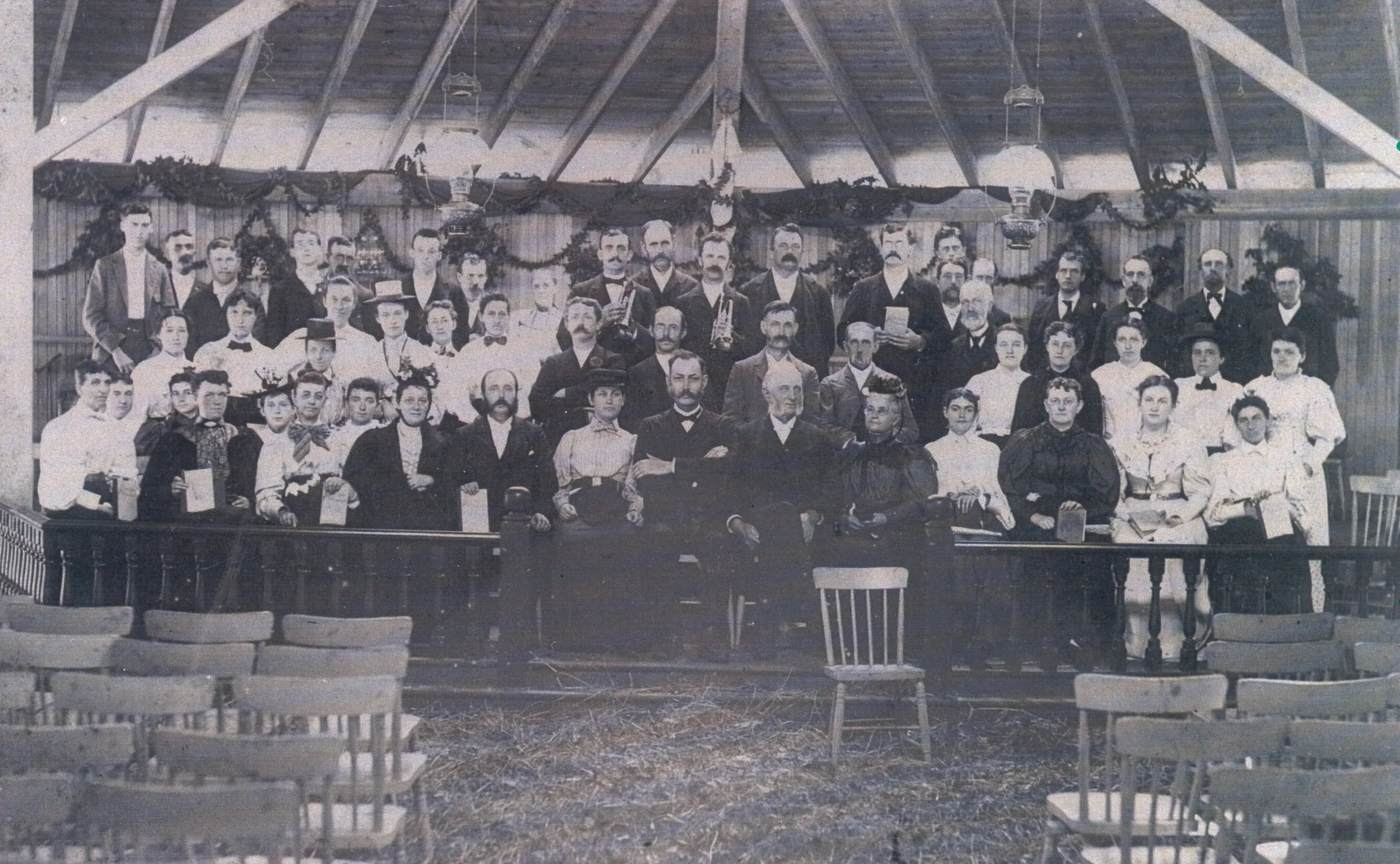
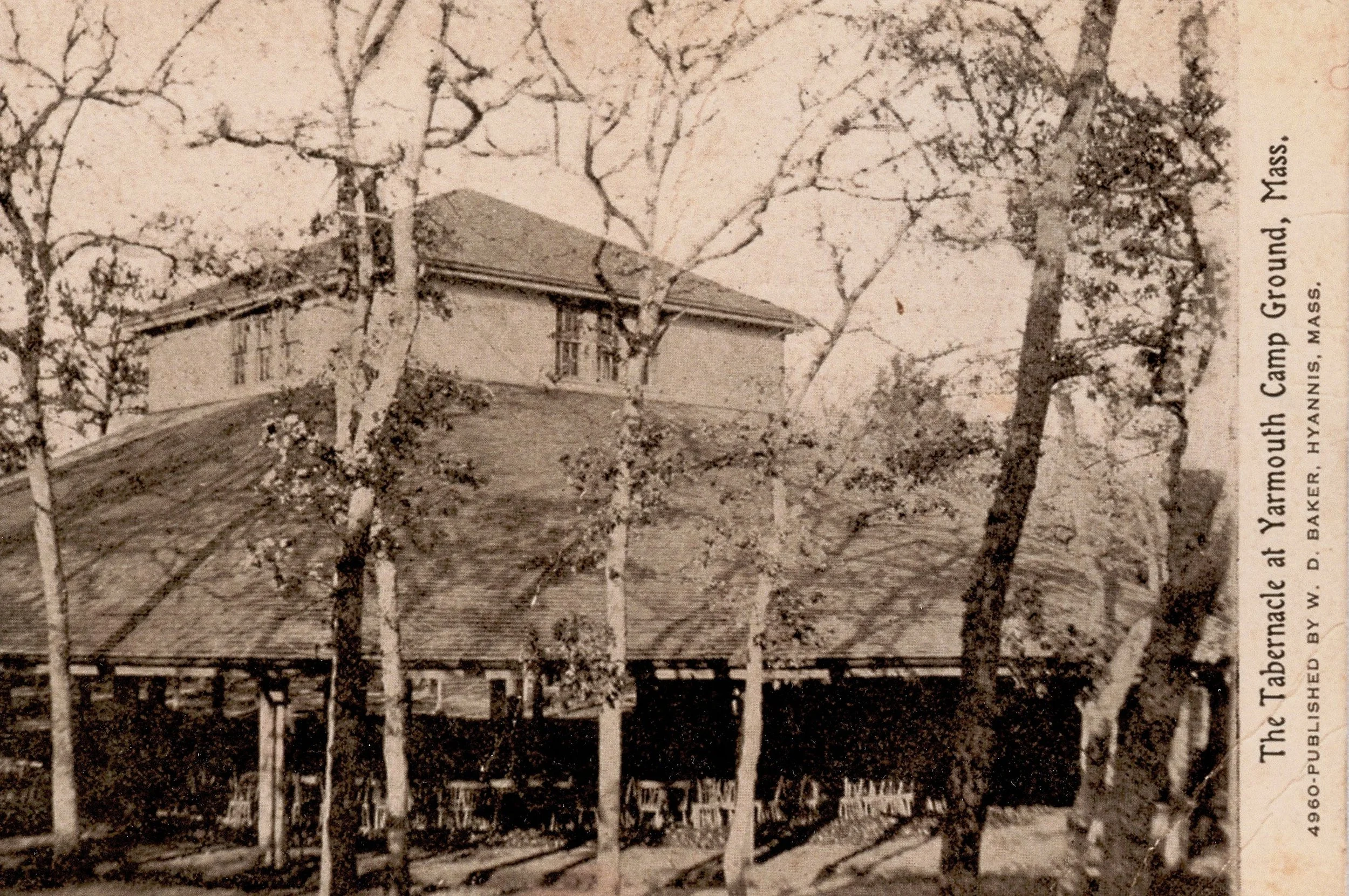
Worship services were conducted in the open or under a tent at first, with a preacher’s stand, and benches of wooden planks supported by posts with no back rests. Later, in 1890, a tabernacle that held several hundred was built to cover the area, but the hurricanes of ‘38 and ‘44 weakened the structure and it was removed.
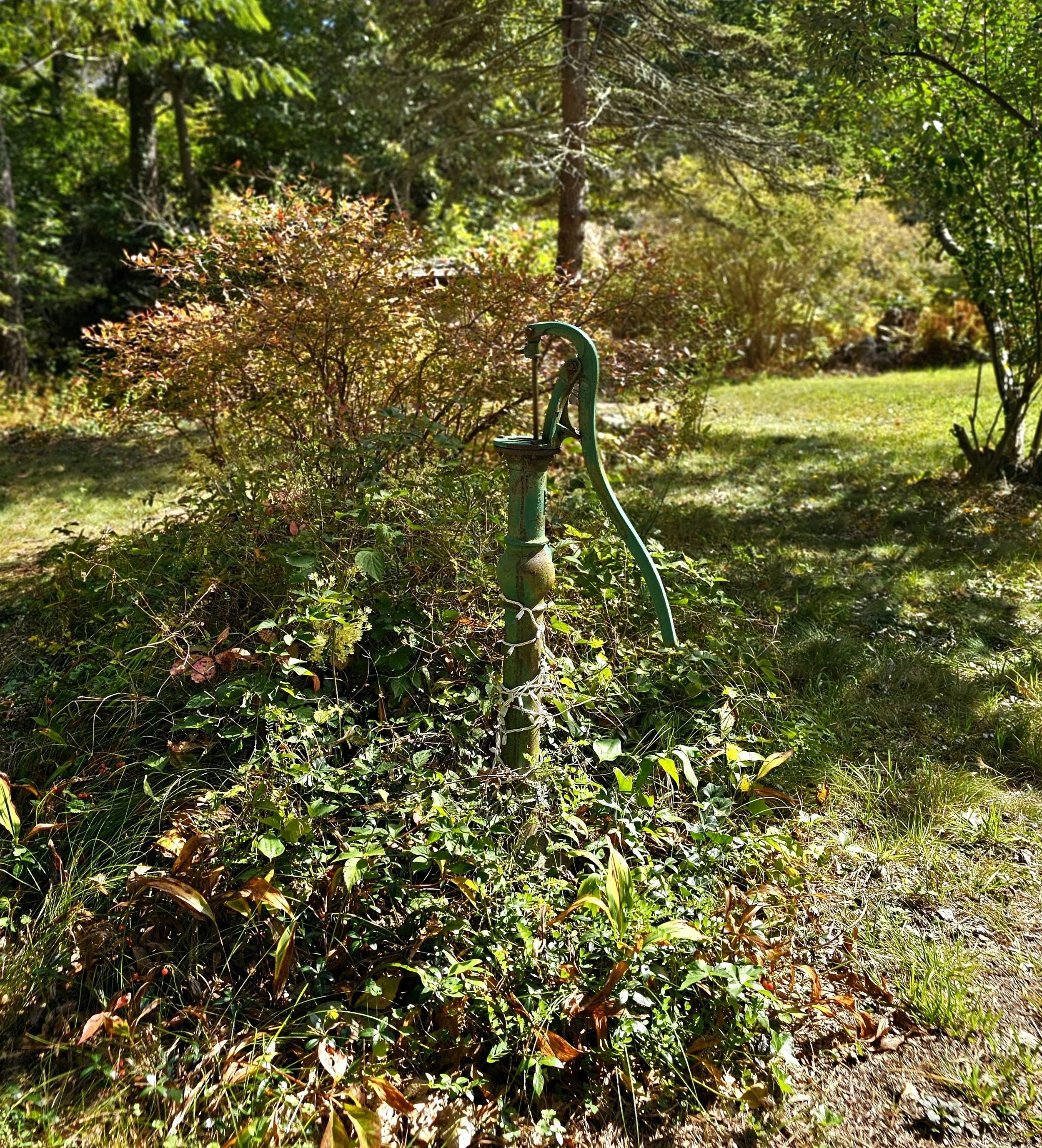
One of the remaining water pumps at the Camp Ground. (photo by Lisa Grady)
Early on many families stayed in tents, either their own or in large group tents, sleeping on straw, with blankets hung up for privacy. The largest tent at the Camp ground was 22’ by 40’ by 20’ high. Families began to use their own tents on small platforms they erected, and eventually small permanent cottages were built and used by the owners or were rented to others; by 1876 there were over 140 of them. Two or three handpumps for water were added throughout the grounds for people to haul water back to their cottage or tent, and outhouses were also available. In some cases the outhouses were quite close to the water pumps!
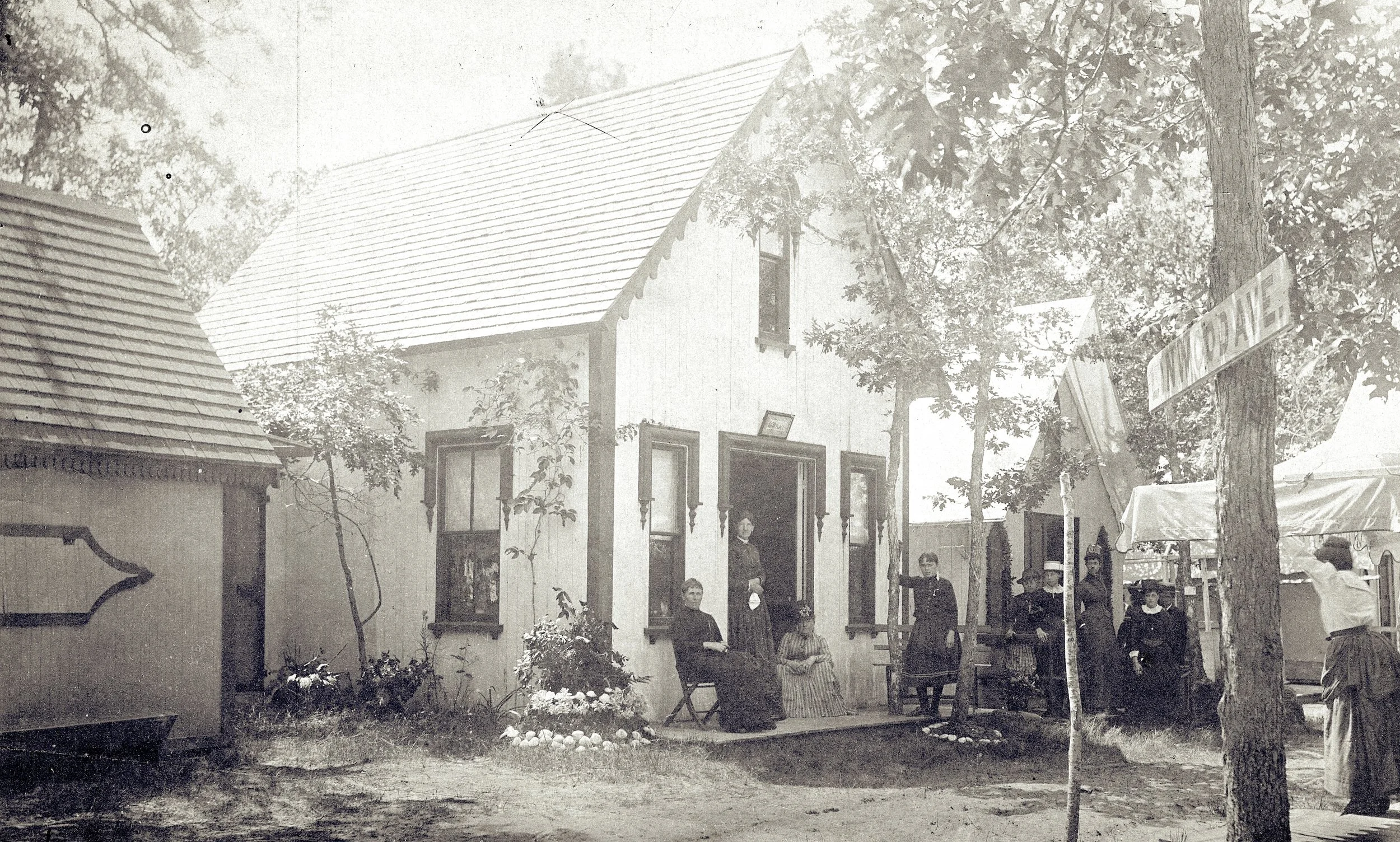
Deborah Bray, who lived on Main Street in Yarmouth Port, owned a small cottage in the Camp Ground on Linwood Ave and attended the meetings each summer. In this photo below you can see Deborah standing in the doorway of her cottage, her granddaughter to the right. Her cottage was destroyed in a storm in the 1920s and Linwood Ave has since disappeared.
Support tents were also erected for vendors supplying groceries, reading material, haircuts and more. Other peddlers were allowed in to sell a variety of supplies. There were up to 6 dining tents, stocked with wood burning stoves, work tables and utensils. Meals could be purchased individually, or by the day or week, at $6 per week. Treats like ice cream were served from a tent and penny candy was available. A bookstore sold pamphlets and religious books and there was a barbershop where men could get a haircut, a beard trim and disposable paper collars. Some vendors later moved into Johnson Hall, the campground headquarters, which contained a Post Office, a small jail in the back, and a few rooms upstairs for “notable” guests, like visiting speakers. A doctor was on staff each season.
An 1870s image of a group gathered around B. B. Hartford’s cottage, which still has a canvas roof. Hartford was a Boston victualer who provided food for the meetings. (click to enlarge)
Another 1870s photo showing the barber shop at Johnson Hall. The meetings lasted for a week or longer, hence the need for shaves, haircuts and fresh collars. (click to enlarge)
The Yarmouth Register even printed a separate Camp Ground newsletter under the banner “Camp Meeting Times” or later the “Yarmouth Camp Meeting Daily Record” with news, essays, stories, service and meeting times and the names of guest speakers.
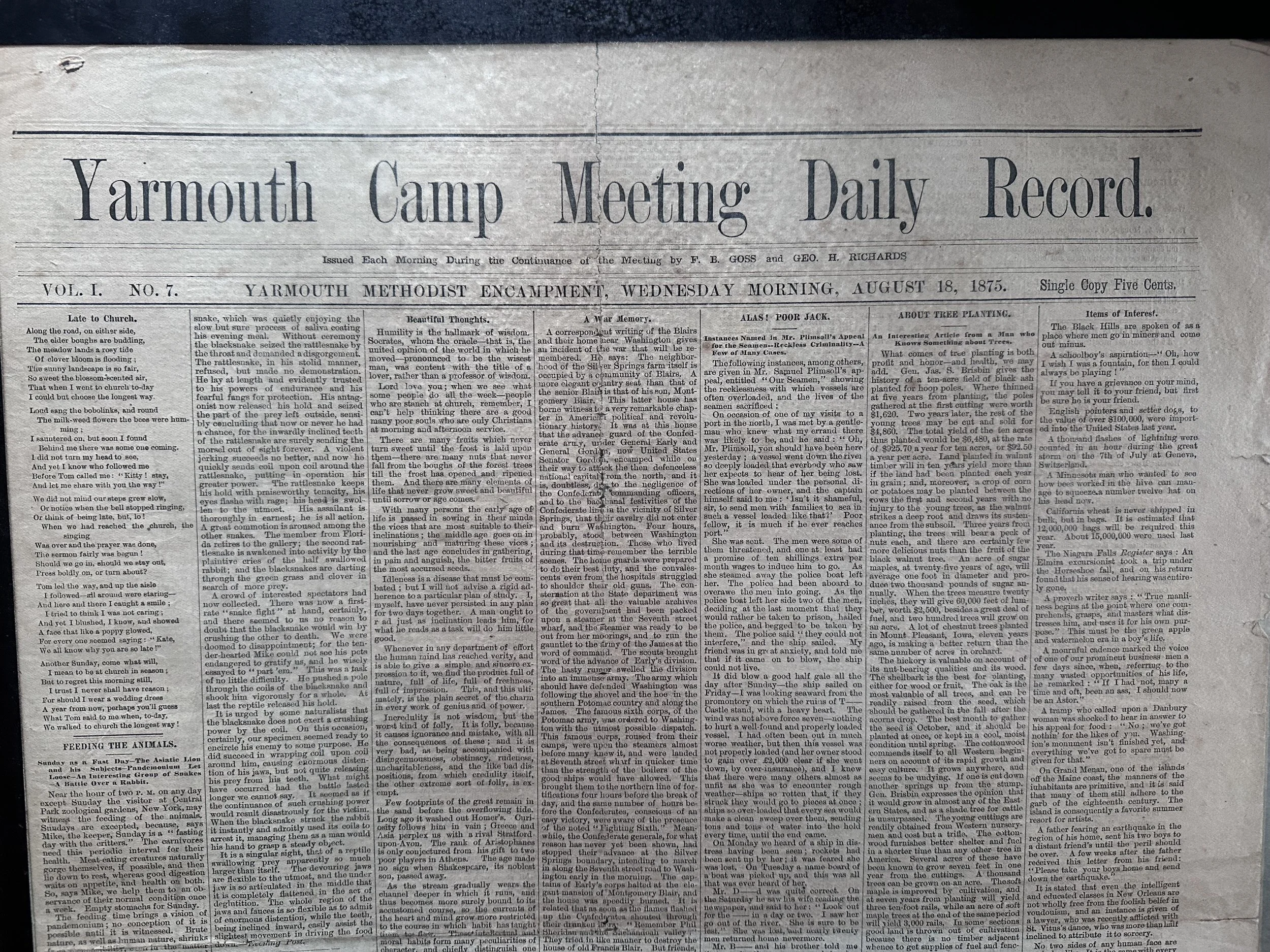
From the HSOY archives.
The Camp meetings were wildly popular with travelers and locals alike. The Yarmouth Register noted in 1891, “Quite a number of our citizens are accustomed to taking an outing at the Camp Ground during camp-meeting week, and this year is no exception. The reunions of people from different localities form no small part of the attraction of the occasion, and the facilities for living are such as to make it a convenient and economical retreat from the cares of housekeeping and the routine of family cares and duties.” At its height, attendance could be as many as 6,000 on a Sunday with ⅓ arriving by train, ⅓ sleeping in their tents or cottages, and ⅓ coming by wagon or on foot. Up to 600 horses might be in the Grove (meadow) at a time along with wagons and buggies. (the horses were moved in the 1870s across Willow Street to a cleared area to cut down on odors). In the 1880s an entrance fee of 10 cents was charged to day visitors to help maintain the grounds.
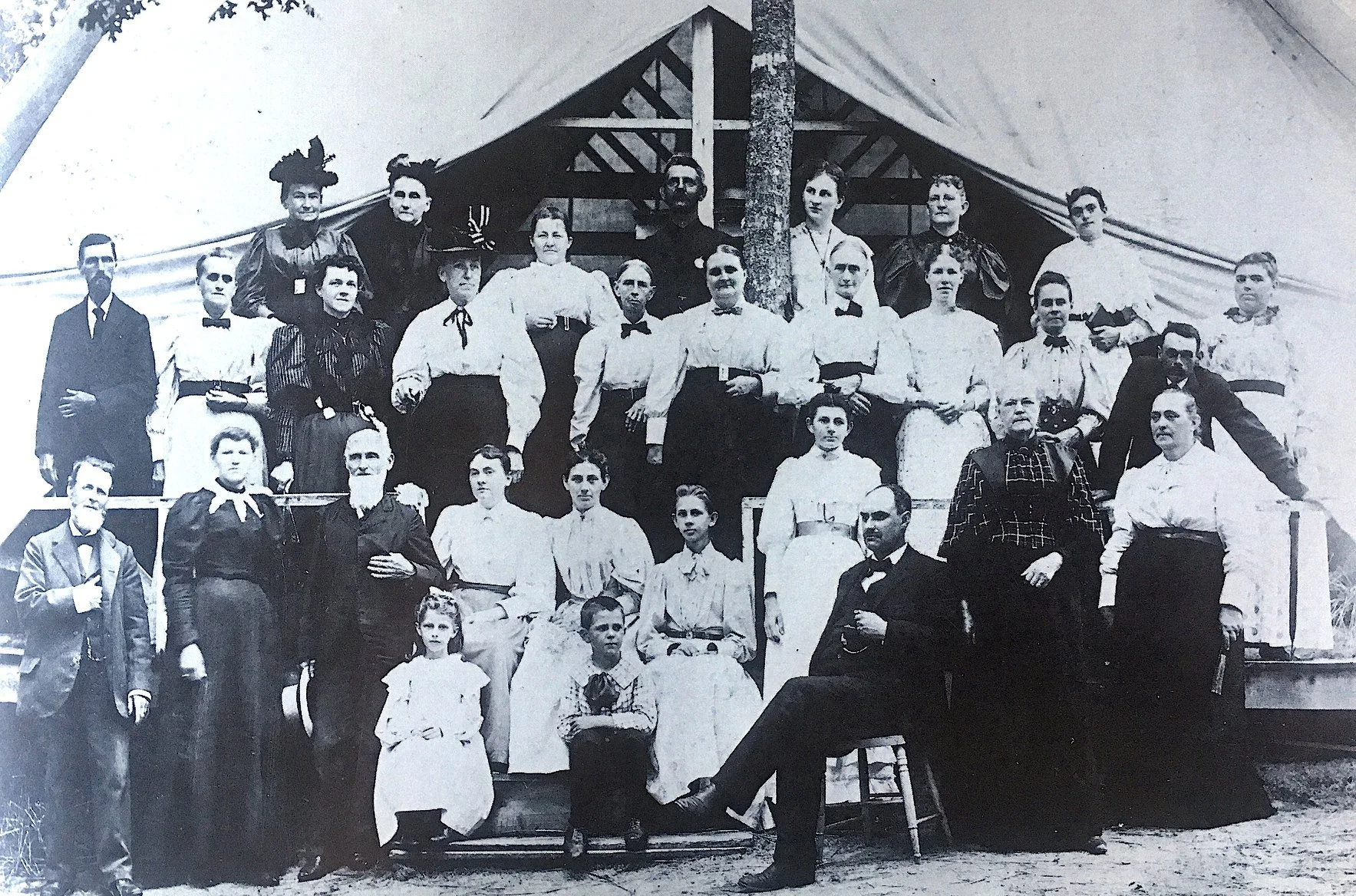
A Yarmouth Camp Meeting in the 1890s.
In later years improvements came in the form of a telephone, installed in 1882, and electricity arrived in 1922. However, after 1900 attendance began to dwindle and in 1912, then again in 1924, some cottages were removed and taken elsewhere. A tornado in 1924 destroyed a number of cottages and after that cottage removal was prohibited. In 1932 there were 75 cottages left. The last camp meeting was held in 1940.
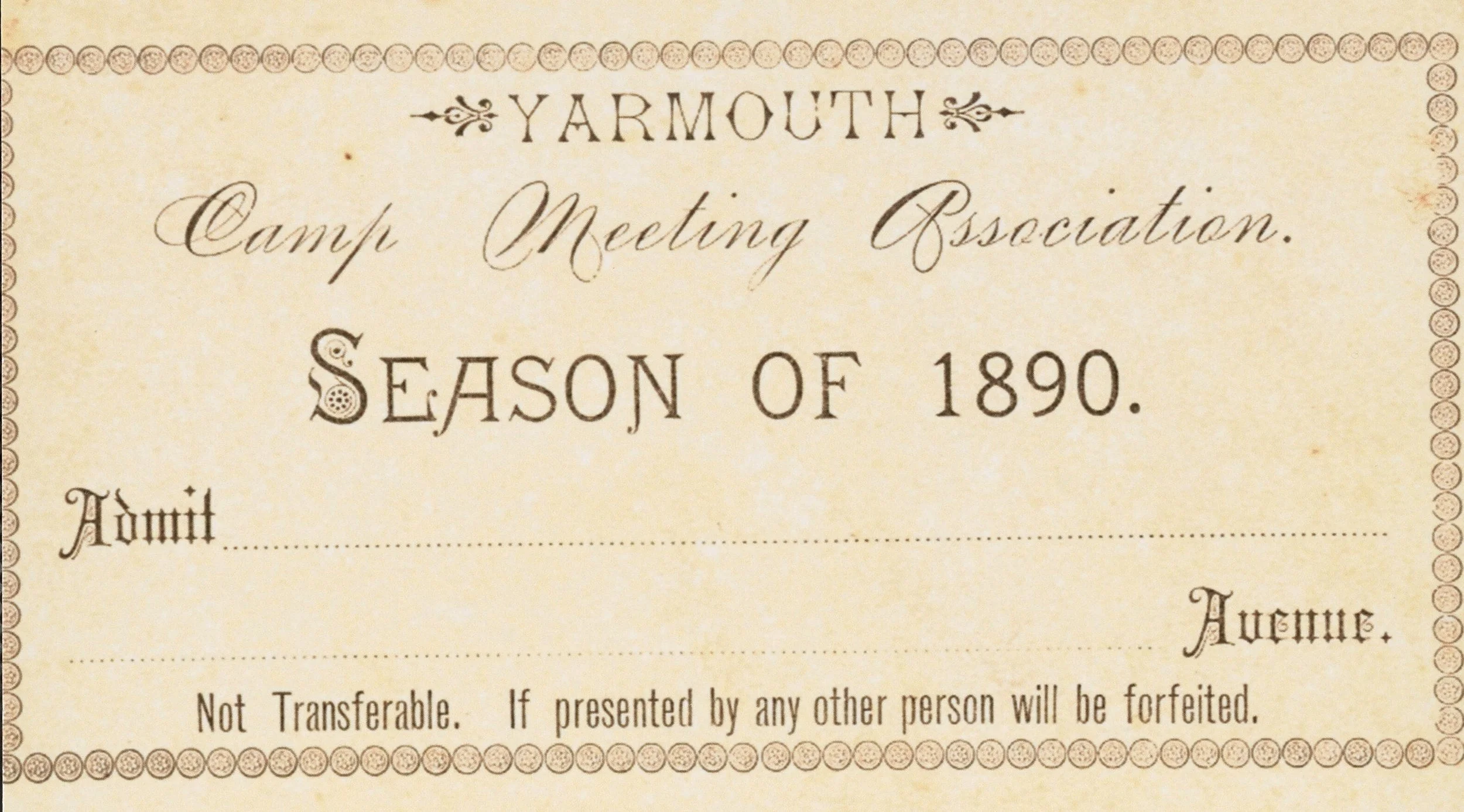
Image of admission ticket.
In 1946 the Yarmouth Camp Ground Association, a secular organization, formed to purchase the common land and preserve the character of the buildings. That organization owns the land to this day, while the cottages are individually owned. The camp ground is in the National Register of Historic Places, lovingly preserved and cherished by those that live there.
And to address one final rumor that has persisted locally for decades - no midgets live there now, nor have there ever been any!
The author would like to thank Paul Bakely for his tour of the camp ground and sharing his extensive inside knowledge. It was a day to remember.
Researched and written by Nancy Mumford
Sources:
Yarmouth Camp Meeting : its history and its Leaders
The Story of the Yarmouth Camp Ground and the Methodist Camp Meetings on Cape Cod by Irving W. Lovell
** Please note that the Yarmouth Camp Ground is private property and the roads are not public. They cherish their privacy.
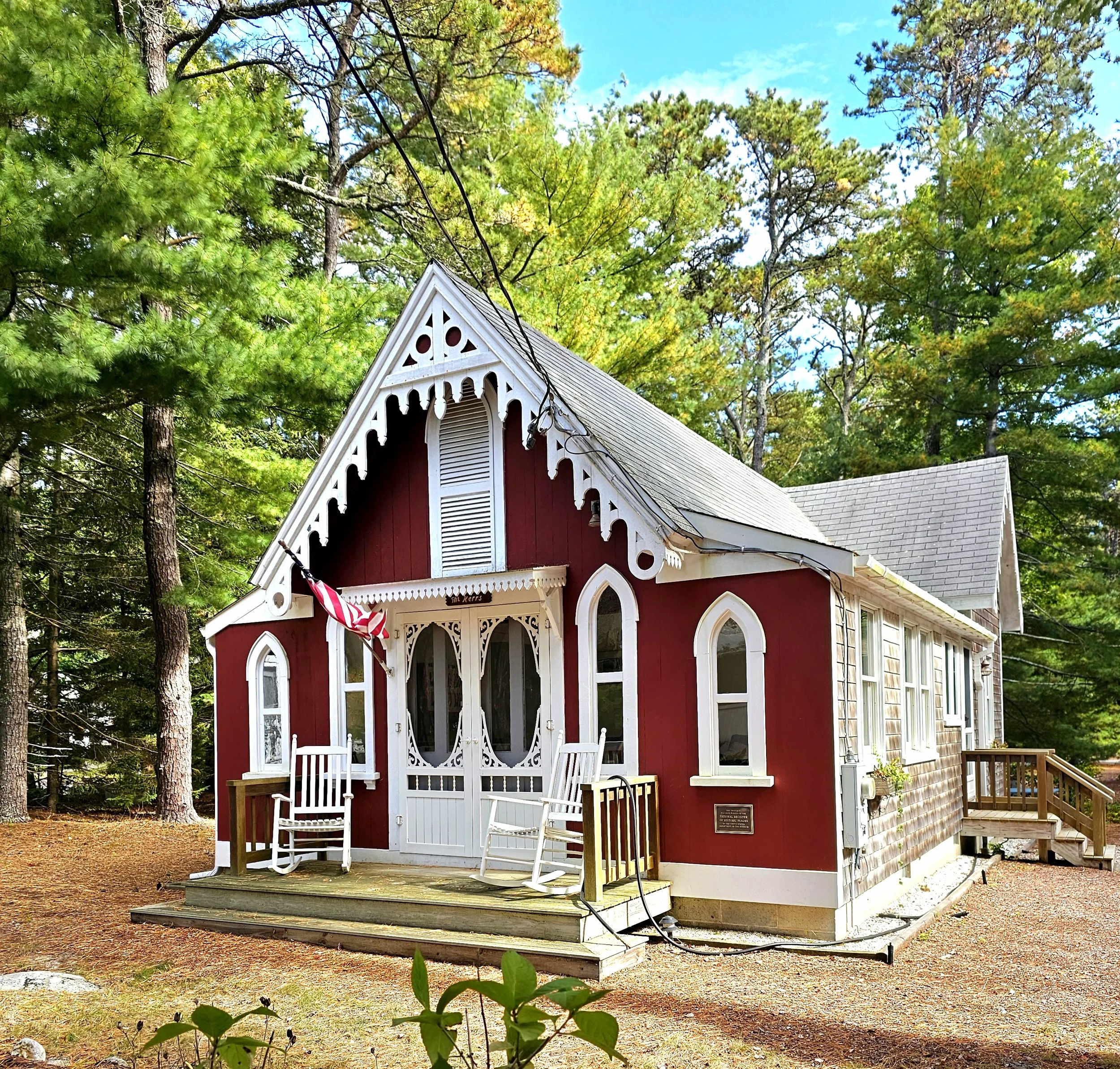
One of the cottages in 2025. (Photo by Lisa Grady)