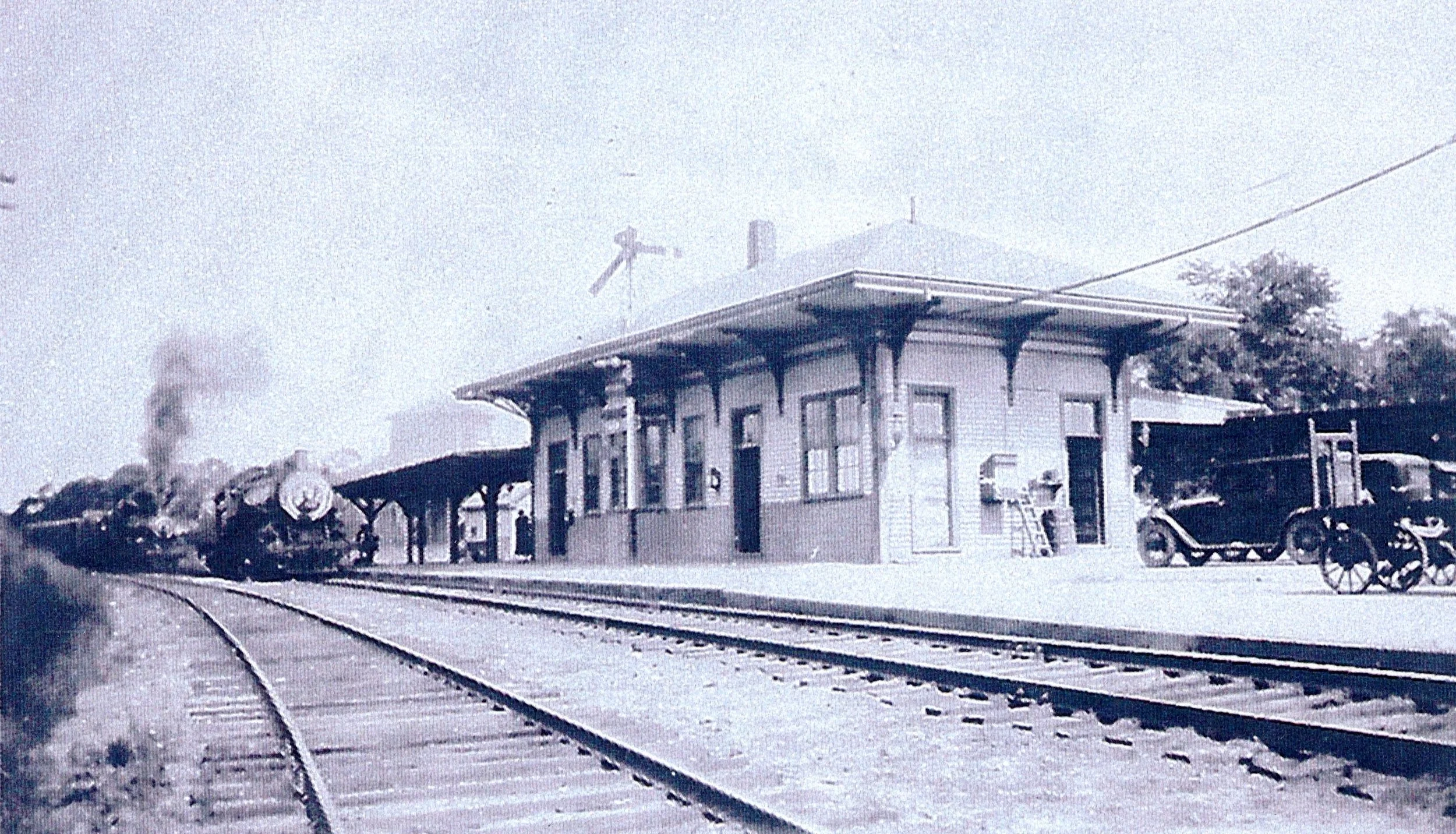
The Cape Codder, Neptune, Islander and other trains provided service for weekenders.
At 10:30 p.m. on the night of Friday, June 25, 1926, the New York, New Haven & Hartford’s Cape Codder left New York City bound for Hyannis. The train ran only during the summer months and this was its first trip for 1926, almost a year to the day from the inauguration of this service. Near Kingston, Rhode Island there is a tidal swamp, historically the scene of the last battle with the Narraganset Indians. There, early on Saturday, the locomotive boiler on a sixty car freight train, bound for New Haven from New Bedford with a load of oil and cotton cloth, blew completely off the frame, hurling the engineer, fireman and brakeman to their deaths. Three minutes later, the Cape Codder, running at high speed in fog and impaired visibility, crashed into the wreckage, unaware that it lay across the express tracks. Its locomotive plowed into the debris and left the rails. The first sleeper of the train plunged past the wrecked locomotive and into the swamp. The three following cars were stopped, heeled over, partly on the rails and partly in the swamp. Crude oil from the freight train had spilled out over the scene and, in the third car, a fire broke out. Most of the ninety nine passengers on the Cape Codder, including twenty children from three to fifteen years of age, were severely shaken up and some suffered minor injuries. They were transferred to another train to resume their ill fated journey to Hyannis.
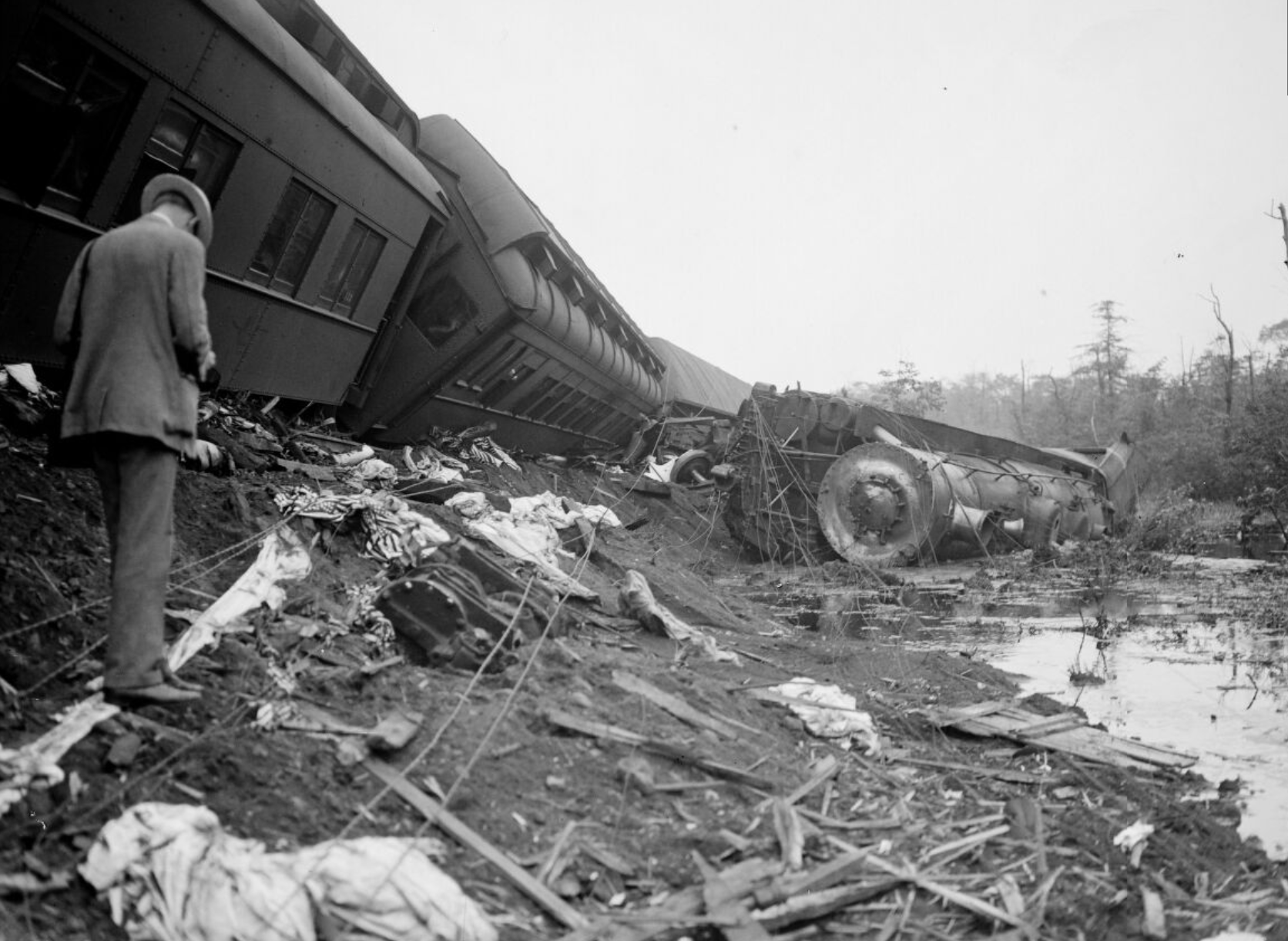
An image of the 1926 train wreck in Kingston, Rhode Island.
Despite this early mishap the Cape Codder became a rapid success. Service to and from Washington, D.C. was added in 1929 by the addition of a sleeping car, joined to the Cape Codder at New Haven. In June 1930 a Pullman sleeper was also added for New York passengers bound for Provincetown. This car was dropped off at Yarmouth Port to be taken to its destination down Cape to Provincetown. It would return Sunday night and be coupled on to the Cape Codder before midnight at Yarmouth Port.
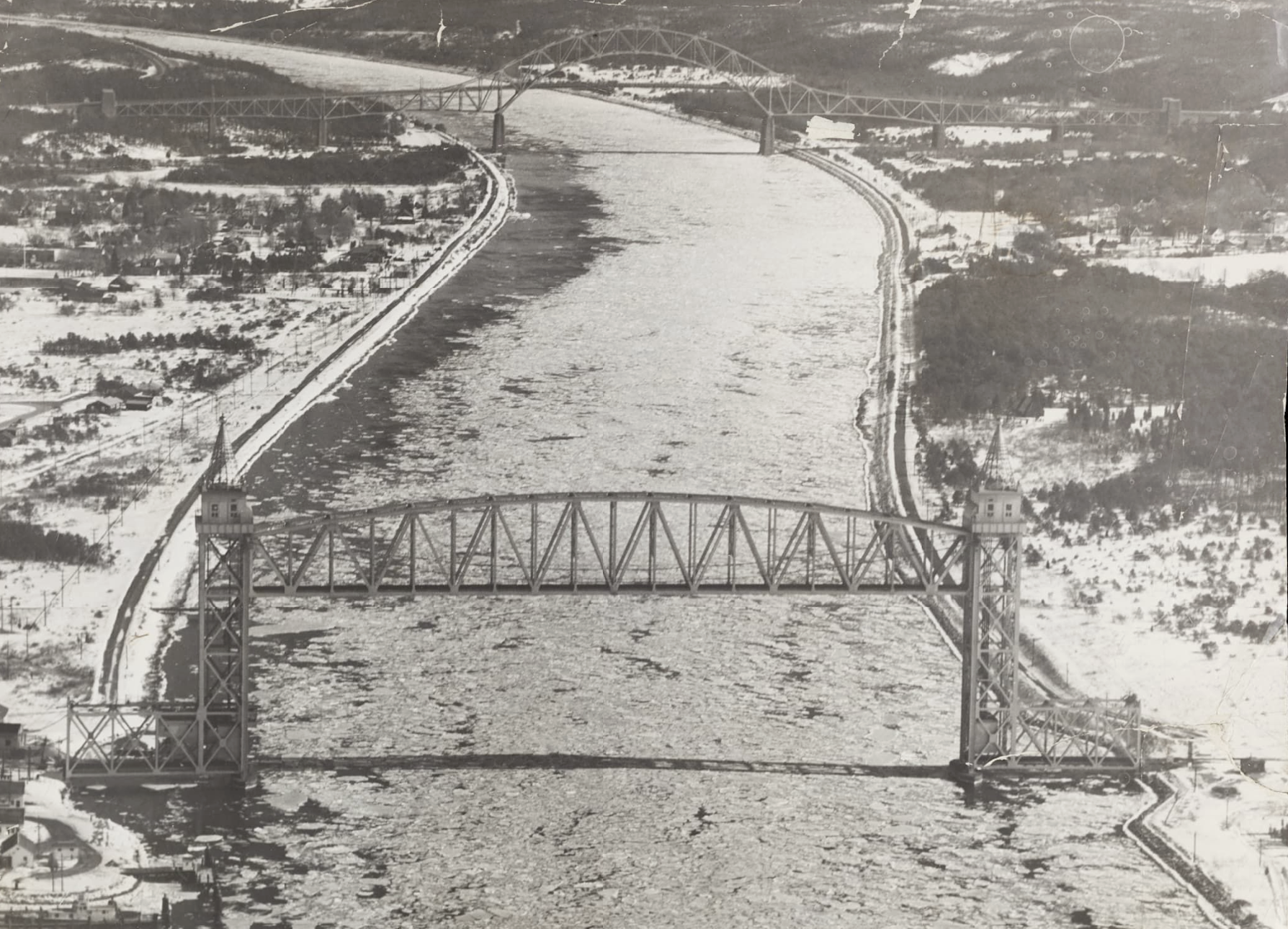
The Cape Cod Canal Railroad Bridge was completed in December of 1935.
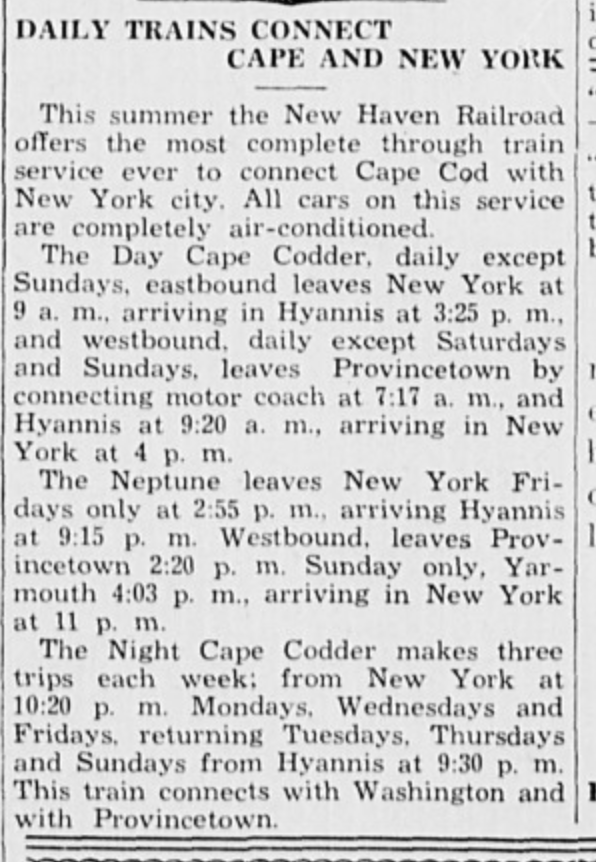
Yarmouth Register, 1938
Because of its success as a nightly weekend operation, the Cape Codder became a daily operation in 1937 and a daytime Cape Codder was added as well. In addition, due to the demise of the Fall River boat line, a third weekend train, the Neptune was added, leaving New York City’s Grand Central Station at 4:45 p.m. on Friday afternoons, splitting up at Buzzard’s Bay with some cars sent to Woods Hole and the remaining ones sent to Hyannis. Indeed, the popularity of the run was such that another weekend train The Islander, running a little earlier in the afternoon than the Neptune, was added in 1939. But the Neptune continued to be popular with the younger set, leaving their offices in New York after the markets closed, embarking on the six hour run to the Cape and spending much or even all of the time in the bar or grill cars. In addition, there were often amateur musicians who would stroll up and down the aisles of the coach cars, with impromptu sing-a-longs breaking out here and there. Passengers might exchange phone numbers and addresses for possible use later on in the weekend once their destinations were ascertained or agreed upon.

An ad for resumption of Cape Codder service to the Cape in 1960.
Weekend service from New York City to the Cape and return remained profitable for many years, except for a brief suspension of service in 1959 when Massachusetts ended its passenger train appropriation. Service was restored the following year. But this was not to last and, on a Sunday evening in September 13, 1964 the Neptune made its final run. The New York, New Haven & Hartford Railroad was soon to succumb to financial problems and was taken over by Amtrak. In June, 1986, after a 22 year hiatus, weekend summer service resumed from New York to the Cape. This would continue until 1996, when it was replaced by far less convenient or glamorous bus connections to Providence and to Boston. In May 2013 limited weekend service between Boston and Hyannis on the CapeFLYER began again.
For further details see Cape Cod Railroads- Including Martha’s Vineyard and Nantucket by Robert H. Farson, providing a detailed history of the Cape Codder and other trains going from New York to the Cape.
Researched and written by William Painter
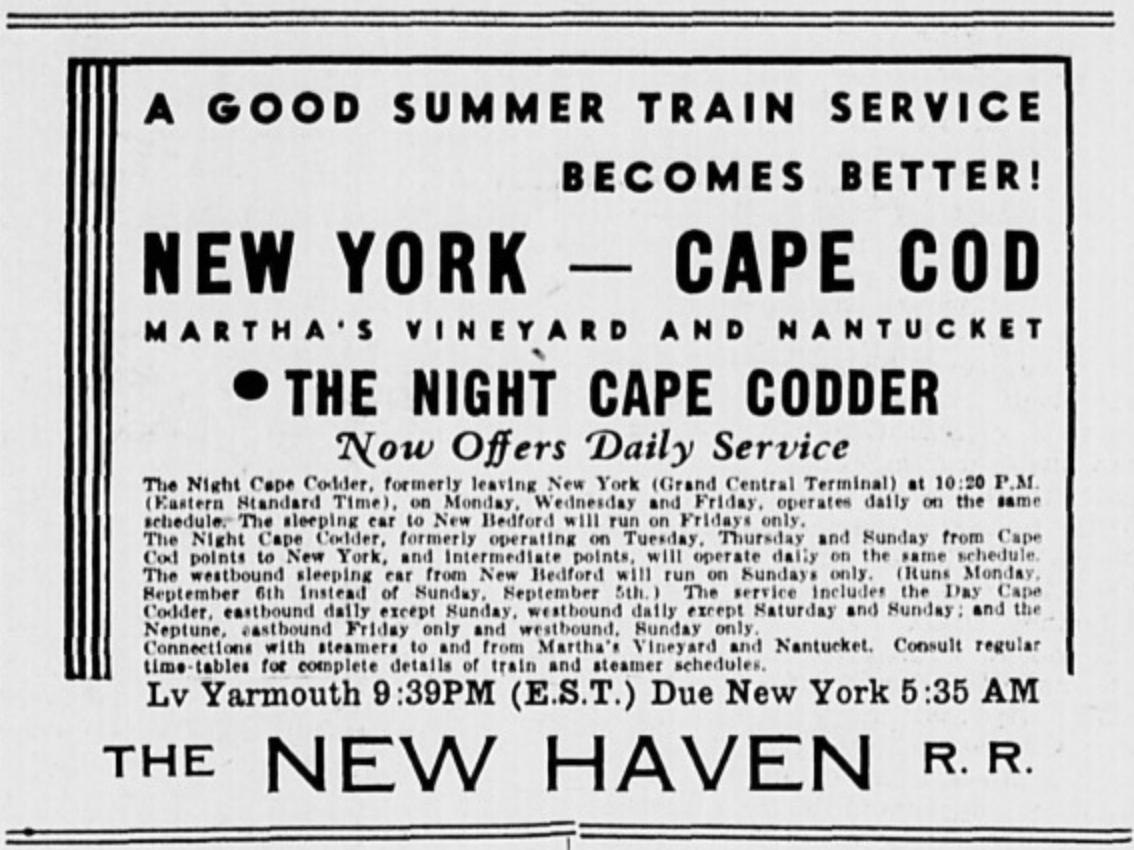
Yarmouth Register, 1937