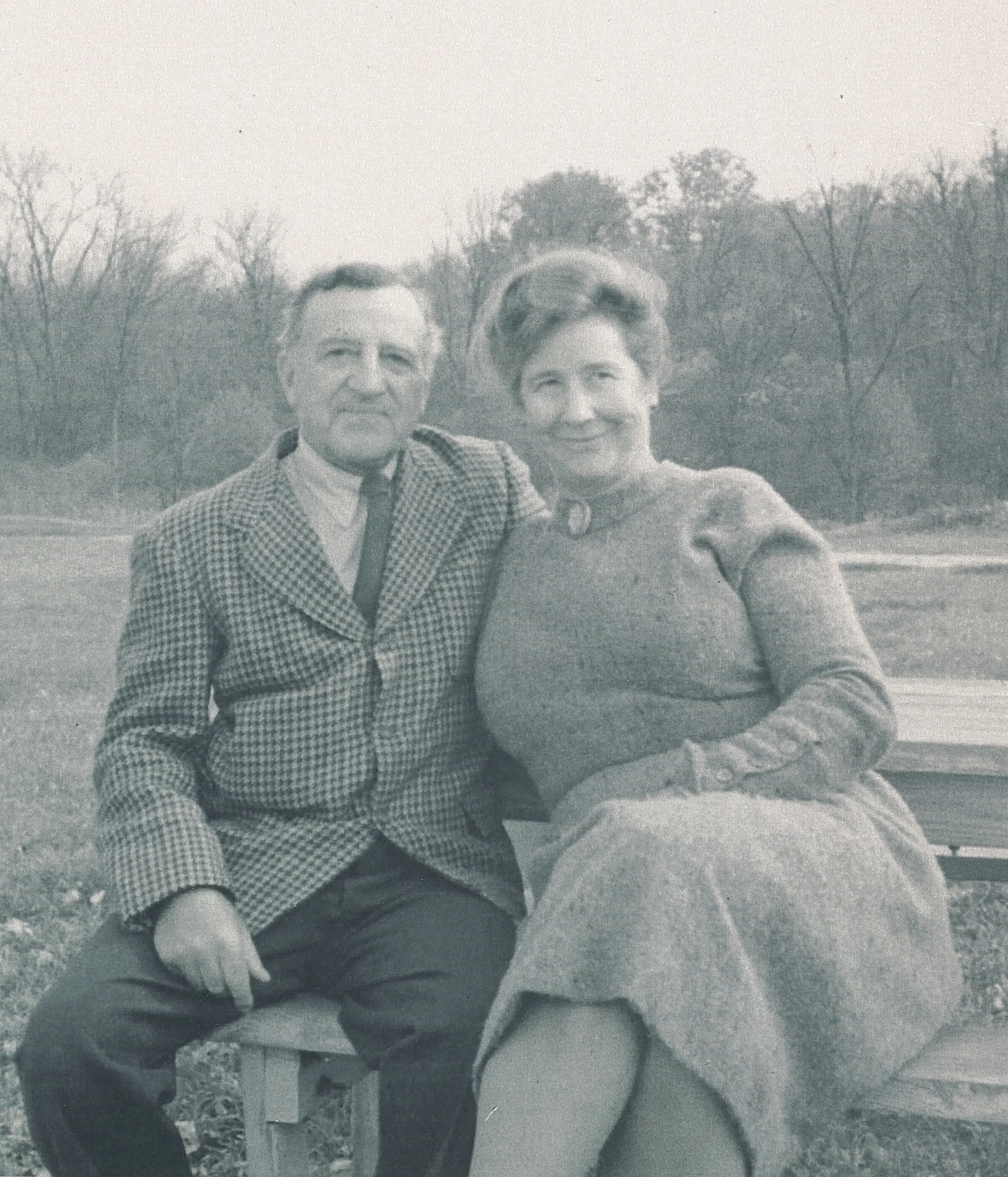
Guido & Faith Perera.
It was about [75] years ago that my family spent three summers living in the Bangs Hallet House on the common in Yarmouth Port. My grandparents bought the house on the corner of Church Street and Route 6A from Tom Thacher in 1927. But in 1950, we needed more space. Uncle Guido Perera invited us to stay in the house next door, which at that time was part of the Thacher estate. If anyone then had asked me who Bangs Hallet was, I would have politely said “No idea,” and gone to the village library for the answer.
This wonderful large white house with dark green shutters was located on the common across the driveway from the “Homestead,” the central home in the Thacher estate, under the supervision of Guido Perera, attorney and trustee of the estate. At that time, the Bangs Hallet House was known as the “Annex” and was a guest house for visitors of the Thacher family.
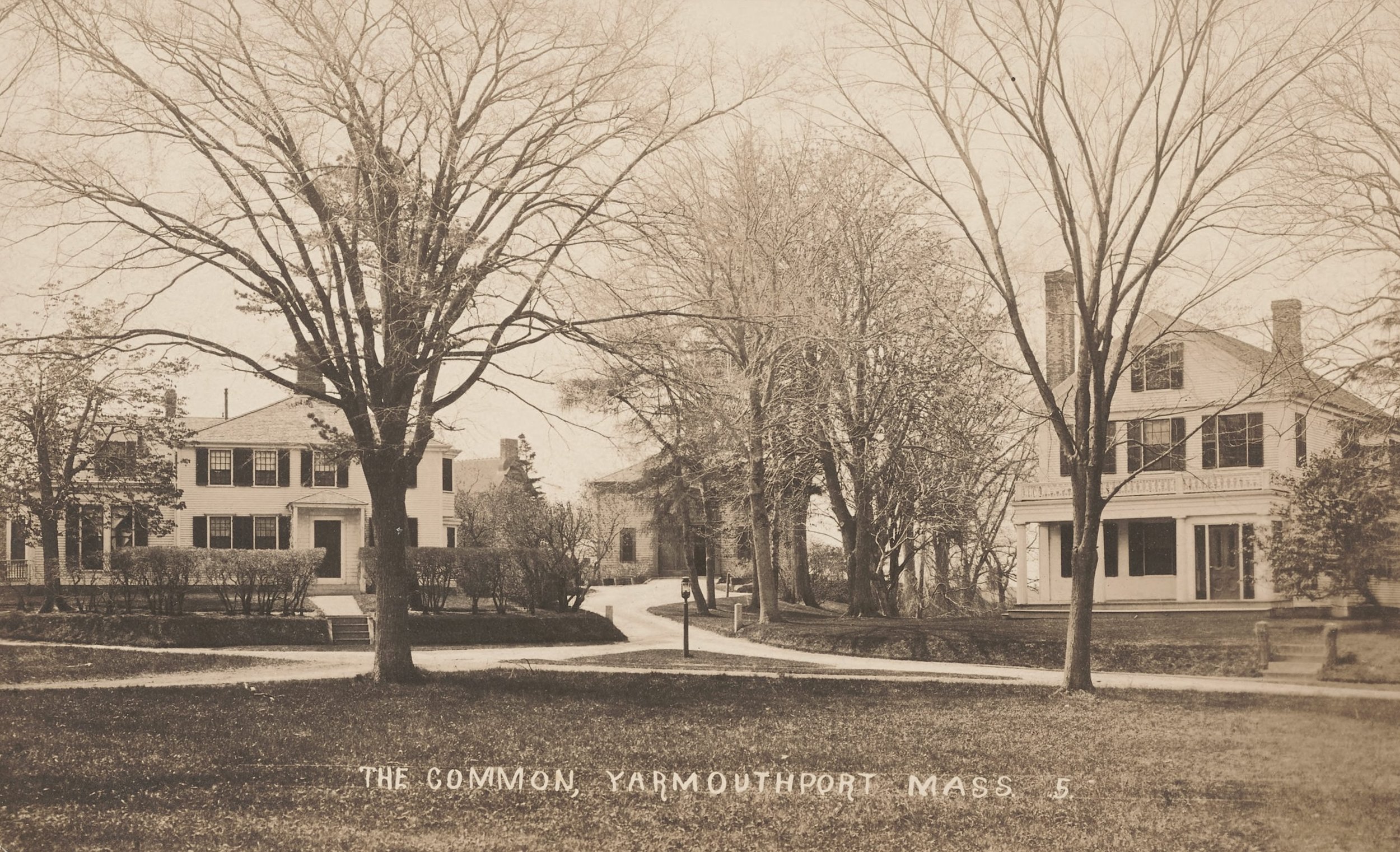
The “Homestead,” left, and the “Annex," right.
At that time, my family lived in Pittsburgh. Since my mother’s sister was Faith Perera, Guido’s wife, a very nice invitation was extended to our family to summer there. Yarmouth Port was in our blood and we were mighty happy to be in the Annex, right next to my cousins. We shared the joint driveway with the Perera family, with all the cars going in and out during summer activities. The Weeping Beech tree was standing tall at the top of the driveway, only a bit smaller than it is now.
One large difference between then and now, hardly noticeable from the outside, revolved around the kitchen and its location at the very rear of the house on the west side (now the exhibit room). The west end of the house was the oldest part, built before 1800, and the original kitchen was in the basement. That old kitchen is still there, but it is assumed that the kitchen was moved upstairs in the 1800s when the Greek Revival front was added to the house.
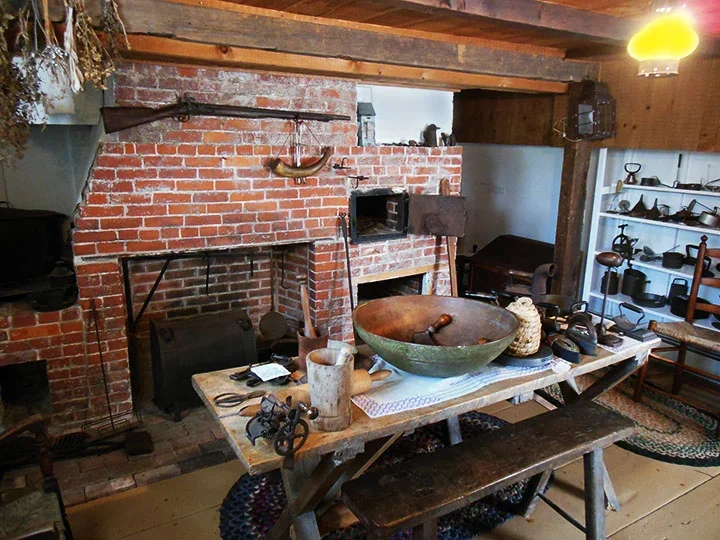
The original kitchen in the basement of the Bangs Hallet House.
There was an extension of about 15 feet then, which became a porch, and extended the lower kitchen as well. That porch and shed underneath came off in the 1960s, after the house had been donated to the Historical Society, when Hugh Clark became curator of the Bangs Hallet House and wanted his garden there.
I remember living in the Annex in the 1950s as if it were yesterday. My world was almost entirely in the back of the house, in the upstairs kitchen area. The rest of my family lived on the second floor; my bedroom was on the first floor in what is now the “captain’s study.” It connected directly to the dining room as it does now, and the other door led to the bathroom (now a small kitchen). I would get up, shave, and meet the rest of the family in the kitchen. Plans for the day and summer activities were discussed there over an extended breakfast.
When I had school friends visiting for a few days, they got in the spirit of things too. They stayed above the kitchen in the bunk room, with the adjoining upstairs bathroom accessible by a four foot high door and a few steps. They came down the back stairs to get meals. That room is now used to store costumes.
Thanks to my mother, evenings continued this enjoyable summer living. The back porch had a railing around it and we loved celebrating the wonderful, happy hours before dinner. My mother called this location “chez-Sallie” and we all had a grand time. Uncle Guido was concerned about too much weight on the porch and shed below, and my mother would say, “Oh, of course Guido, you are right.” But since he worked during the week in Boston, she would just go along anyway with our drinks, snacks, and summer friends. This evening fun with family and visitors is permanently etched in my mind.
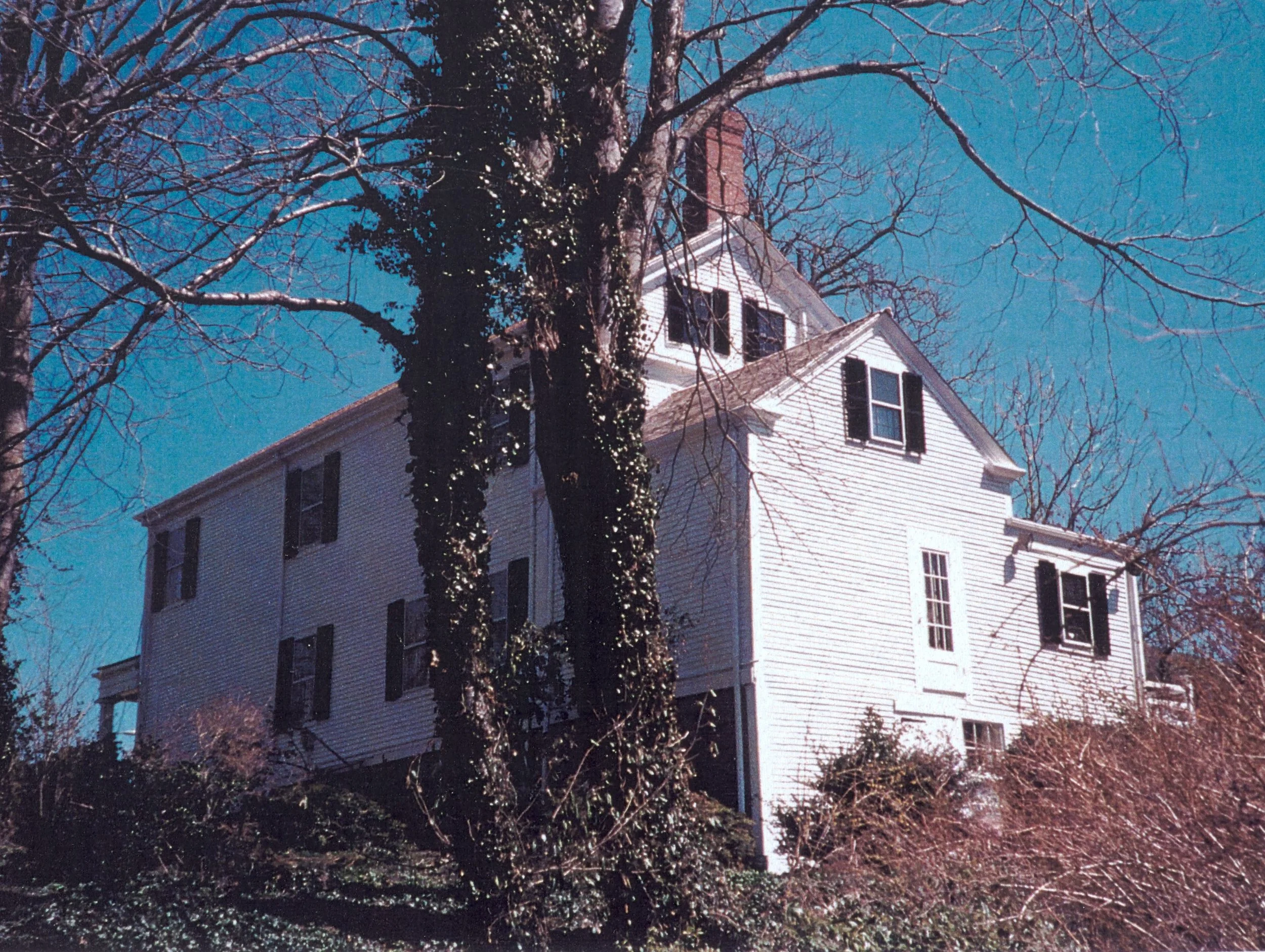
The rear of the Bangs Hallet House, showing the door that used to lead out onto the former porch. The door has since been replaced by a window.
The Yarmouth Port common is as clear to me today as it was after World War II. Mary Thacher was in the Winslow Crocker House on Route 6A, across the street from Ella Bray, who lived on the northwest corner of the common at 1 Strawberry Lane. Next to her was the Annex, now the Bangs Hallet House, and then the Thacher Homestead. Across Strawberry Lane lived Louis and Grace Thacher, and in what is now the Edward Gorey House Museum, lived Louise and Olive Simpkins. On the north side of Route 6A, next to the Swedenborgian Church (now Thacher Hall), were Clayton Priestnal, pastor of that church, and his wife Marion. In the red house next to them were the Knowles family, owners of the general store down the street which is now Parnassus Book Store.
And last, but by no means least, was Tom Thacher, who lived in what is now the [Chapter House] Inn. My cousins and I used to sell them lemonade on hot summer days. They are all gone now, but are not far away, since they are all buried in the Woodside Cemetery on Summer Street, as are my parents.
The Bangs Hallet House, donated to the Historical Society of Old Yarmouth in 1953 by the Perera family, stands today as a great tribute to the rich local history of Yarmouth Port, the 19th century life of a sea captain and his family, and the Thacher family. The Historical Society of Old Yarmouth plays a most important role in the ongoing histories of these traditions.
by Robert McClenahan (written about 2001. Bob passed away in 2025 and is buried near his parents at Woodside Cemetery).
Be sure to join us at the Captain Bangs Hallet House Museum this summer for our special exhibit, Yarmouth in Revolution. We will focus attention on Yarmouth residents’ daily lives: how did political and military events effect them and how did they manage to live ‘normal’ lives during this tumultuous time? What was life like in this village in the 1760s-1780s?
Drawn from the collections of the Historical Society of Old Yarmouth as well as private lenders, the exhibit will showcase a select number of artifacts associated with Yarmouth’s experiences during the Revolutionary War period. Tours will be available beginning June 5, on Thursday, Friday and Saturday at 11:00 am, 12:00 noon, 1:00 pm and 2:00 pm. Tickets are available online or at the door.
