
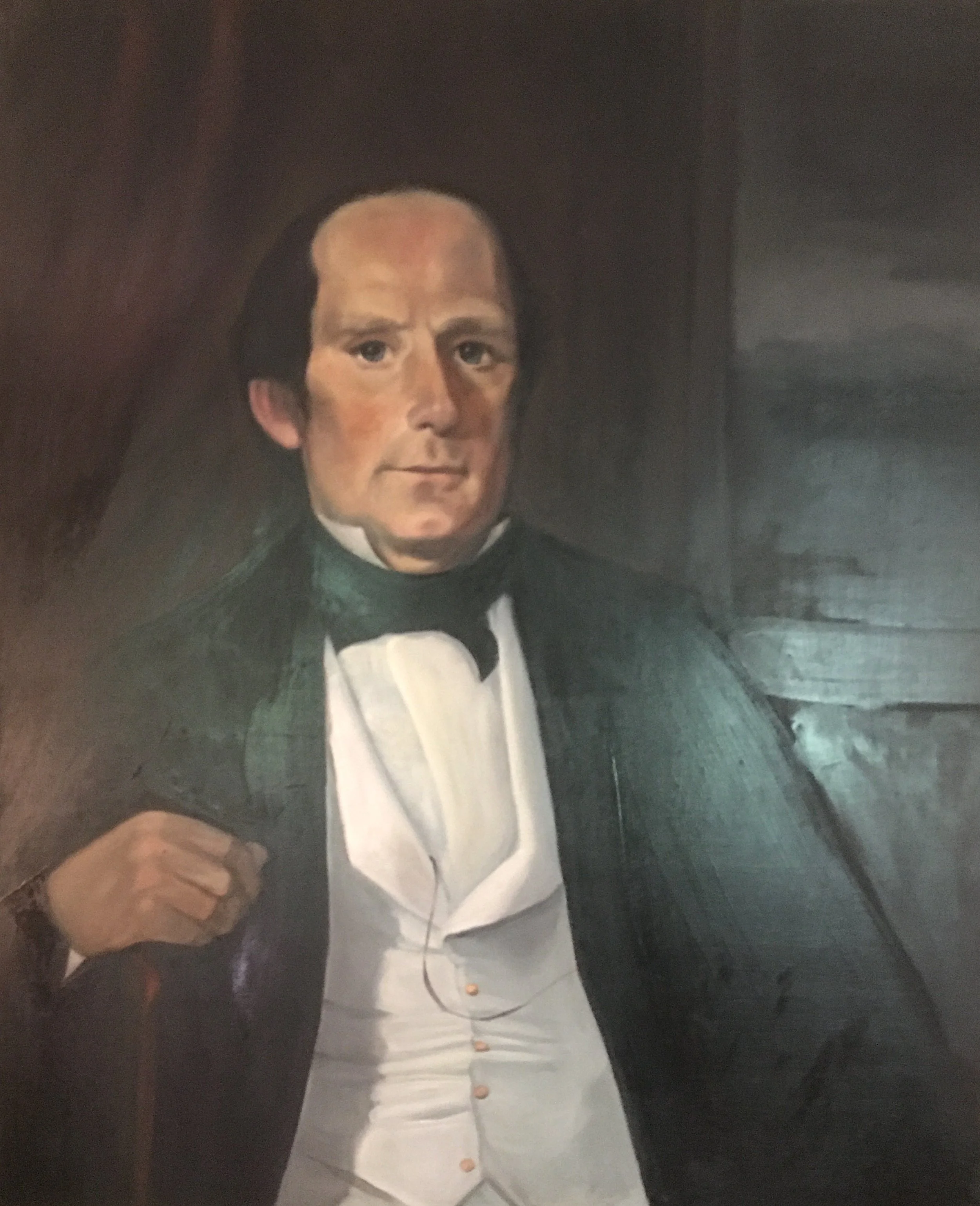
Captain Bangs Hallet was born in Yarmouth in 1807, the son of Edward and Hannah Hallet. Although best known for his house which is now the showcase of the Historical Society of Old Yarmouth, in fact he had built two previous houses in Yarmouth Port. The first, shortly after he was married, was at 165 Old Kings Highway, now a nursery school. His second house, a much bigger one, was built at 95 Old Kings Highway. His final home on Strawberry Lane, facing the Yarmouth Port Common, was acquired from Captain Allen Hinckley Knowles, when they decided to trade houses.
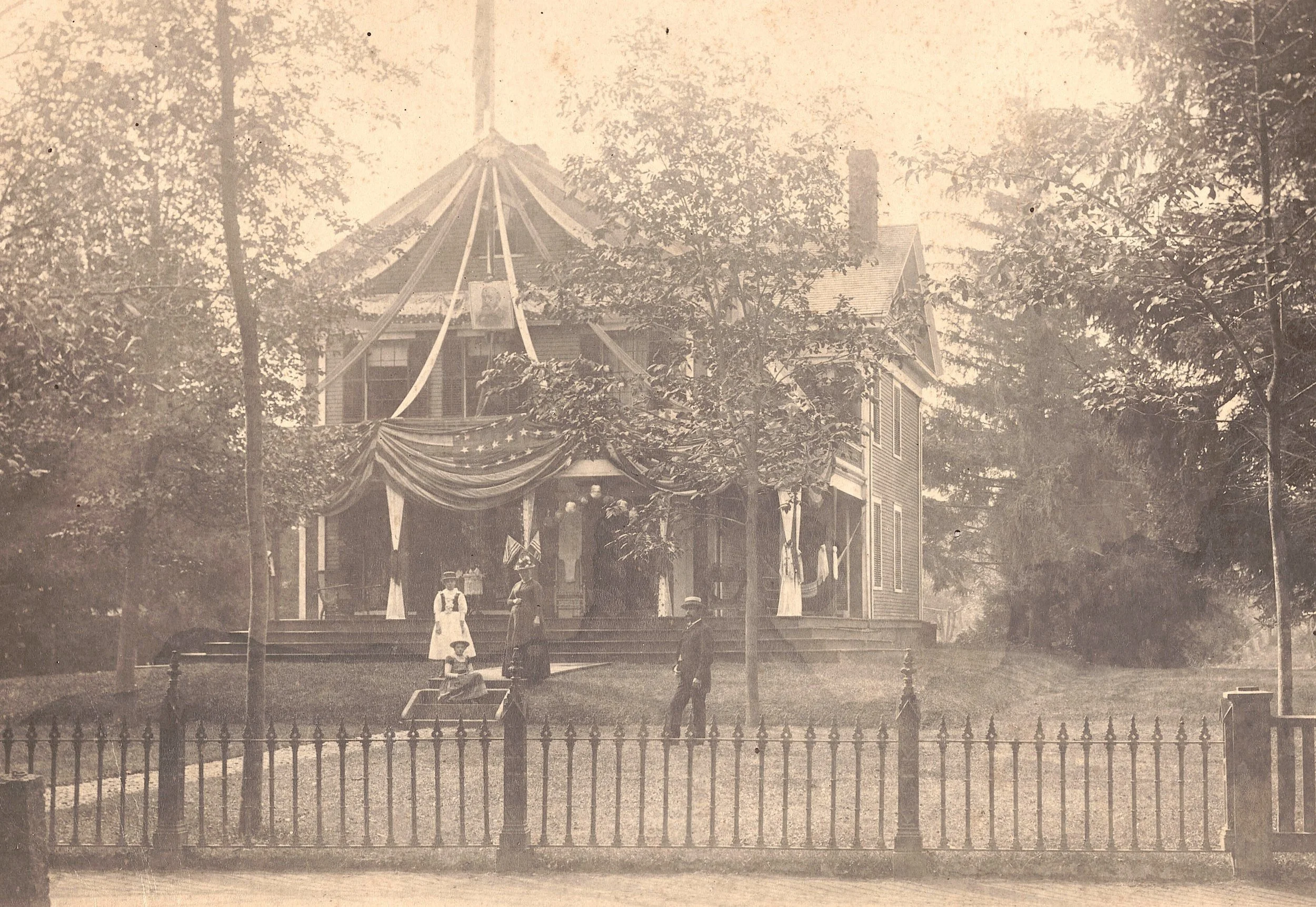
95 Old King’s Highway, Yarmouth Port, in the 1880s.
Captain Hallet was commander of a number of vessels, including the ship Herbert, the brig Pilgrim, and the bark Burlington. It was in this latter vessel, on February 13, 1840, while sailing from New Orleans and bound for France and about 900 miles east of the Cape of Delaware, that his ship was struck by lightning. The strike knocked down the second officer (then in charge of the deck) and all the watch, except the man at the wheel and one other member of the crew. The lightning bolt set fire to the cargo below of 1600 bales of cotton.
Despite efforts to lessen the fire by boring holes through the deck around the mainmast through which water was pumped, the fire continued and eventually Captain Bangs made the decision to abandon the ship and escape with the crew in the long boat and jolly boat (a small, lightweight boat, typically 16 to 18 feet long, usually carried at the stern of a sailing vessel). Since there was no possibility of launching these boats until daybreak without them being pushed by waves against the ship’s side, the cook and steward were ordered to get up a good breakfast of fried pork for all hands, the crew having killed a pig on the previous day.
After breakfast, Captain Hallet called all hands into the cabin and addressed them as follows: “Men, this may be the last time that we shall all meet together in this world. That is known only to the being that sits aloft to guard the destiny of those ‘Whose march is o’er the mountain wave, Whose home is on the deep’… But we should all remember that we are men, and it is a duty we owe ourselves and our friends on shore to preserve our lives as long as possible.” After reading a passage from Psalm 107 and a prayer designed for seamen in distress, Hallet had his crew lower the boats and prepare for an ocean voyage of 800 miles to either Bermuda or New York, both equally distant. True to tradition, Hallet was the last to leave the ship.
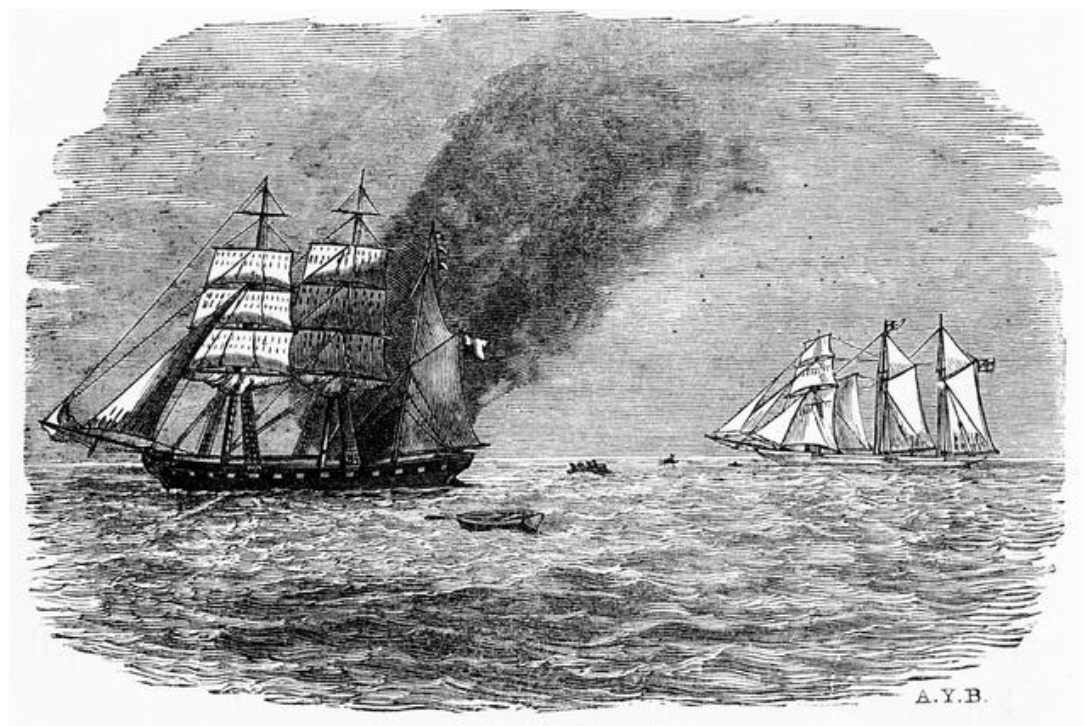
They stayed in the smaller boats only through the following night, however, and the next day when the weather cleared it was found that although the fire was still smoldering, the heat had lessened due to the water that had been pumped into the cargo. Captain Hallet, after consulting with his officers, decided to continue the voyage as far as possible and they reboarded the ship.
Click to enlarge
Their troubles were far from over, however. The weather soon worsened and later the ship found itself in a “perfect hurricane … laboring hard, hove to under bare poles, the lea gunwale in the water” during which time the fire down below continued with large quantities of smoke coming through the holes which had been bored in the deck. Soon the ship’s cabin was filled with an unknown gas and after Captain Hallet retired for the night and when awakened three hours later, he was described as “almost dead” and fell helpless to the deck as soon as he came up for air.
Soon a ship was sighted on the starboard quarter and Hallet hove to and set the ship’s ensign upside down in the mizzen rigging, a signal of distress. The rescue ship, the London packet St. James with Captain William S. Sebor commanding, lowered its boats and soon the entire crew had been saved. Once again, Captain Hallet was the last man over the side, and boarding the St. James, they all watched their former vessel burning until she was a complete mass of flames. Around 10 P.M., she suddenly disappeared beneath the waves.
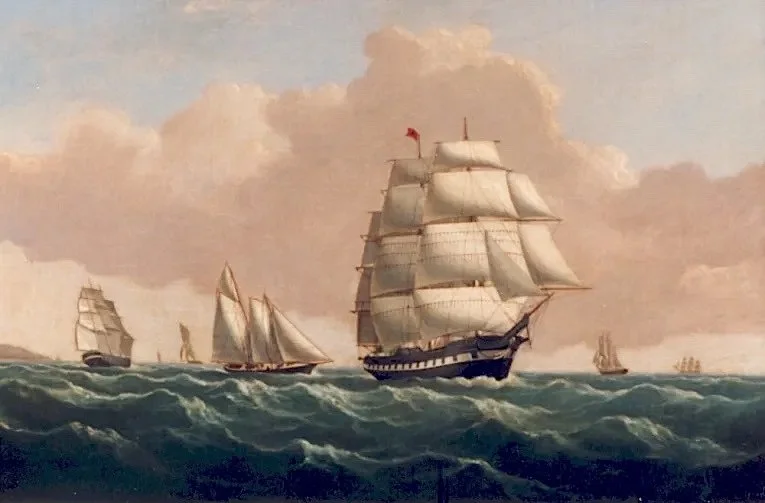
A typical packet ship of the period.
One member of his crew, recounting the adventure, described Captain Hallet as having acted throughout as a “true seaman and efficient commander. Even when it was known on that dark and fearful night… that the fire had broken out and after a long and careful examination we could not locate the spot, and knowing no earthly power could save a soul on board if it once got out of control, he was cool and calm as if the ship was sailing with a fair wind and a smooth sea.”
Bangs Hallet married Anna Eldridge in 1829 and the two survived to celebrate their fiftieth wedding anniversary in July 1879. The marriage was a happy one indeed, although the two were often separated by Bangs’s absence during his long voyages, an all too familiar feature of domestic life of nineteenth century seafaring folk. Of the nine children born to them, only two survived to adulthood. Both partners missed each other keenly. Anna’s sentiments emerge dramatically in a series of letters written to her husband in March and April of 1859 when her health had prevented her accompanying him on his last voyage to Calcutta aboard the ship Gertrude (on an earlier voyage she had fallen ill and had nearly died).
“Bangs, I think of you and feel so much for you that I am almost unfitted for anything… I go about saying, and think how bad you are feeling, and disappointed, and lonesome, you are, I have never felt anything like it in my life to think that I felt as though I could not comply with your oft repeated wishes, and orders to come… O my dear I cannot tell you how much I feel for you. I don’t think that there are many people that do feel as we do. We have, as you say, been long attached to each other, and it is stronger and stronger, I know it is so.”
Bangs, equally lonely and sick at heart, composed poetry he sent to his wife.
If thou wert at my side my love!
How fast would evenings fail
In green Bengallia’s palmy grove
Listening to the nightingale.
If thou my love! Wast by my side
My baby on my knee
How gaily would our pinnace glide
O’er Ganges mimic sea.
His poetry is heartfelt, sincere and its sentimentality is characteristic of the Romantic and early Victorian period in which he lived. His love for both Anna and his children shines through. This was particularly apparent in a twenty stanza poem he wrote to Anna when in the single year of 1846 they lost two children, Marianne, aged three years, six months and four days, and an unnamed daughter only seven weeks old.
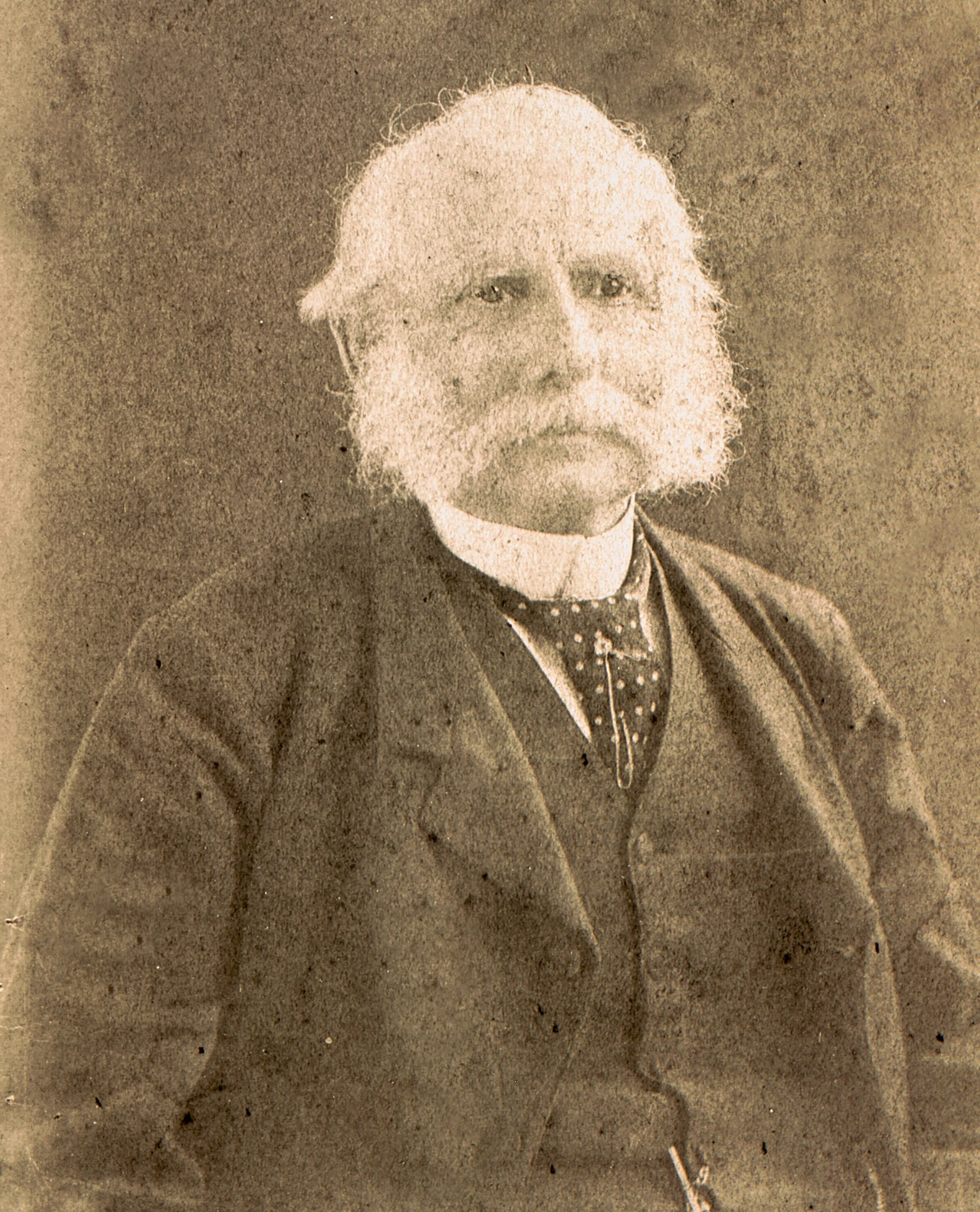
Bangs Hallet, date unknown
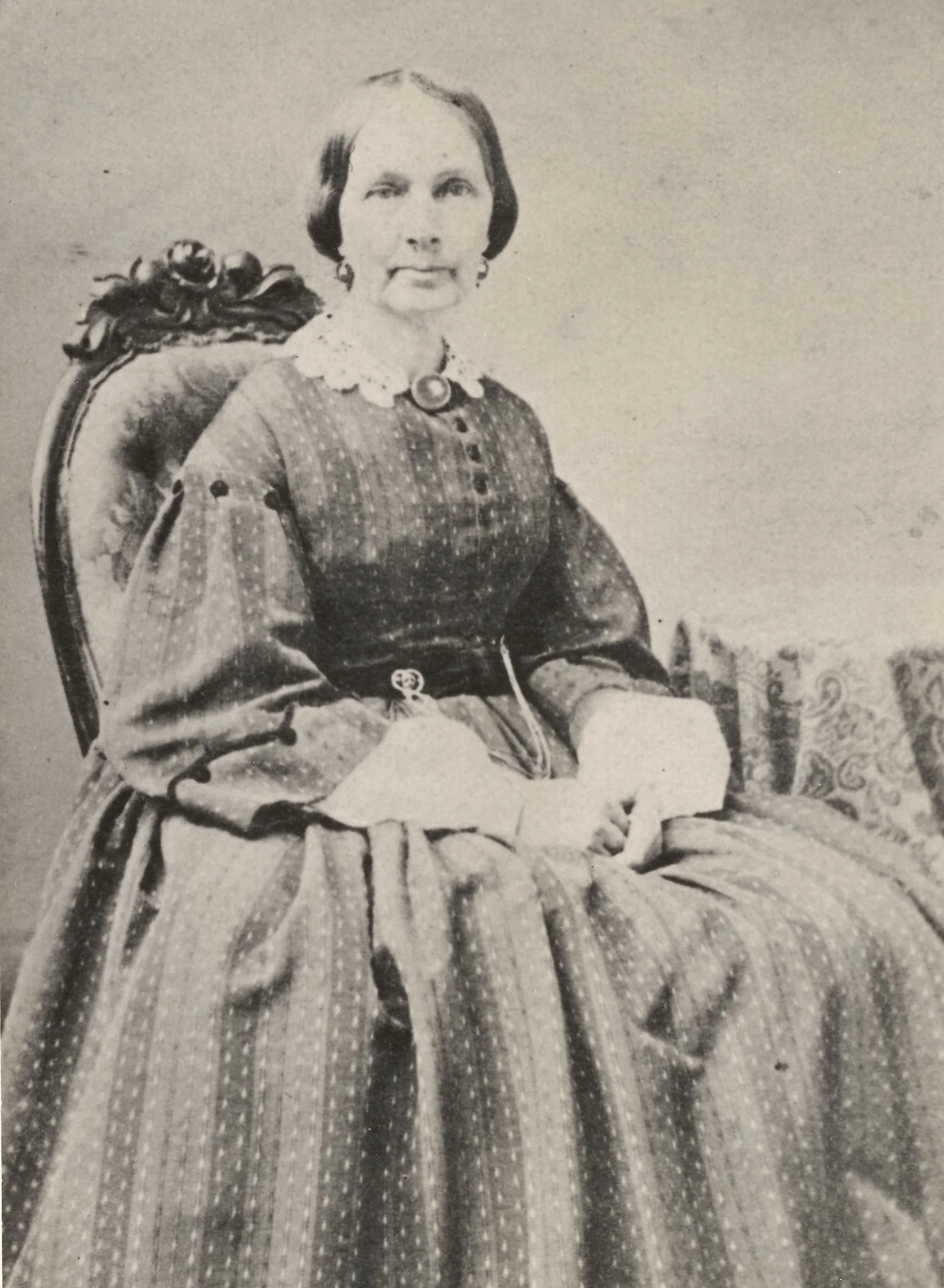
Anna Hallet, 1860s.
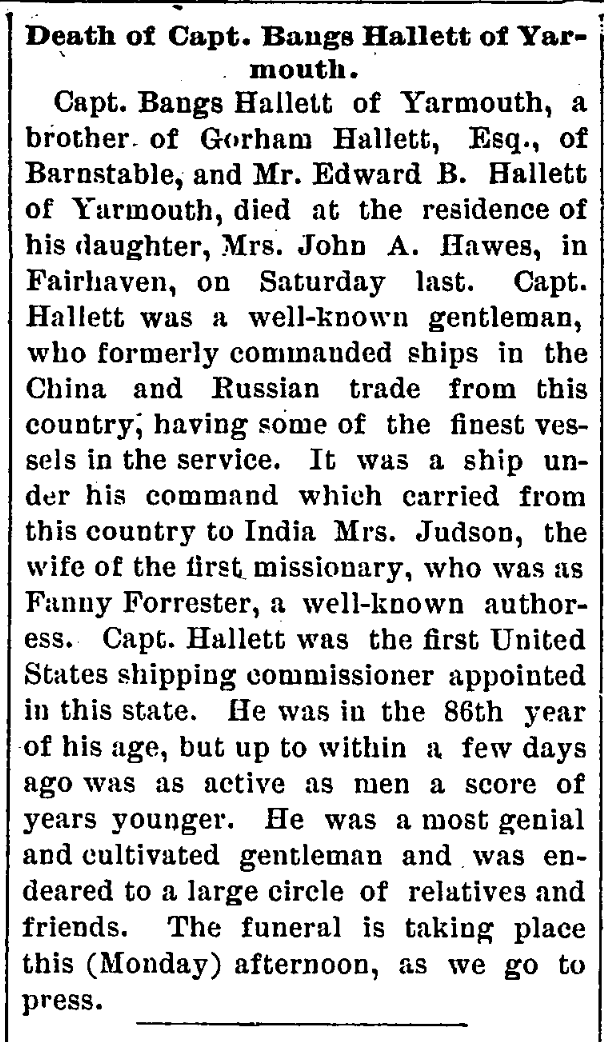
After retiring from the sea, he and Anna spent part of their winters with their daughter Amelia, in Fairhaven. He was the first United States Shipping Commissioner appointed in Massachusetts and worked primarily in Fairhaven.
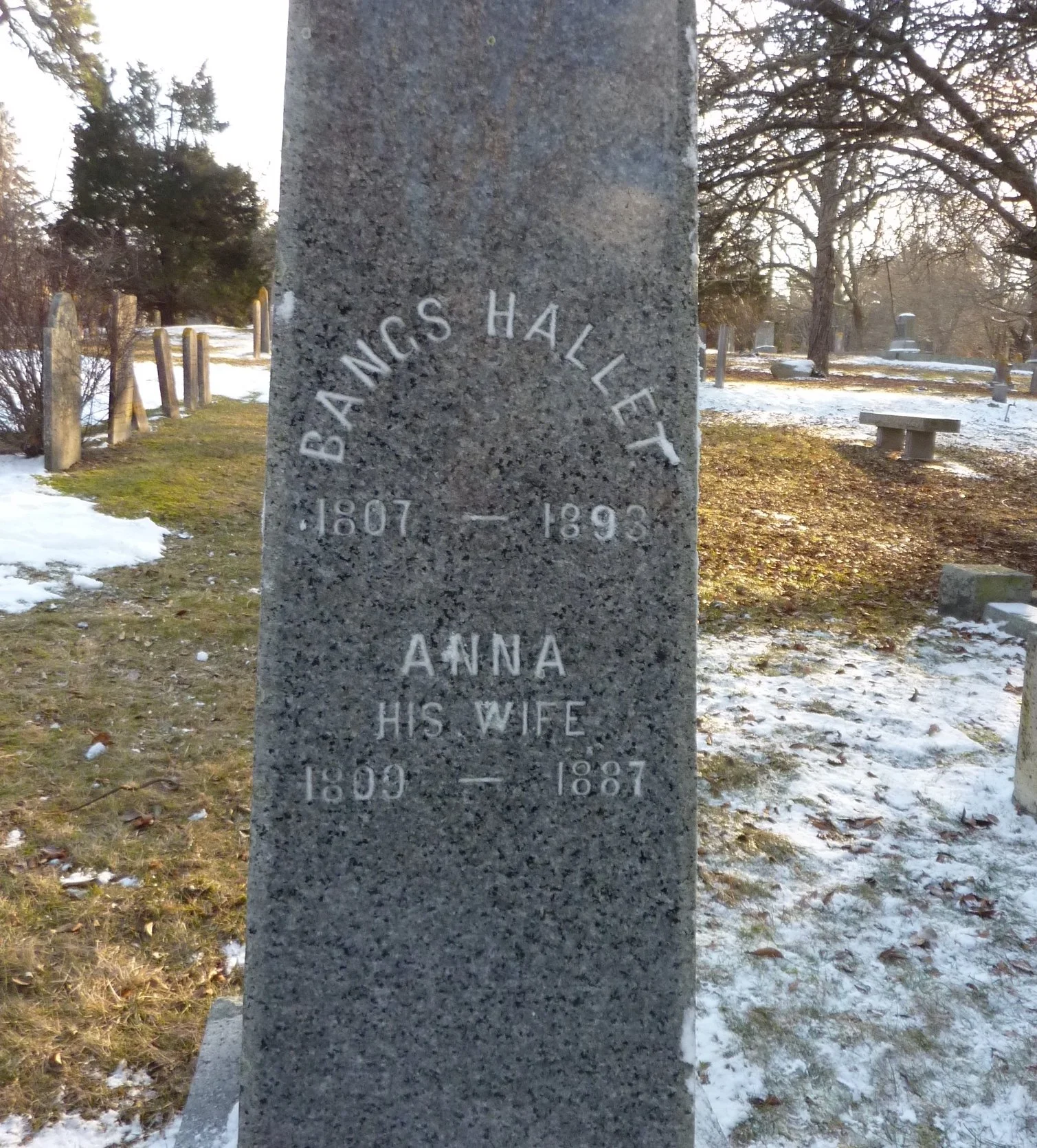
Anna died in 1888. Bangs died in Fairhaven in 1893 at the age of 86. They are buried together in Woodside Cemetery in Yarmouth Port.
Researched and written by William Painter.
The Captain Bangs Hallet House Museum is now open for the season - come and visit! Tours are offered at 11, 12, 1 and 2 pm on Thursday, Friday and Saturday. More information and tickets are available at bit.ly/visitBHH