WHAT HAS MARY DUNN DONE?
What has Mary Dunn done
What Did Mary Dunn do
That brought her fame?
Her good home brew
And her open door
To any who came
By the Pond, By the Road,
That keep her name.
by Margaret Milliken – 1976
Note: There are terms in this article that may offend some. They were extracted as is from historic documents.
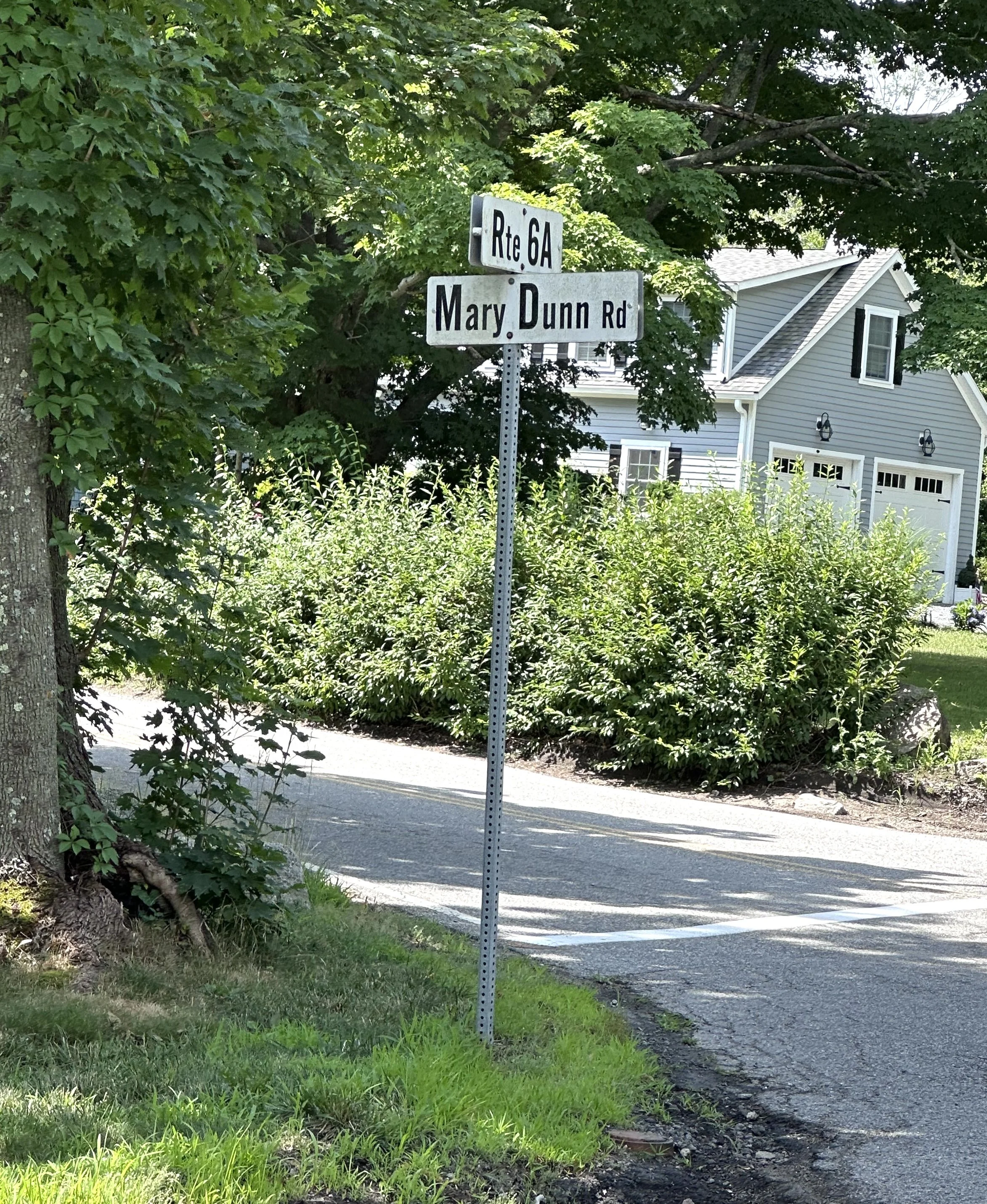
A back road connecting Cummaquid with Hyannis, and a pond near it, are the only evidence today of a rather unusual and misunderstood woman. She is Mary Dunn, who lived in the area about 200 years ago. Because much of what has been written about her has been untrue, it is only natural that her real story remains clouded.
There are at least five myths about her which have little basis in fact. The myths have grown over the years, and include:
-Mary Dunn was a fugitive slave who escaped from the South on board a Cape Cod schooner.
-Mary’s husband was a former slave who favored the South and recruited soldiers on Cape Cod for the Confederacy.
-Mary was a full-blooded Native American.
-Mary was a witch.
-Mary died with a snake twisted around her neck, and her body disappeared.
Only by examining the facts, where they exist, does Mary Dunn become an actual person in history, not just a fictional character. She was a Cape Cod native, not an escaped slave, despite the claims of at least five writers. She was born in Yarmouth on July 6, 1778, according to town records, the daughter of Boston Boston and Lucy.
Boston Boston was listed as a “Negro” and had been one of at least five slaves that Ebenezer Hinckley of Barnstable had willed to his son in 1751. Boston was a common name among colonial African Americans, including a famous Nantucket whaling captain Absalom Boston.
According to hand written notes made by Yarmouth historian Daniel Wing, in his copy of Frederick Freeman’s, History of Cape Cod, Mary’s mother Lucy was a “full blooded Indian woman.” That note is made immediately after the following passage in Freeman’s book – “In 1797, there was left standing one wigwam only; it was on the banks of the river, and was occupied by a [indigenous woman] and a Negro.”
If Wing is correct, both the identification of Mary Dunn as black and the assertion by George Lyman Kittredge and others that Mary was an indigenous woman are incorrect. She must have been of mixed race, half black and half indigenous.
There was a close relationship between African Americans and indigenous peoples in the years between the American Revolution and the Civil War and they were often grouped together in the public mind, but there were few pure-blooded Indians left in this vicinity during Mary’s time.
The black man identified by Freeman as living in the “wigwam” with Lucy was not Boston Boston, who must have died soon after Mary’s birth. Town records show Lucy married another black man, Cato Judah on April 16, 1786.
Cato Judah may have been the slave Mrs. Lucy Bourne of Yarmouth put in her 1782 will, which “gave her Negro boy Cato to son Richard, when Cato arrived at 35 years, her said son shall manumit him.” According to records, Lucy and Cato had two more children, Richard born in 1786 and Bettsey born in 1789.
On January 4, 1807, Mary Boston married Thomas Dunn with Rev. Timothy Alden of Yarmouth officiating. Thomas Dunn and his family are listed in the 1810 Barnstable census under the column “All other free persons,” a column used only for non-white inhabitants. The records of the East Parish Church say Dunn worked as a fisherman out of Barnstable harbor and was lost at sea in the summer of 1832.
The 1810 census lists Thomas Dunn in Barnstable with two in his household. Mary and Thomas had at least one child, a daughter named Lucy, and perhaps a son as well. The Yarmouth Register of July 25, 1839 reported , “Died – In Barnstable, Miss Lucy Dunn, daughter of the late Thomas Dunn.” Thomas Stetson noted in his journal for July 23, 1839, “going with the hearse to Mary Dunn’s daughter funeral $1.00. All other charges 75 cents.” Where Lucy was buried is not recorded, though it was likely somewhere near their homestead.

The Dunns did not own property in Yarmouth or Barnstable. No deeds in the Registry of Deeds list their names. They were probably squatters on land belonging to Zenas Bassett on what would now be the northeast corner of the Hyannis Airport. An 1887 deed on the land makes the first known reference to Mary Dunn’s Road.
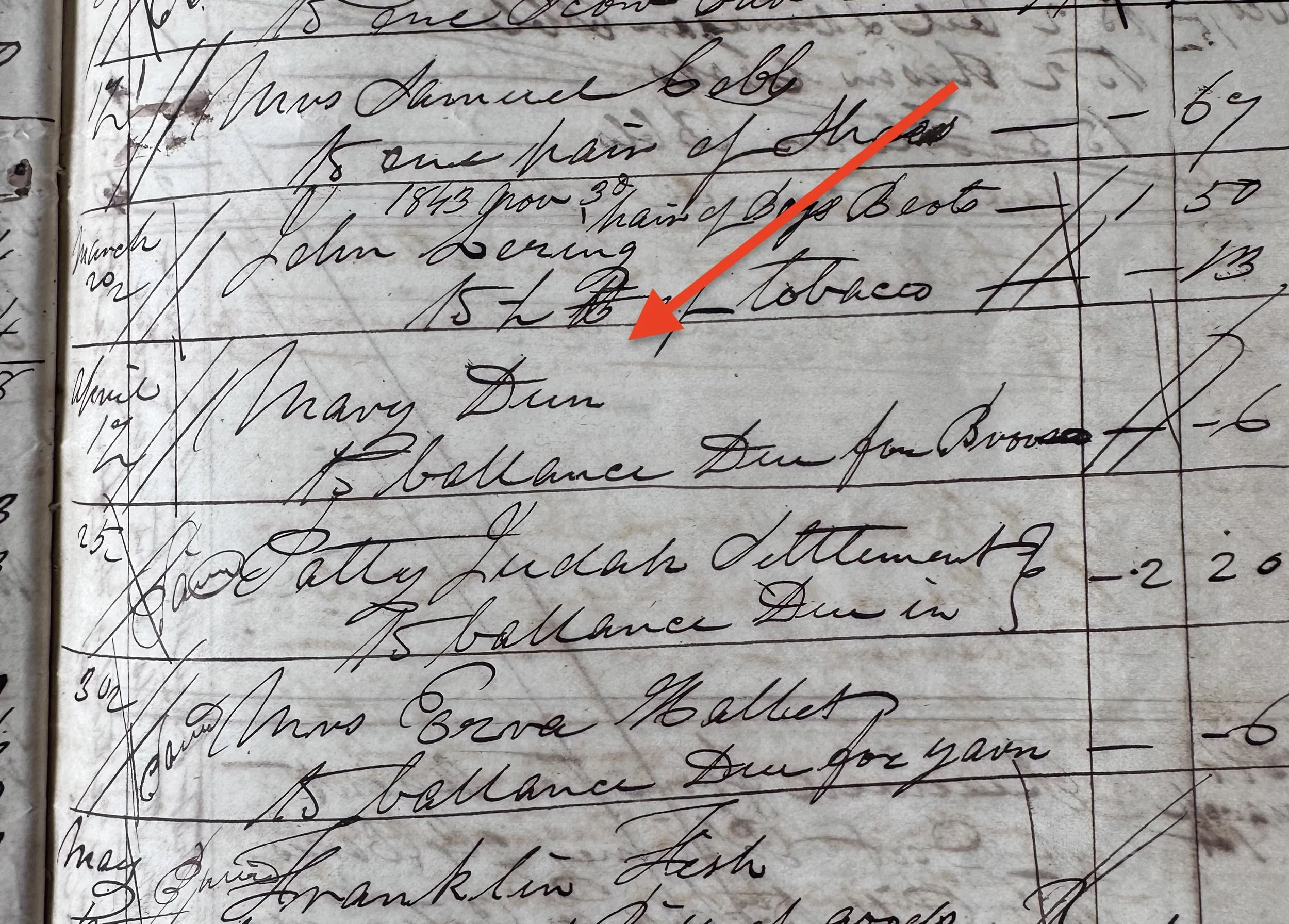
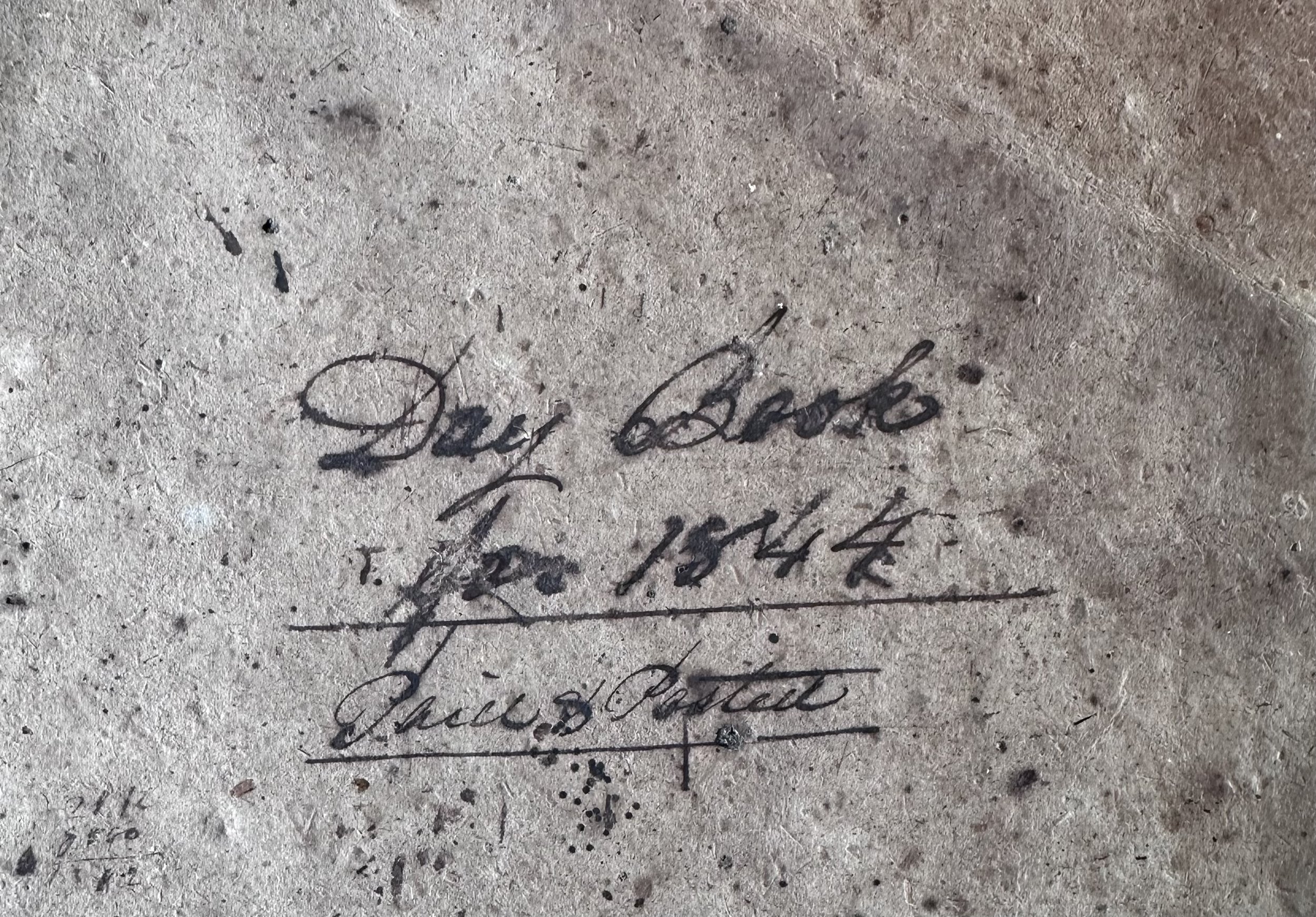
Thomas and Mary Dunn took care of black and indigenous poor people in their home for both Yarmouth and Barnstable, the house supposedly on the shore of what is now called Mary Dunn pond in Hyannis. An 1825 Yarmouth was charged for 78 cents for cloth and thread for a “black by name Thadeus Thompson living with Richard Cato at Thomas Dunns.” Mary purchased some of her supplies at the Cobb and Smith store at Central Wharf in Yarmouth, and their store day book (in the HSOY archives) records her as still having a balance due in 1844.
Mary sold spirituous liquors out of her home. She was known to brew “yarb beer,” yarb being colloquial term for herb. Herb beer may in fact have been fermented herb tea - or not. We simply do not know. There are many stories of Mary’s famous potent concoctions.
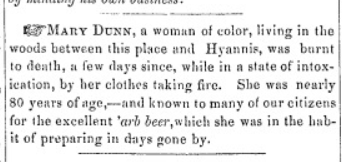
Mary was a pauper by 1846, as she was given supplies that year by Barnstable’s Overseers of the Poor. The Overseers preferred to let the poor dwell at home and help them there, rather than remove them to the town’s Alms House. This may have ultimately led to Mary’s death. Her house burned in 1850 and she died in the blaze, as reported in the Barnstable Patriot.
Charles Swift, editor of the Yarmouth Register and author of the History of Old Yarmouth, is responsible for creating the myth that Mary Dunn was a witch, prophet, and fortune teller. In an article he wrote in 1896, he asserted that Mary was more than 100 years old. Swift unwittingly combined the lives of Mary Dunn and a woman who had lived in the area who died in 1790. This woman was Lizzie Blatchford, also nicknamed by locals as Liza Tower Hill. She lived near where Mary later resided. She was fined in 1773 for selling spirituous liquor without a license. Lizzie/Liza also had several other fables written about her, including her ability to stop a horse by looking at it and having black cats. Where Swift got the story that Mary Dunn was “found prostrated with stupor, with a large adder entwined around her neck and one on each ankle in the wild wood” is anyone’s guess. The woods where Mary Dunn lived were called “The Enchanted Forest” by nearby residents, perhaps because of Liza Tower Hill’s earlier residence there. Or maybe it was also that you could buy liquor from both Liza and later Mary Dunn and the forest seemed “enchanted” as you made your way home!
Swift called Mary Dunn an Indian, and said she had magical powers that allowed her to drive ashore a Swedish vessel on Sandy Neck. Supposedly, she was accused of using her witchery to wreck the vessel. While early Indians in the area were thought to have magical powers, the most famous was Granny Squannit, a mythological figure from Wampanoag folklore, and she used her powers to heal and help keep children on the straight and narrow.
Obtaining information about common folk who lived 200 years ago is never easy. In Mary’s case, there are several documents which allow us to track her life. It doesn’t need embellishment. Mary was a caring person who helped others who were less fortunate. A road with her name on it is a constant reminder that people of all types contributed to the fascinating history of Cape Cod.
Written by Bill Barnes, using research and material by Duncan Oliver and Jack Braginton-Smith
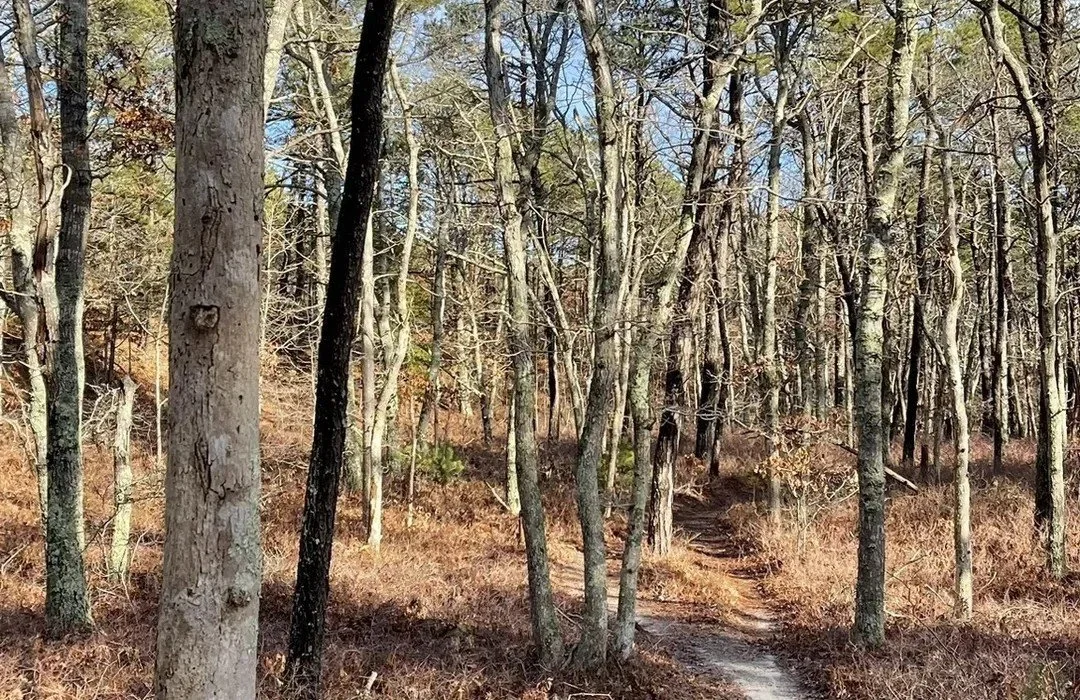
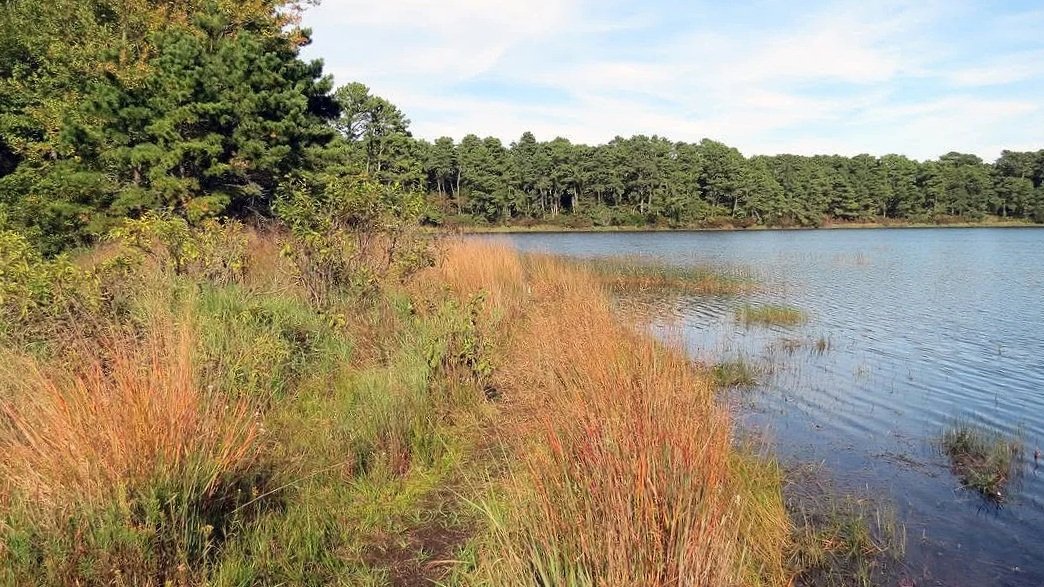
Wooded trails around Mary Dunn pond