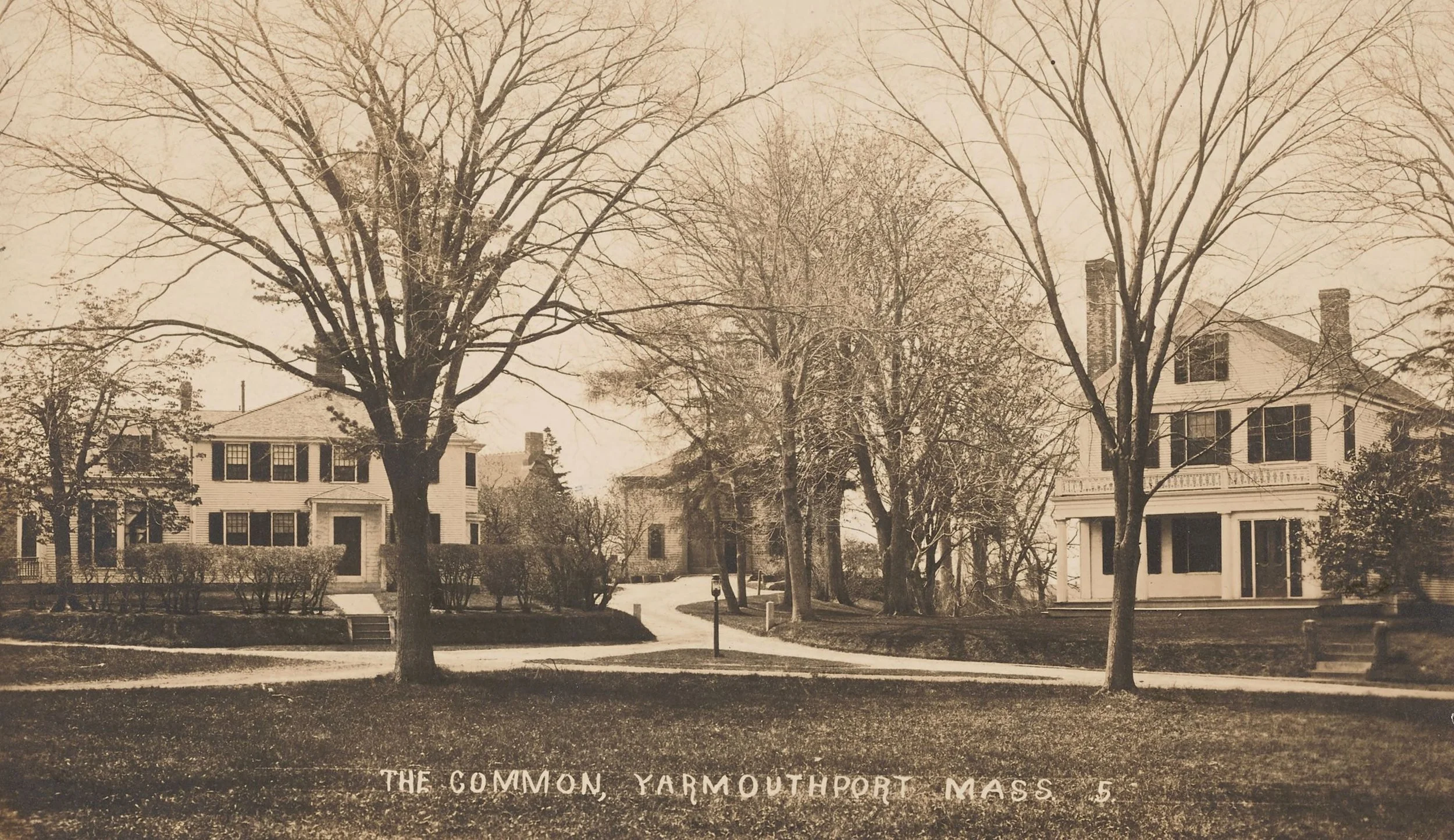
Yarmouth Port’s quaint common, surrounded by Strawberry Lane and the Old King’s Highway, didn’t always have such a revered place in the hearts of townspeople. The marshy area was common land almost from the day the town lands were divided by the original proprietors.
Those proprietors, in February 1686, granted to John Thacher many acres in this section of Yarmouth, with the following proviso: “It is agreed and granted by the said committee, that the clay land about the plash beyond the rock shall lie for a perpetual common, for the neighborhood to dig clay and make brick, as they might have occasion, and never be fenced in by anyone (bold by the author).” That final phrase is one that would make the original proprietors stare in amazement, should they return today! The “plash” referred to is an old fashioned word referring to a small body of still water.
What isn’t so certain, is the possible earlier private ownership by Thomas Starr, one of the first settlers. In 1640, he traded to the town one acre with clay for two acres elsewhere. Whether this was the area where the Yarmouth Port common is today, the area along Thacher Shore Road where a brickyard existed later, or another area is not certain.
The clay was used by locals to make bricks and over the years, townspeople would back their carts up to the pond and dig it out. Water filled the area. Old time resident Ella Bray wrote that one of her relatives remembered in 1833 that the northern half of today’s common was swamp and the southern half was a pond.
In 1859, the town of Yarmouth approved the leveling of the land and building a fence around it. So much for what the original proprietors had stated when they set this area aside! The land was to be leveled because those who dug the clay only took the clay and left piles of dirt around the holes.
After the Civil War, photographs show the common with a fence, and water in it. Small boys are even seen sailing their sailboats right in front of what is now the present Edward Gorey museum.
The common, looking north.
Boys playing with toy boats on the common in the 1860s. The Simpkins home, now the Gorey House, is in the left rear of the photo.
The 1859 agreement was soon found to be unsatisfactory, as stagnant water still remained, and mosquitoes and other biting insects dearly loved this sort of environment. Add to that the fact that the pond was near the road where horses traveled, and water runoff from “road apples” became putrid so the pond stank. Dead and rotting vegetation made the area smell even worse.
The influence of two Yarmouth residents who owned property around the pond was enough to have an article inserted for the 1884 town meeting. The article was “To see if the town will authorize the filling of Common Pond, so called, on the north side of Yarmouth, without expense to the town.”
Who were those with influence? - Henry C. Thacher and State Representative Nathaniel Stone Simpkins. Speaking for the article at town meeting were Captain Bangs Hallet, Thomas C. Thacher, and Thomas Cook. Cook was Henry C. Thacher’s hired hand, who drove his carriage and ran Thacher’s farm.
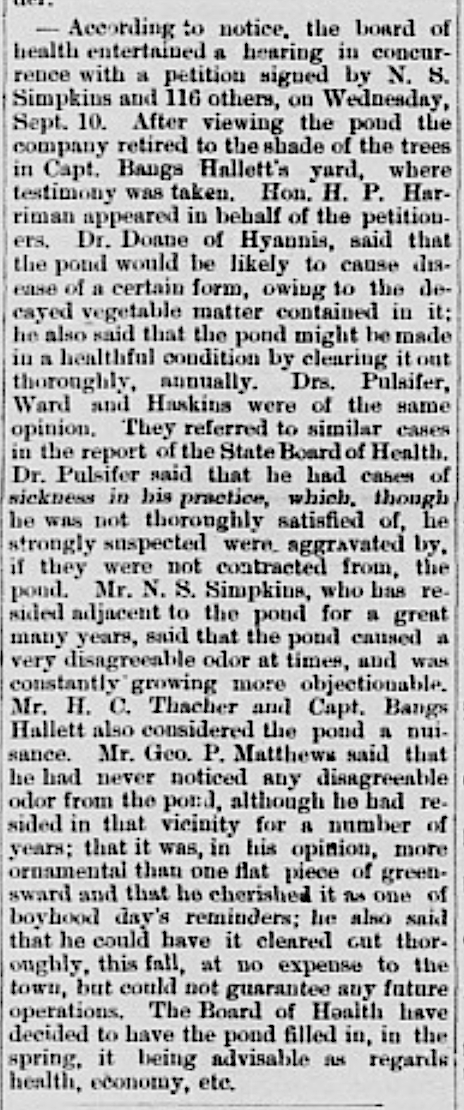
After some disagreement at town meeting the neighborhood took another tack. A petition was created and given to the health board, signed by Nathaniel Stone Simpkins and 116 others. The petition asked for a meeting at the pond to see its health problems. The meeting took place on September 10, 1884, beside the home of Captain Bangs Hallet. According to the Yarmouth Register, “after viewing the pond the company retired to the shade of trees in Capt. Hallet’s yard.”
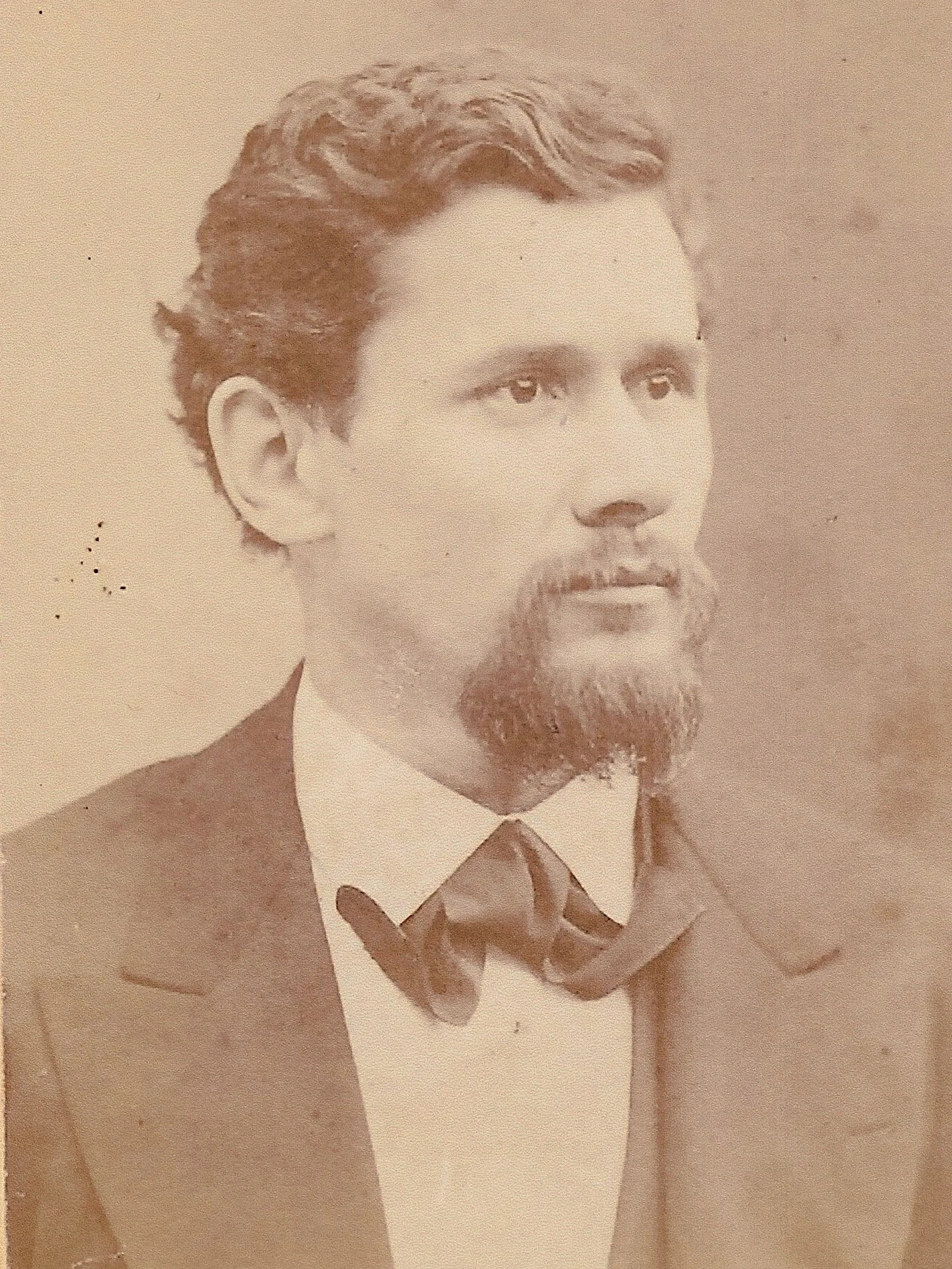
Dr. Thomas Pulsifer, born in Maine, was a beloved doctor in Yarmouth and Dennis.
Doctors testified that the pond was a hazard. Especially effective was Dr. Thomas Pulsifer’s testimony that he had cases of sickness that he strongly suspected were contracted from the pond. Soon the Yarmouth Register reported that the “Board of Health have decided to have the pond filled in.”
Captain Charles Bray was awarded the job for the sum of $99. That he didn’t overfill the area can be seen on photographs taken since that time. Those photographs show water near the south end and a very wet northwest end where water collected with every hard rain.
The common was used for town events. At the end of World War I, a bonfire was built there as part of the two day celebration. Thacher Taylor Hallet, the Public Safety Chairman, organized the celebration. In 1926, the town placed a World War I memorial at the northern end of the common. The dedication took place September 4th, and the Yankee Division’s commanding general, Clarence Edwards, was the main speaker.
The fence which surrounded the land that was “never to be fenced in by anyone,” didn’t last forever, and it wasn’t replaced when it rotted out. It was seventy-five or more years later, that the Historical Society of Old Yarmouth came to the rescue.
In 1985 the society decided to put back the fence. Member Lee Marchildon was placed in charge and the sum of $3000 authorized. The fence was installed, mirroring the original fence around the common, and a strawberry festival was held for the dedication. A time capsule was buried at the foot of the flagpole.
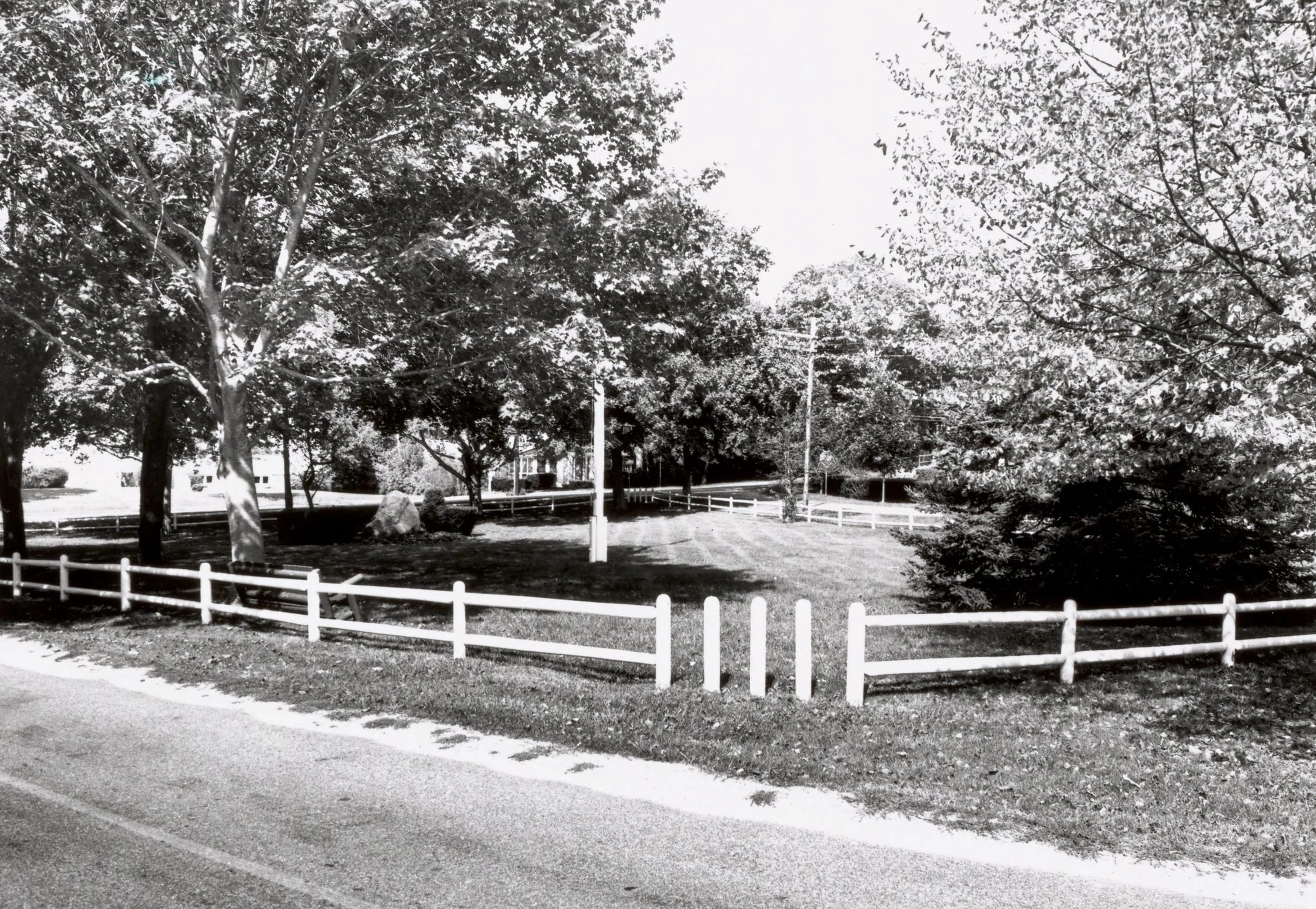
The Yarmouth Port Common with the new fence, in 1988.
The following year, the society, at its annual meeting, voted to paint the fence white. The repainting of the fence and the repairing of rotted posts took place every three or four years until the year 2004. At that time it was discovered that the only thing holding the fence together were the layers of paint. The historical society made the decision to replace it. Generous donations from neighbors, the Edward Gorey house, and a significant donation by the Perera family, made it a fiscally feasible project for the society.
The fence still isn’t legal if one goes back to the original 1686-7 proprietor’s wishes, and some speculate that’s why several of the houses around the common are haunted. But the common is now a space where people can gather, picnic, sit on a bench, or even take a yoga class without sinking in the mud. We think those proprietors would approve.
Written by Duncan Oliver (using research from the 1970s by Charles Holbrook)