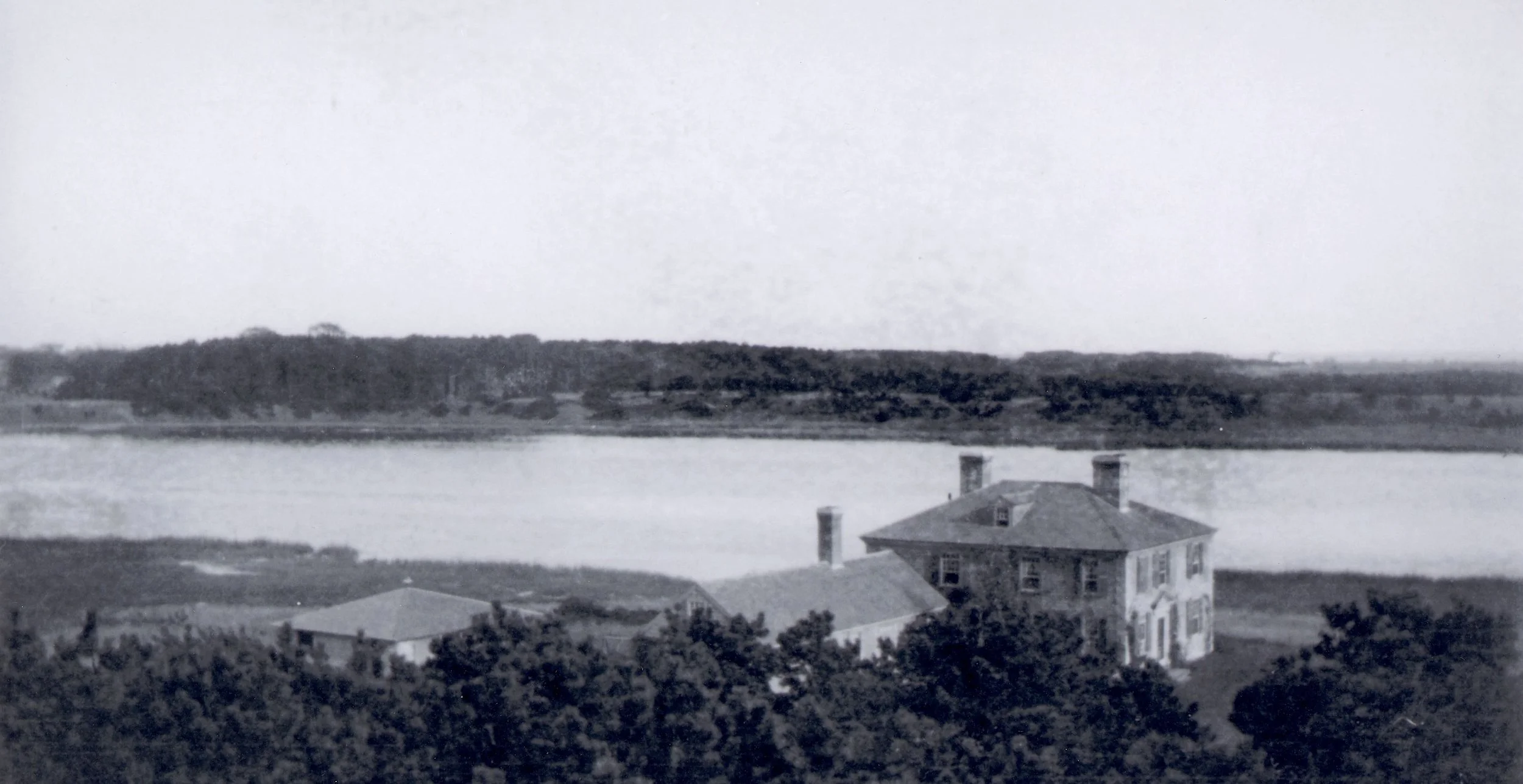
Excerpted from an essay written by Ted Frothingham and privately printed in his book, With a Grain of Salt. Cover image is the Frothingham home on Bass River.
I came with my parents to South Yarmouth in 1906. Before that my father had visited with the Hallowell family on River Street as far back as 1880 when he was a freshman at Harvard University. Stories of early days have been told to me so often I can picture life in those summers.
The Hallowells were some of the oldest summer visitors in this community. Auntie Anna Hallowell and her daughter May Loud used to drive down with the horse and carriage each spring from their winter home in Medford. It was a two-day trip and they stopped in Plymouth for the night. The horse Prince was a great favorite, a member of the family. On boat racing days before the turn of the century, Aunt Anna always insisted someone go out and open the door to Prince's stall, which was on the front of the barn facing Bass River, so that he could watch the event. I remember pictures of him looking out of his quarters.
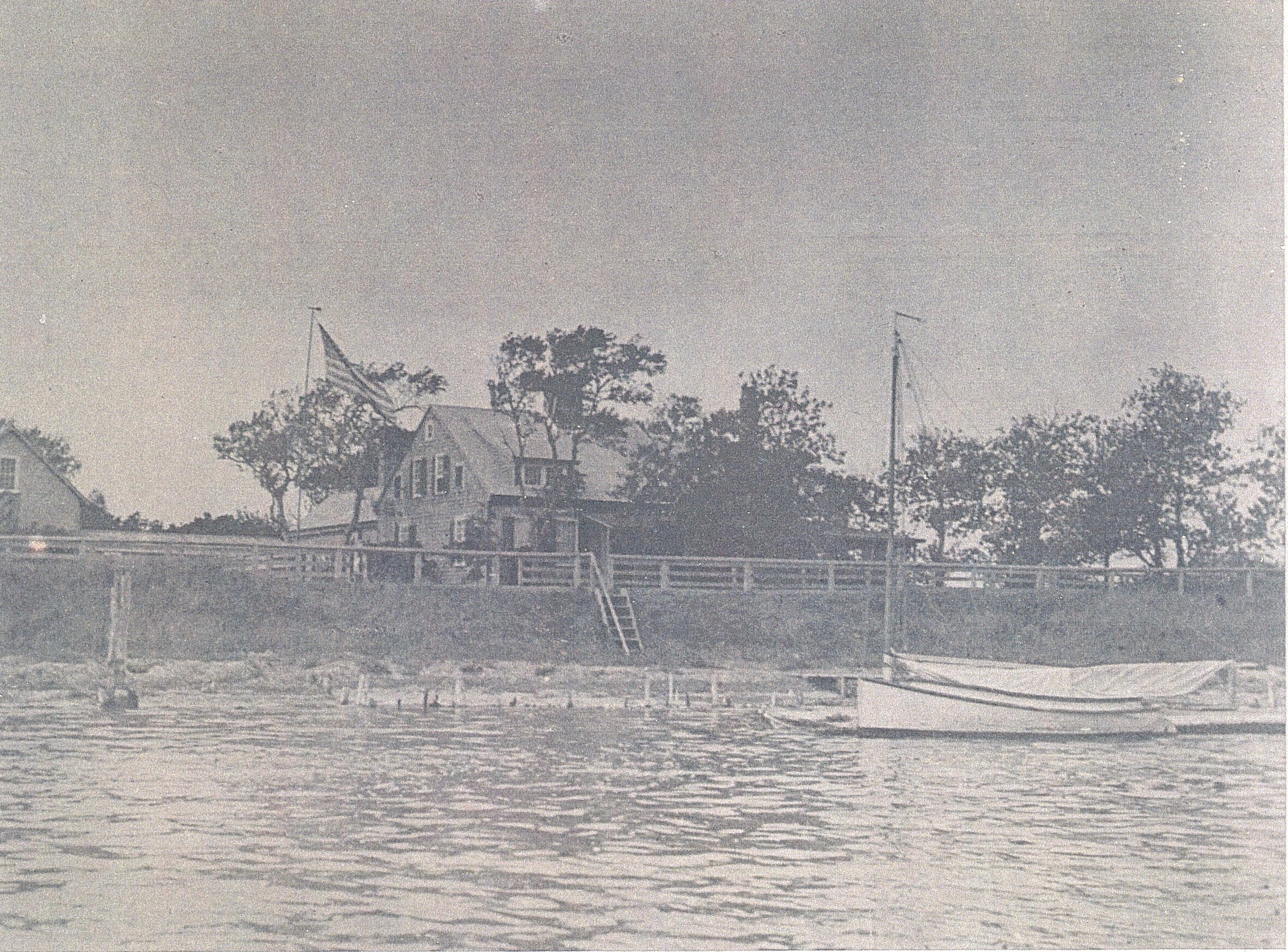
The Hallowell home on River Street.
When you look at the shore front from Bass River to Parker's River today it is hard to realize that through much of my youth there was no Shore Drive. We used to go on picnics to the high bluffs about where Surf and Sand now stands. Laurie Berry, who picked up the rubbish in town, had a blue cart and horse and in this wagon we rode down a winding wood road, through what was virgin pine all hung with gray moss, to the back of a bluff. Scampering up this we could slide down into the Nantucket Sound beach in an area that was completely wild. There wasn't a house on the shore from the Bass River entrance all the way to Great Island.
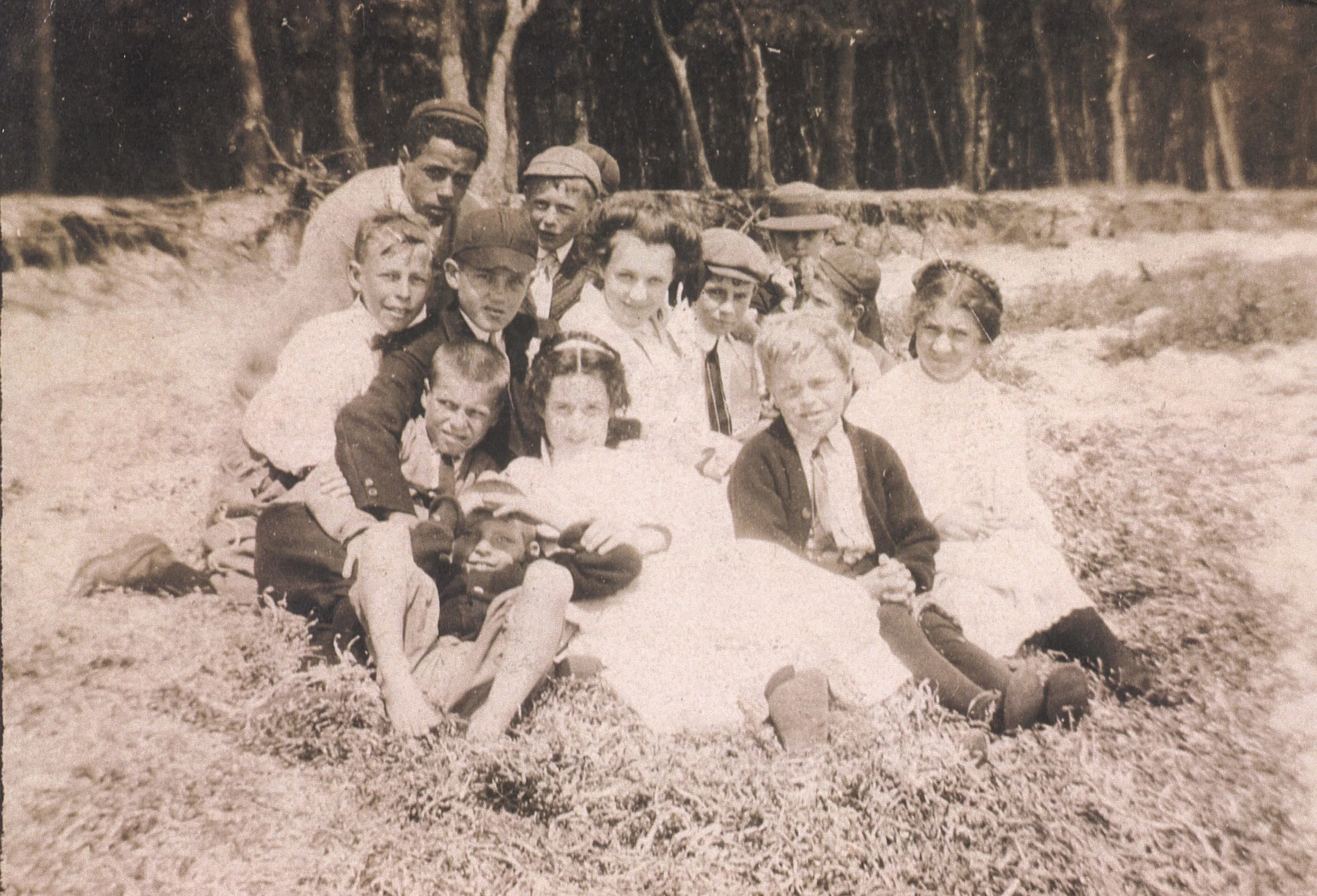
Yarmouth kids at a beach picnic
Lower River Street, in the area of the Bass River parkway, used to be the site of the old bath houses that lined the river's edge. People came down to swim in the clean cool water of the Sound. These unsightly buildings, with numerous knot holes and wide cracks, allowed only a modicum of privacy for changing clothes. In the early spring some of my friends and I took the Saturday train with our bicycles from school at Milton to the Cape, and then rode back the 70 miles on Sunday to be on time for chapel. I recall we all got in trouble for this excursion, as we fell asleep in chapel that evening from sheer exhaustion. On these trips to the Cape we always went swimming no matter what the season.
Water for plumbing systems was pumped by a string of windmills with high tanks to give a gravity feed. As a young lad I had a business of looking out for neighbors' water works. When a high wind came up at night I had to jump on my bicycle and make the rounds of the mills to shut them off before their metal fans were blown to pieces. More often than not the tanks were overflowing so every shut off involved a shower bath while I secured the brake below the water tower. It was a well-earned 25 cents per week per mill. In the fall when the summer folk retreated to their winter homes in the city, Horatio Bond came and stripped the fans off the windmills and emptied the tanks. They then served as homes for squirrels and chipmunks so that by spring it was an operation to clean them out. Occasionally squirrels fell into the tanks and drowned and gave the water a rancid flavor. We had a direct hand pump in our kitchen, so we never had to drink the squirrel water, as we called it. I never heard of anyone dying from it though.
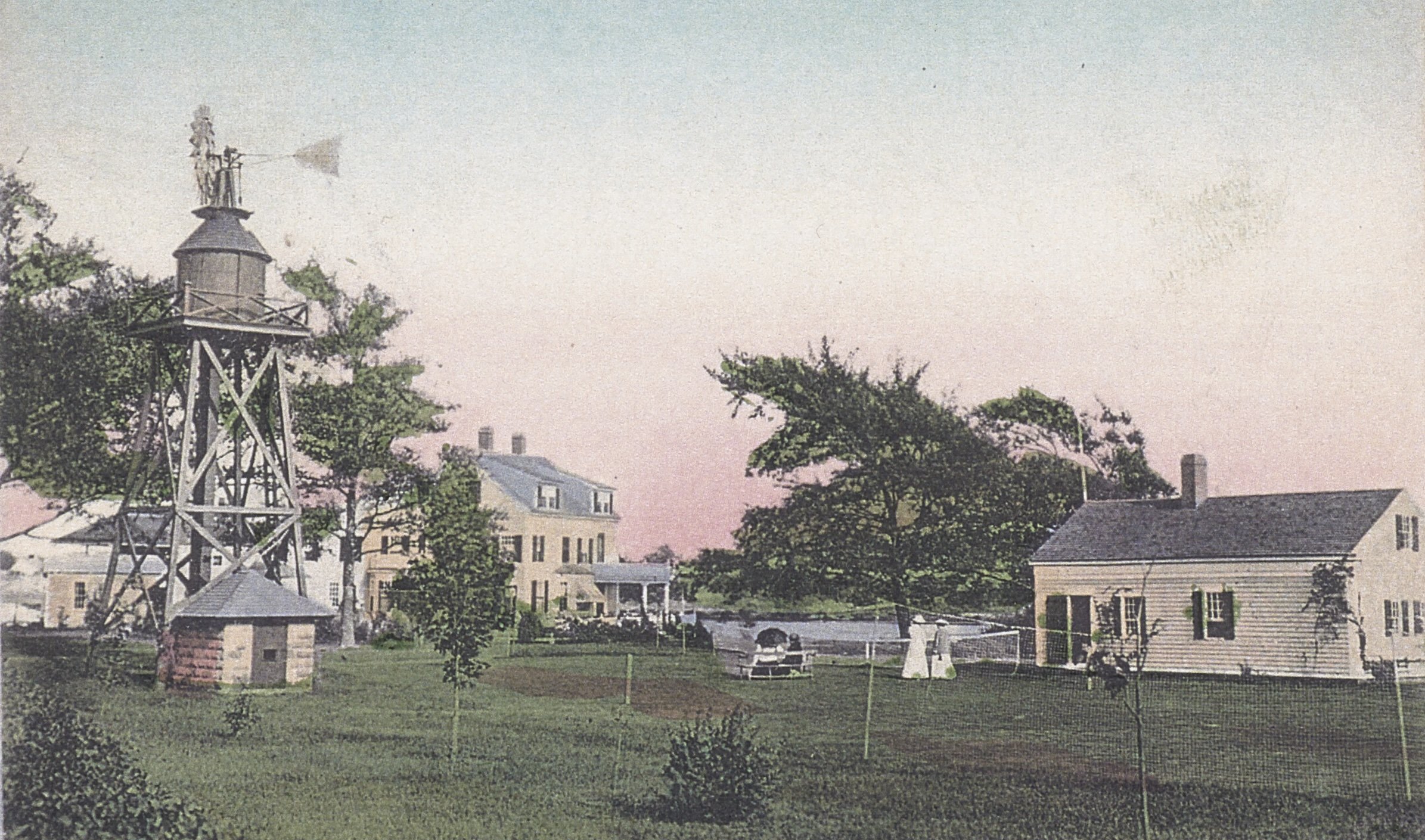
The Bass River home of Dr. Abbott, with a typical gravity feed windmill.
Automobiles were a curiosity. There were five or six around South Yarmouth, and they were often hauled home by horses when they came to grief. An all day trip to Chatham I once made in the Donald's car stands out vividly. People wore dusters and goggles and had lap robes to keep off the chill. Many of the old headlamps were operated with gas carried in tanks on the running boards.
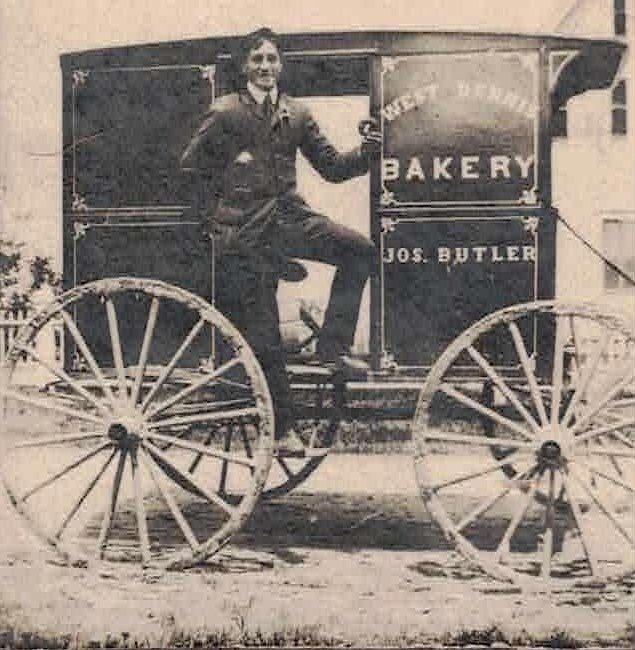
West Dennis Bakery delivery (from the Priscilla Sears White collection).
When you came to the Cape for the summer you really came to stay put, except as you got around by horse and carriage, bicycles, or walking. Two trips to Hyannis a season were about the limit. Shopping was no problem as the trades people all came to you at your back door. Clarence Nickerson and Mr. Long came in several times a week with their wagons laden with fruit and vegetables. Mr Hamblin came by weekly with the bakery cart and hermit cookies. The fisherman and butcher each had a truck with a back that swung up to give you shade while they cut the meat and fish on the spot. Jim Baker, the iceman, who made it through life with only one arm, came twice a week with huge cakes of ice that he lugged into the house and hove into the high door in the icebox. The drippings from the box came out of a lead pipe in the bottom that went through the wall into the lilac bushes. a slimy mess, but the lilacs loved it and had the best blossoms of all.
We had a crank type magneto phone that had as many as 20 parties on a line. You had to listen sharp for your call, three long rings and two short ones, cranked out by the operator in Hyannis. The phone was ringing most of the time with one customer or another, so they were almost not worth having. If you wanted to call out, it was invariably being used by some neighbor who hated to give up the line. Besides this all 19 other parties could listen in on anything you said by just lifting the receiver when your number rang. My father had the telephone taken out after years of frustration and thereafter my sister and I were dispatched on our bicycles with written notes for five cents a trip.
if the train left the South Yarmouth station at 4:15 p.m. Charlie Brown would be shouting at the door at 3:00 p.m. to allow time for the drive through the sand ruts. He carried the US mail and had to be on time for all trains. There was another consideration - he liked to be at the railroad station half an hour early to gossip with Frank Crosby, Frank Collins, and Harold Kelly.
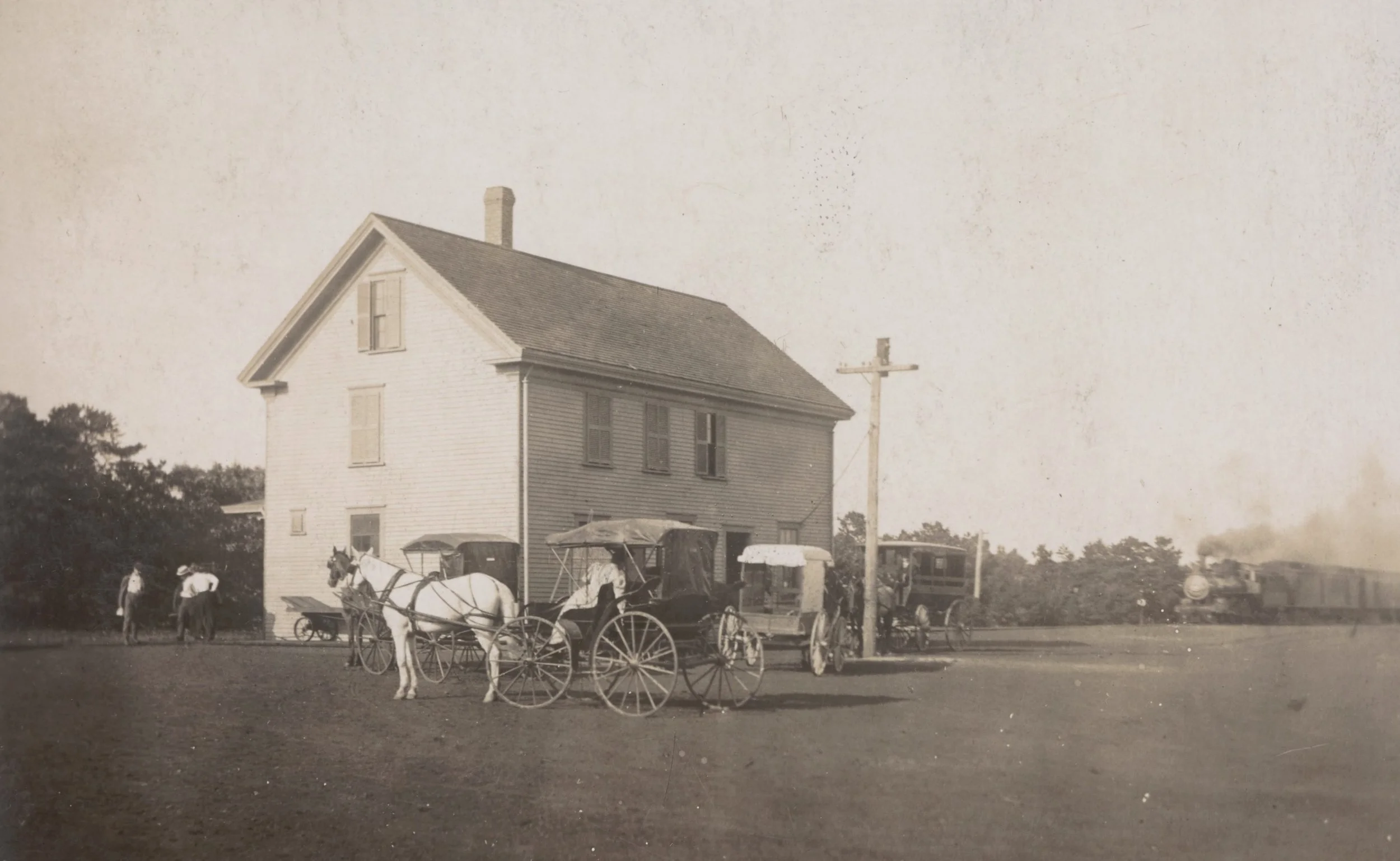
The former South Yarmouth Railroad Depot.
Betty and I used to bicycle out to see Dad off, or to meet his morning train from Fall River. We left early in blueberry season to sit by the tracks and load up our coffee tins. It was a cinch to beat the stage with a bicycle, though we often took ugly spills slewing around in the sand on Station Avenue, trying to get around a wagon. If the wind was right you could hear the train whistling for Barnstable, and then for all the crossings as it came nearer. Finally engine 841 appeared around the curve and swept into the station. It was always a thrill. Dad's kisses smelled of shaving cream and soot, and we knew his bag was sure to have a gift for us like a bicycle lamp or a cyclometer.
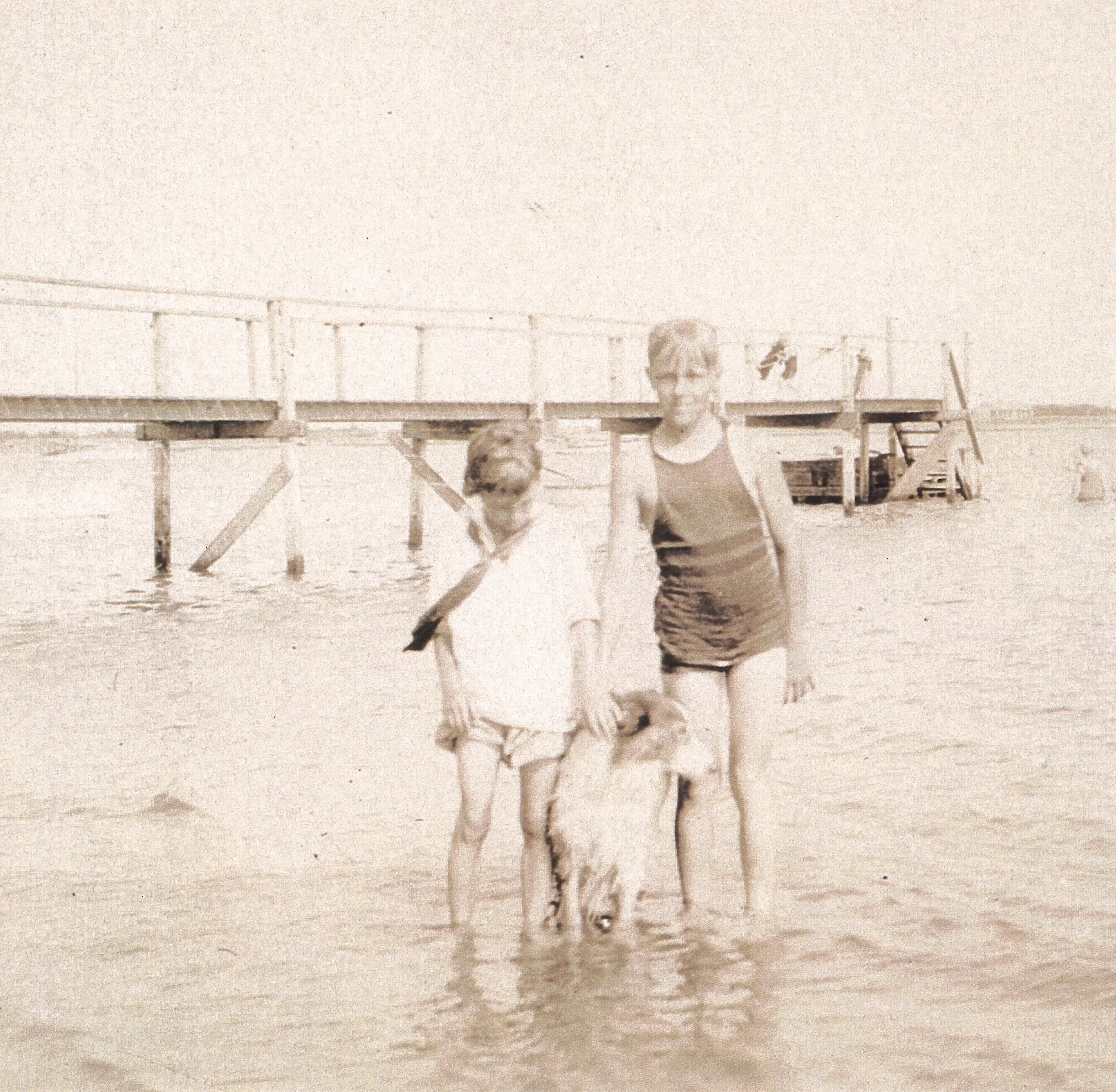
After our welcome we were off for home dashing on our bicycles to see how much ahead of his arrival we could be. Usually we were in our bathing suits and waiting on the float for him to join us for a noon swim. Looking back, life on Cape Cod prior to 1925 seems like a dream.