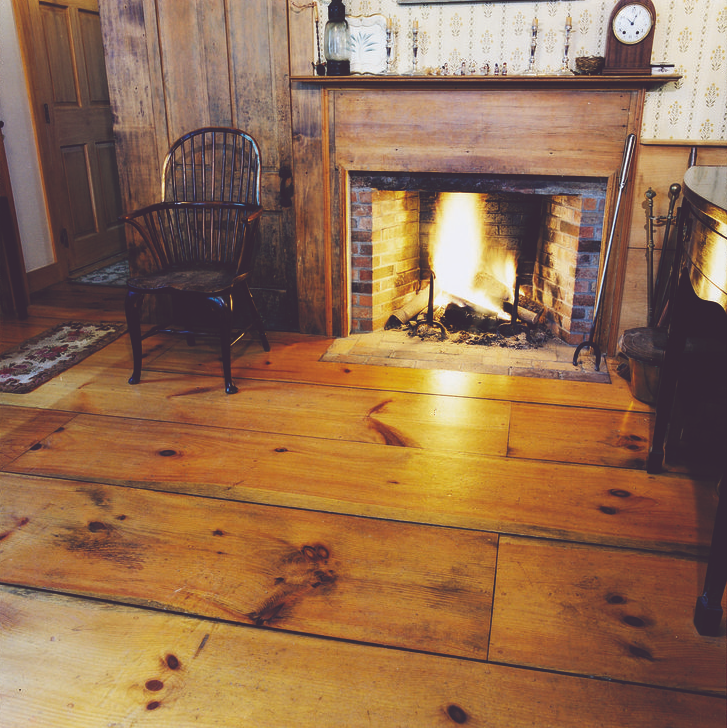
Those much-admired wide pine boards found in antique homes and early furniture were, at one time in our history, illegal to own. They were the property of the King of England!
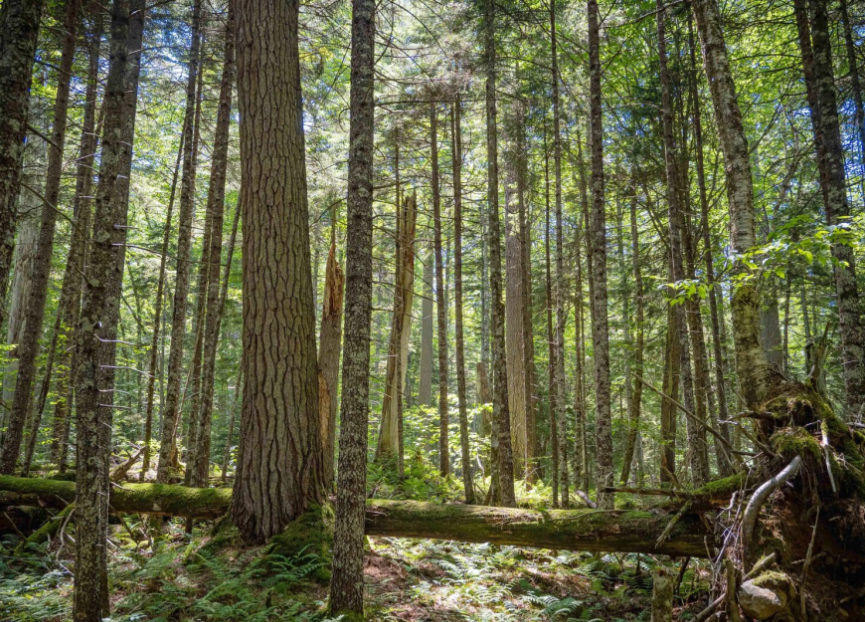
The forests of England were devastated by the middle ages. Wood for fires and building materials was scarce and in great demand by both the government and the growing population of the relatively small island nation. North America on the other hand was densely forested by old virgin growth. The Native Americans did not build sailing ships or large structures that required such trees. Once colonized, the forests of America would be of prime interest to England for the lumber needed to meet their demands, especially for their large navy. Anyone who has seen early photos of Cape Cod knows how treeless it later became.
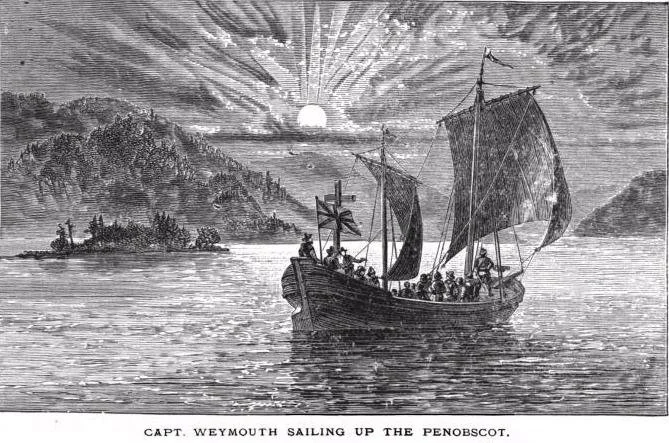
The colonists were not the first to set eyes on the lush forests of America, especially the tall white pines, which would play such an important role in American history. In 1605 English explorer Captain George Waymouth (old spelling of Weymouth) sailed the Maine coastline along Penobscot Bay in his ship the Archangel. He wrote having, “Found notable high timber trees that would make masts for ships of four hundred tons.” Within two decades after the Pilgrims landed, mast making would become the first major industry in the colonies. White pine is lightweight, flexible, and strong, making it the ideal material for ship masts both large and small. Completed masts as well as raw trees were exported to England, the Caribbean islands and many other ports around the world.
A pine destined to be a mast for a large vessel would be hundreds of years old, the diameter at the base would be five feet in circumference, one hundred and twenty feet in length, and weigh approximately ten tons. Because of their size and weight, the existing vessels of the day could not handle such a large cargo. Decks had to be lengthened and made stronger to accommodate the large masts, which led to an increase in the shipbuilding industry.
Timber surveyors marking pine trees for the crown.
During the Colonial period, the King of England officially and legally “owned” all the white pine trees in America. He appointed a group known as, “The Surveyors of Pines and Timber,” whose job it was to mark all suitable trees with a symbol known as “The King’s Broad Arrow,” - three vertical slashes with an ax in the shape of an arrow - thus establishing ownership by the crown. These trees were to be at least two feet in diameter one foot from the ground. Any colonist cutting one of these trees was fined £1,000, a huge fortune at the time. The surveyors were responsible for enforcing the law and levying fines.
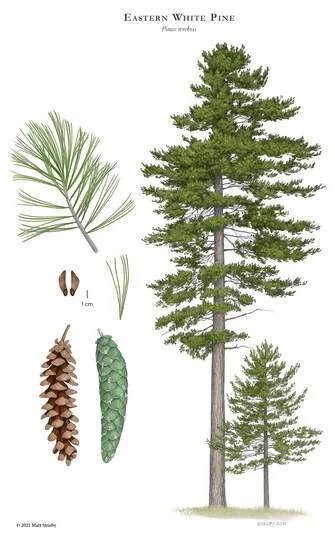
The growing enforcement and stricter criteria of the decree angered the colonists who made their livelihood from the Eastern White Pine wood products they produced. The early American pioneers had this timber on their properties, available to them, yet they were not allowed to touch it.
Their growing resentment led to “Swamp Law” whereby many of the king’s pines were cut illegally, the “Kings Broad Arrow” mark obliterated and the wood put to use. Others cut down and used all the marked trees and then placed the broad arrow on smaller ones. Many of the marked trees were partially burned in mysterious fires or splintered in unusual gales. The Revolutionary War was not only about unjust taxation or independence, the rights to the native pine trees was also an important factor.
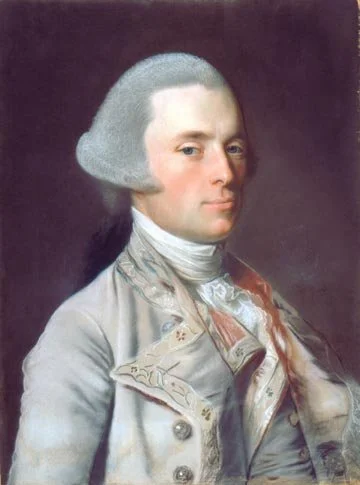
Governor John Wentworth of New Hampshire.
When British Governors began to enforce the laws, several rebellions erupted throughout New England. In New Hampshire, in the year 1772, Deputy Surveyor of New Hampshire, John Sherman, ordered that sawmills be searched for white pine bearing the Broad Arrow mark. Six mills in the towns of Goffstown and Weare were in possession of the King’s pines. On February 7, 1772, in the New Hampshire Gazette, owners of these mills were named as offenders. They hired a lawyer by the name of Samuel Blodgett to represent them. He met with Governor Wentworth in order to persuade him to drop the charges. Instead of changing the governor’s mind, he was offered the position of Surveyor of the King's Woods, which he accepted. Turning on the mills’ owners, Blodgett ordered them to pay a settlement. The Goffstown owner’s paid their fines and their logs returned to them. Those from Weare were not willing to accept the fines.
Benjamin Whiting, Sheriff of Hillsborough County, and his Deputy John Quigly, went to South Weare with an arrest warrant for the mill owner Ebenezer Mudgett. He was arrested and released promising to post bail the next day. However, that course of action was not Mudgett’s intention. A plan was hatched and executed the next day, April 14, 1772. Mudgett and a group of townsmen with blackened faces, entered Whiting's room, which oddly enough was at the Pine Tree Tavern, and with switches assaulted him and his deputies. The punishment was one lash for every tree for which a fine was levied. This was known as the “Pine Tree Riot.” They were not the only ones to suffer the wrath of the group. The sheriff and deputies’ horses had their manes, and tails cut off thus insuring they had no value.
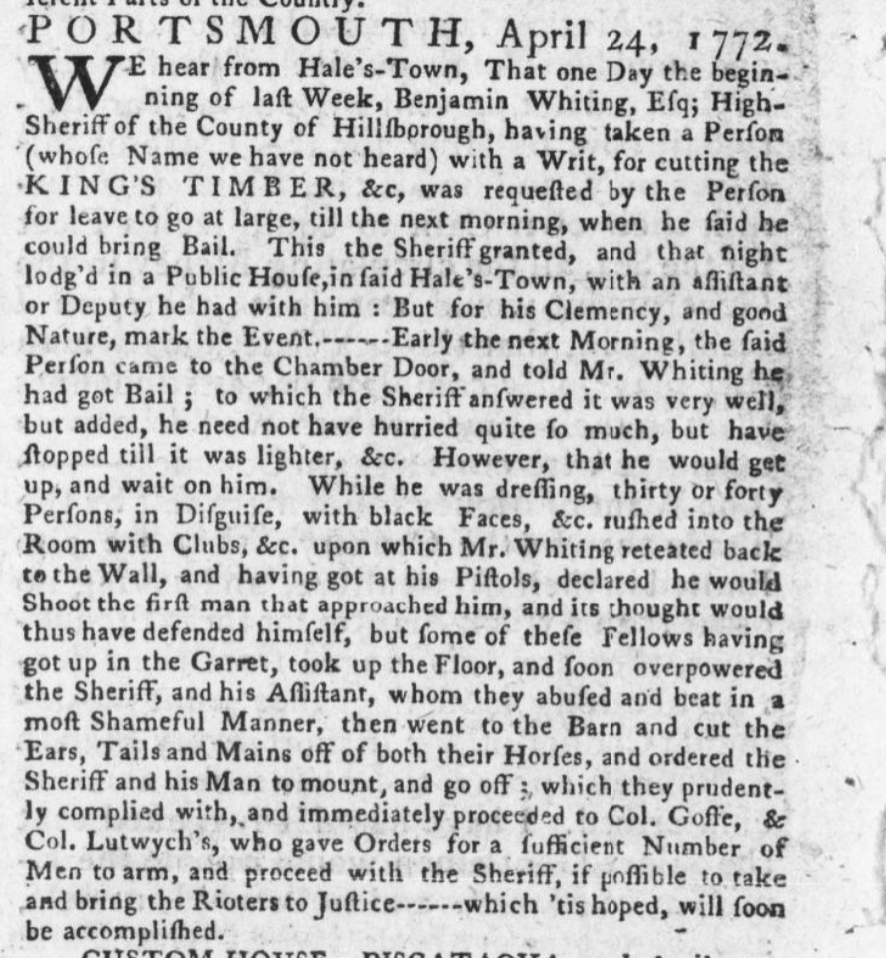
New Hampshire Gazette April 24, 1772
To add insult to injury, the sheriff and his deputies were forced to ride through town, past a crowd of angry townspeople, who shouted insults at the arresting group. The rioters were eventually were tracked down, and after pleading guilty to the charges paid off twenty shillings each, plus court costs, a light fine considering their actions and the possible maximum fines for these offenses. Three of the men charged, as well as Samuel Blodgett, fought against the British in the Revolutionary War. Sheriff Whiting on the other hand served with British. After the Revolutionaries’ victory, Whiting’s land was confiscated and it is believed he fled to Canada with many other Tories.
The pine tree continued to have significance as the War for Independence developed. In 1775 when the British were occupying Boston, George Washington wanted to intercept the supplies coming in on British ships. At his own expense he decided to form a secret navy composed of six privately owned schooners. All these ships were to fly an “Appeal to Heaven” flag, which was also known as “Washington's Cruiser Flags.”
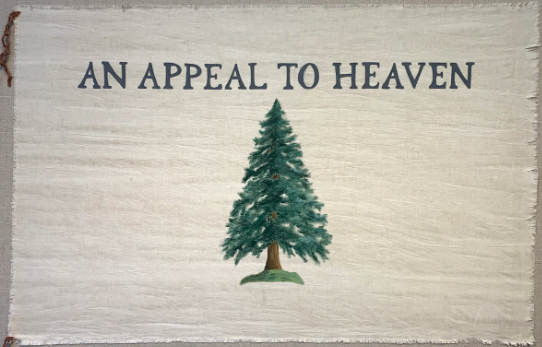
Reproduction of an Appeal to Heaven flag.
The flag was made up of a pine tree on a white background, with the words, “An appeal to Heaven” stitched across the top.
Colonists had first used the pine tree as a symbol of New England in the last quarter of the seventeenth century, appearing on coins and flags. During the Revolution it became a symbol of one of the earliest revolts against the British. Later, when visiting foreign ports this flag indicated that these ships were from New England and it was well known that they traded in rum and lumber, two commodities in great demand. A simple pine tree had become a symbol of so much more.
The next time you see beautiful wide pine floors in an old home - like the Bangs Hallet House - remember that those trees were once reserved for the King of England.
Researched and written by Frank Tardo.