Within a one mile section of the Old King’s Highway, Yarmouth Port has been home to five churches, of different denominations, during its nearly 300 years of history. Church played an important and central role in the lives of most of the community. They worshipped there, attended Sunday School and choir practice, and gathered for community events. In fact, as you will read below, Yarmouth could not even be incorporated as a town in colonial times until a church had been established.
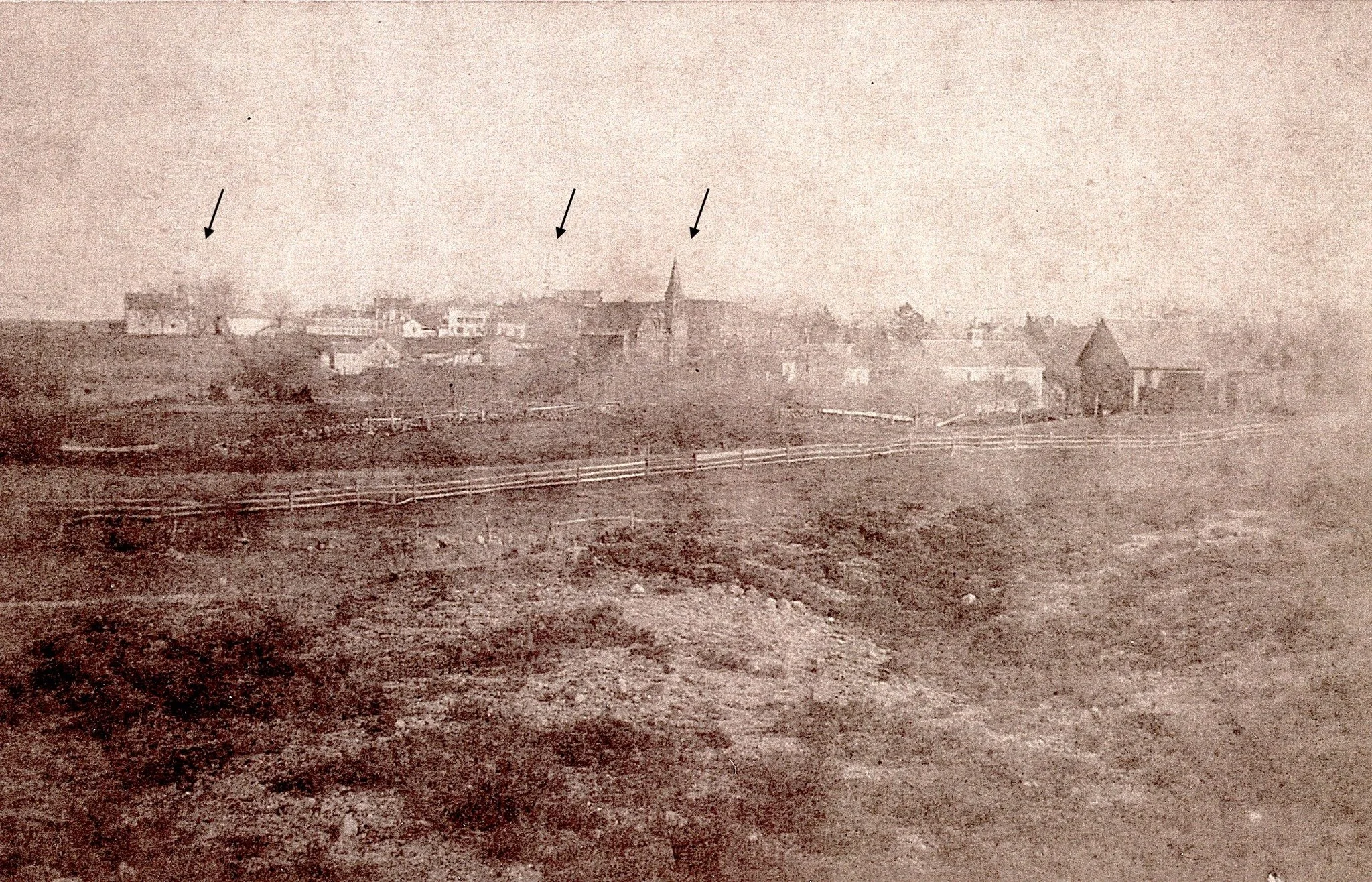
This early photo, probably taken from Wharf Lane sometime after 1870, shows three Yarmouth Port churches, L-R: the Universalist church, the Congregational Church, and the Swedenborgian church.
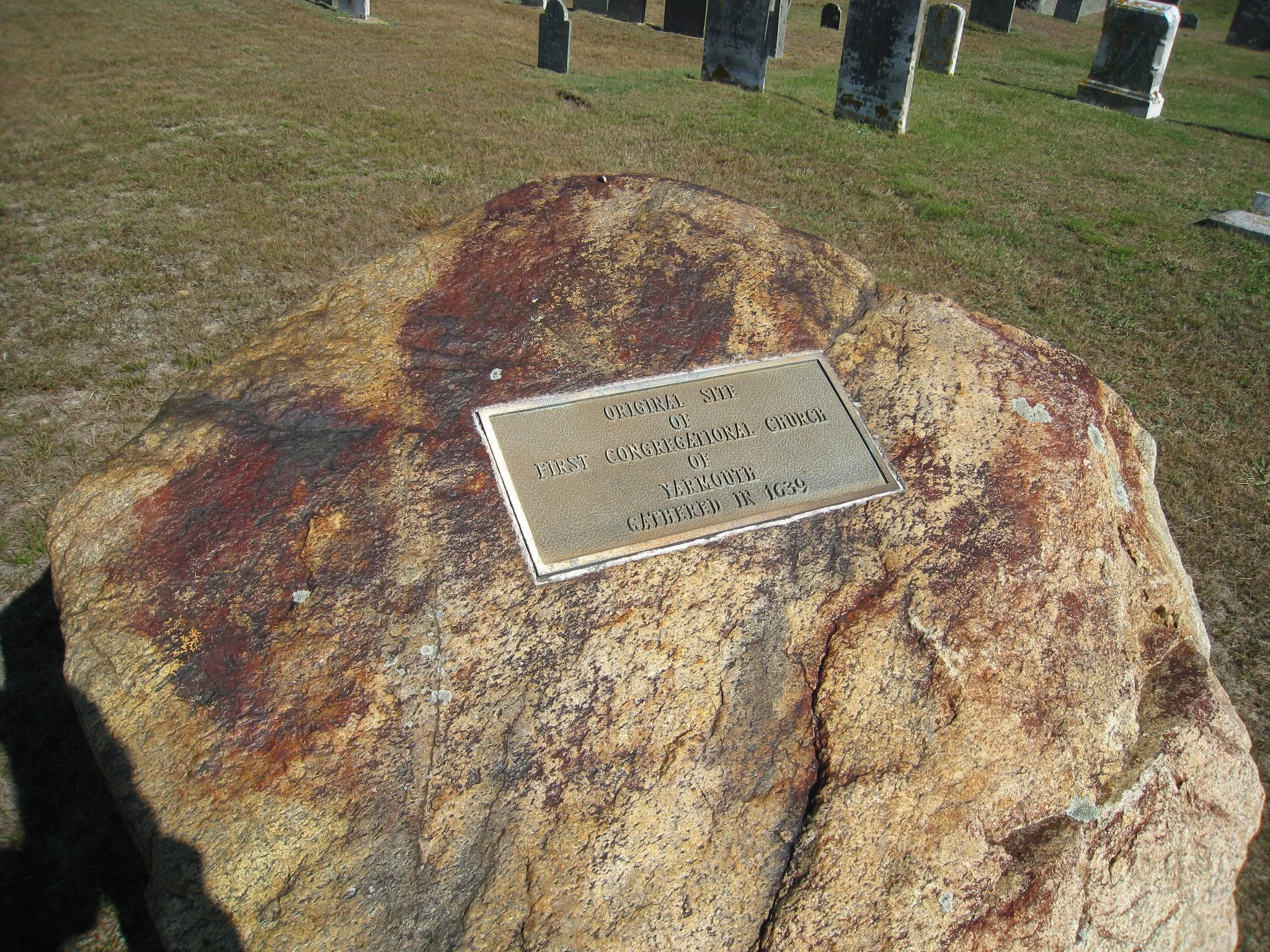
The first church in Yarmouth Port was the Congregational Church, still in existence today. According to their website, “The First Congregational Church, established in 1639, coincident with Yarmouth's founding, was Yarmouth's official church during colonial times when a church was required for a community to be incorporated.” It was originally located in the middle of Ancient Cemetery where a large boulder now sits to commemorate the location. The dimensions were 30 x 40’, constructed of logs with a thatched roof and oiled paper windows, and worshipers were called to service by the beat of a drum. The building was replaced in 1716, then enlarged 50 years later by cutting it in half and adding room in the middle. Ancient Cemetery’s location makes sense when you realize people wanted to be buried in their churchyard.
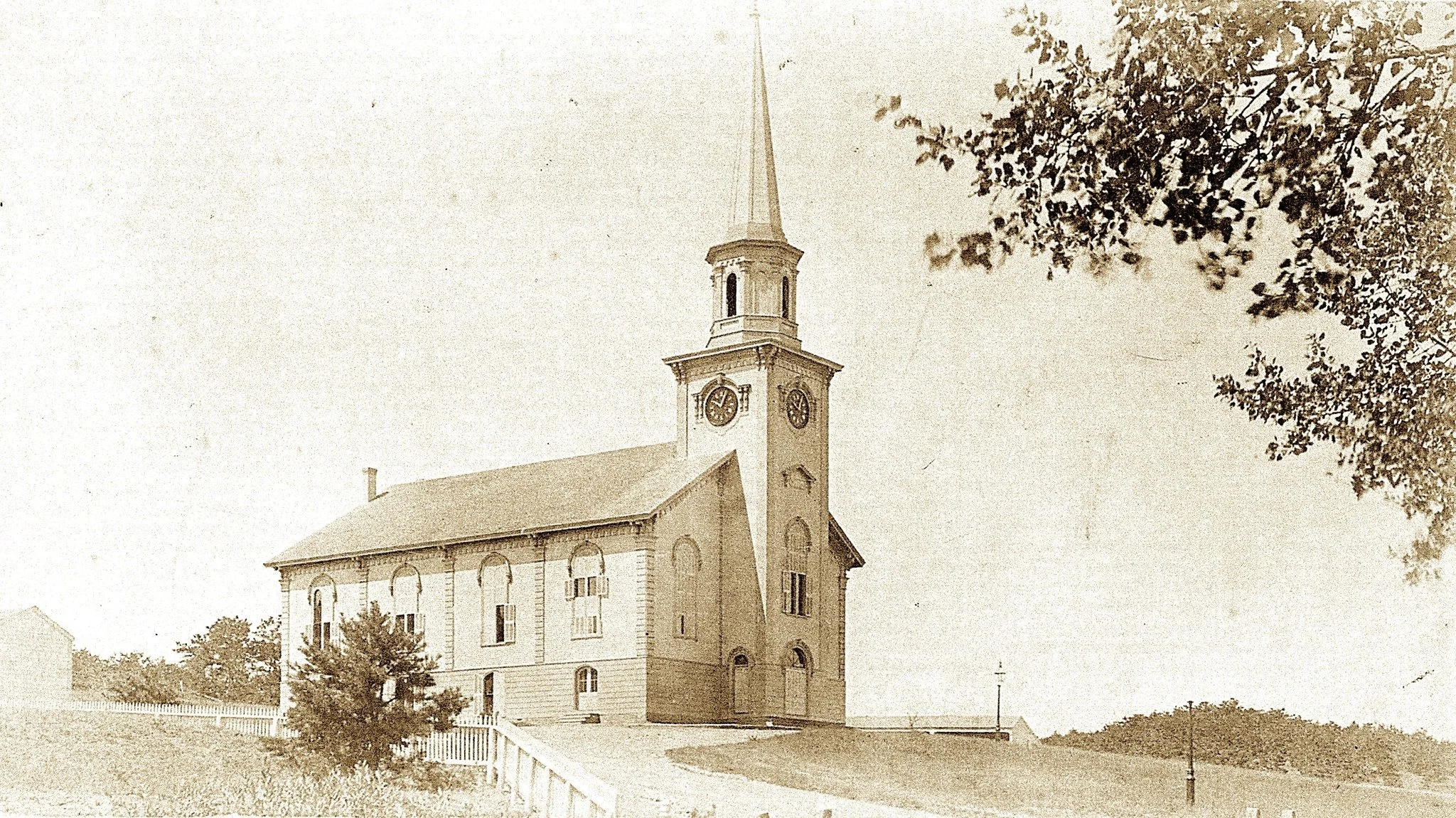
In 1830 the congregation moved to what is now the Fred Thacher playground, where a large, traditional church building was erected, along with stables for the parishoner’s horses. Finally, the congregation moved one more time, in 1870, to “Zion Hill” where the current building still stands and is still used for worship. The spire rises to a height of 138 feet and was a well-known landmark for ships sailing in Cape Cod Bay. The bell, cast by Clinton Meneely of Troy, NY in 1880 is inscribed, “Si Deus pro nobis quis contra nos” which translates to, "If God is with us, then who can be against us." The old church building at the playground became a post office and a store, run by retired sea captain Edwin Thacher and later his nephew Isaac H. Thacher, until it burned down in 1903. The land was acquired by Louis B. Thacher and later given to the town for recreation purposes.
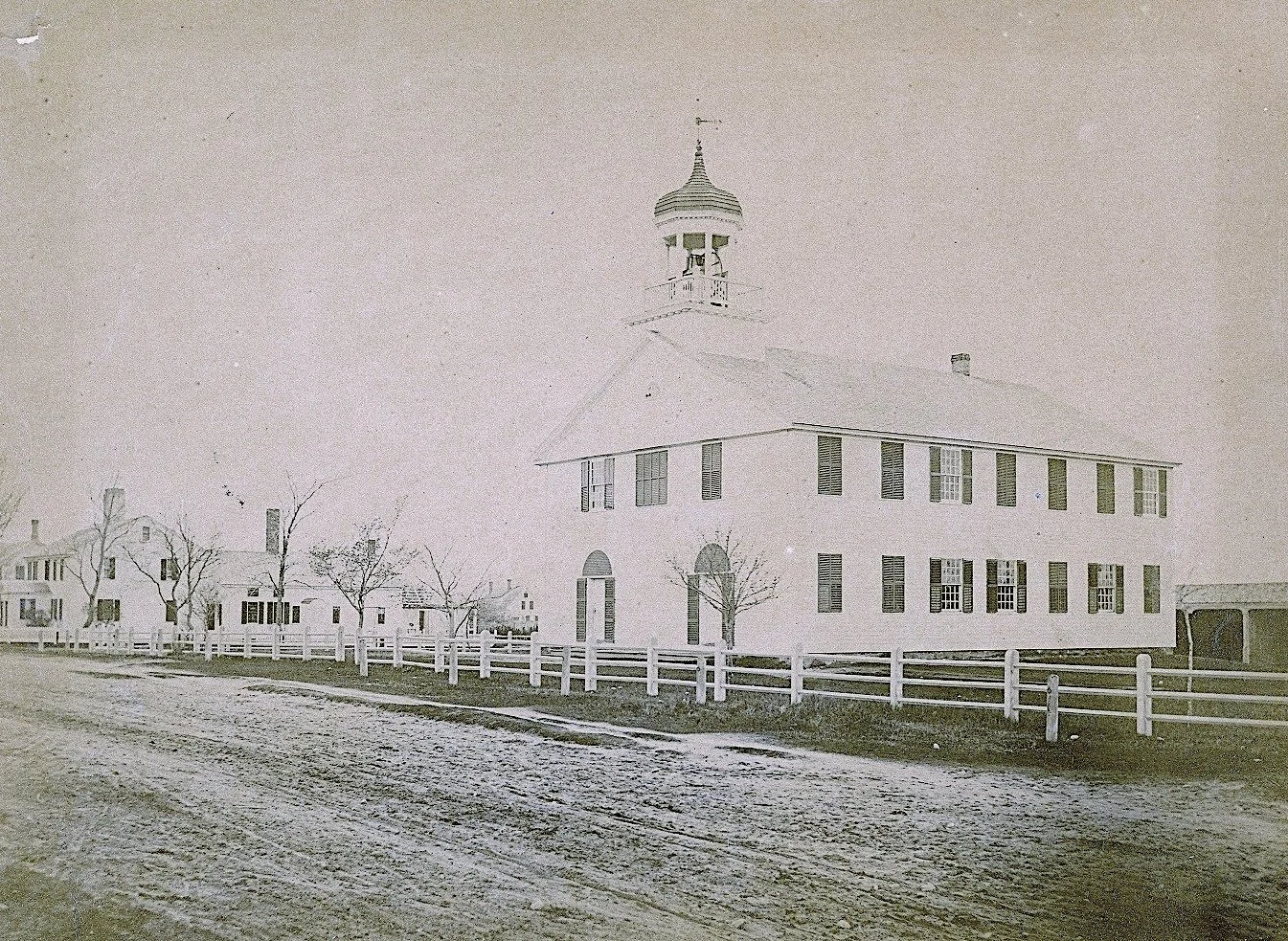
The former church on the Yarmouth Port playground, which burned down in 1903.
As early as 1823 there was interest in establishing a Church of the New Jerusalem in Yarmouth. A congregation formed, and services were first held in the Old Yarmouth Inn, then later on the second floor of what is now Parnassus Books, then Knowles’ store. The congregation was finally able to build their own church on land across from the Yarmouth Common in 1870, designed by Boston architect Sam Thayer and built by John Hinckley.
Also known as “The New Church” or Swedenborgian, the faith was influenced by the thoughts and writings of Emanuel Swedenborg (1688–1772). The church was active for many years, though eventually participation dwindled to the point where they could no longer sustain a parish. The building began to deteriorate and concerned citizens stepped forward in 1998 to preserve it. Thankfully it was rescued, structurally renovated, renamed “Thacher Hall” and is now a secular venue for community events, musical programs and weddings.
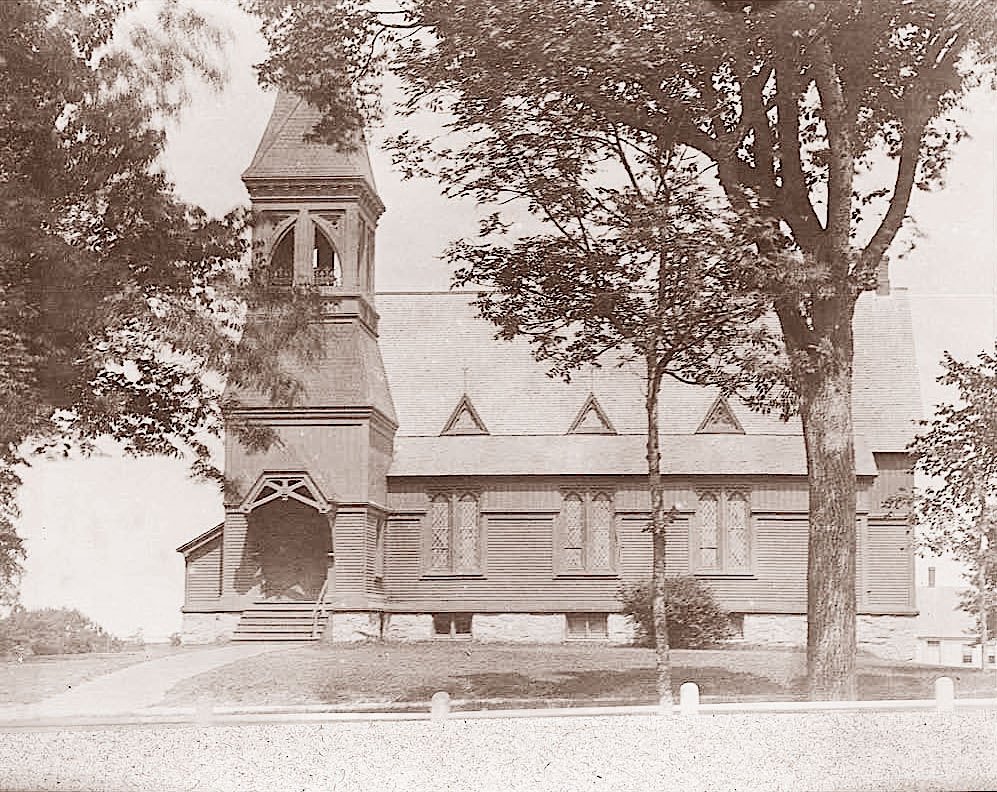
The New Church, late 1800s.
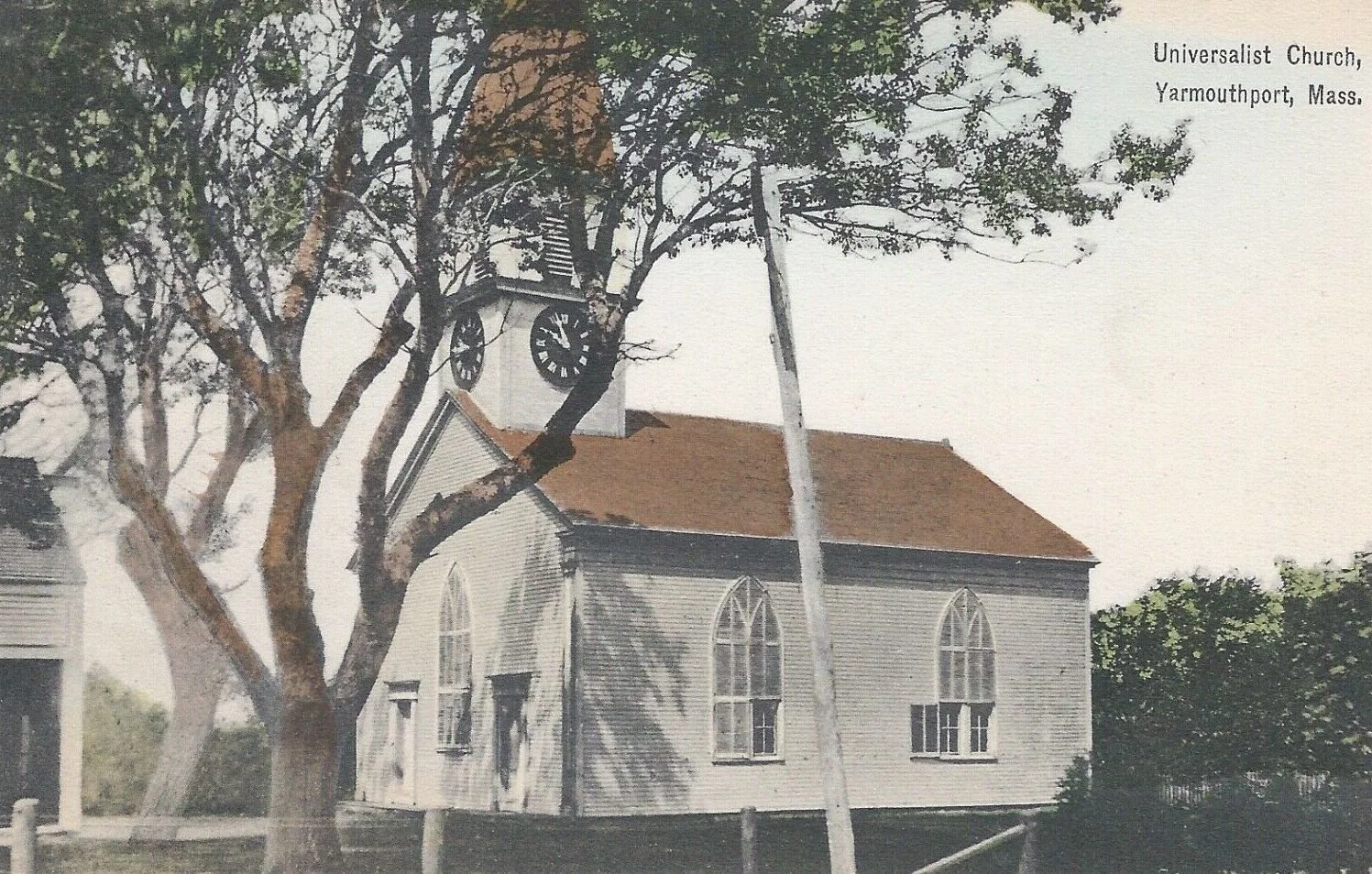
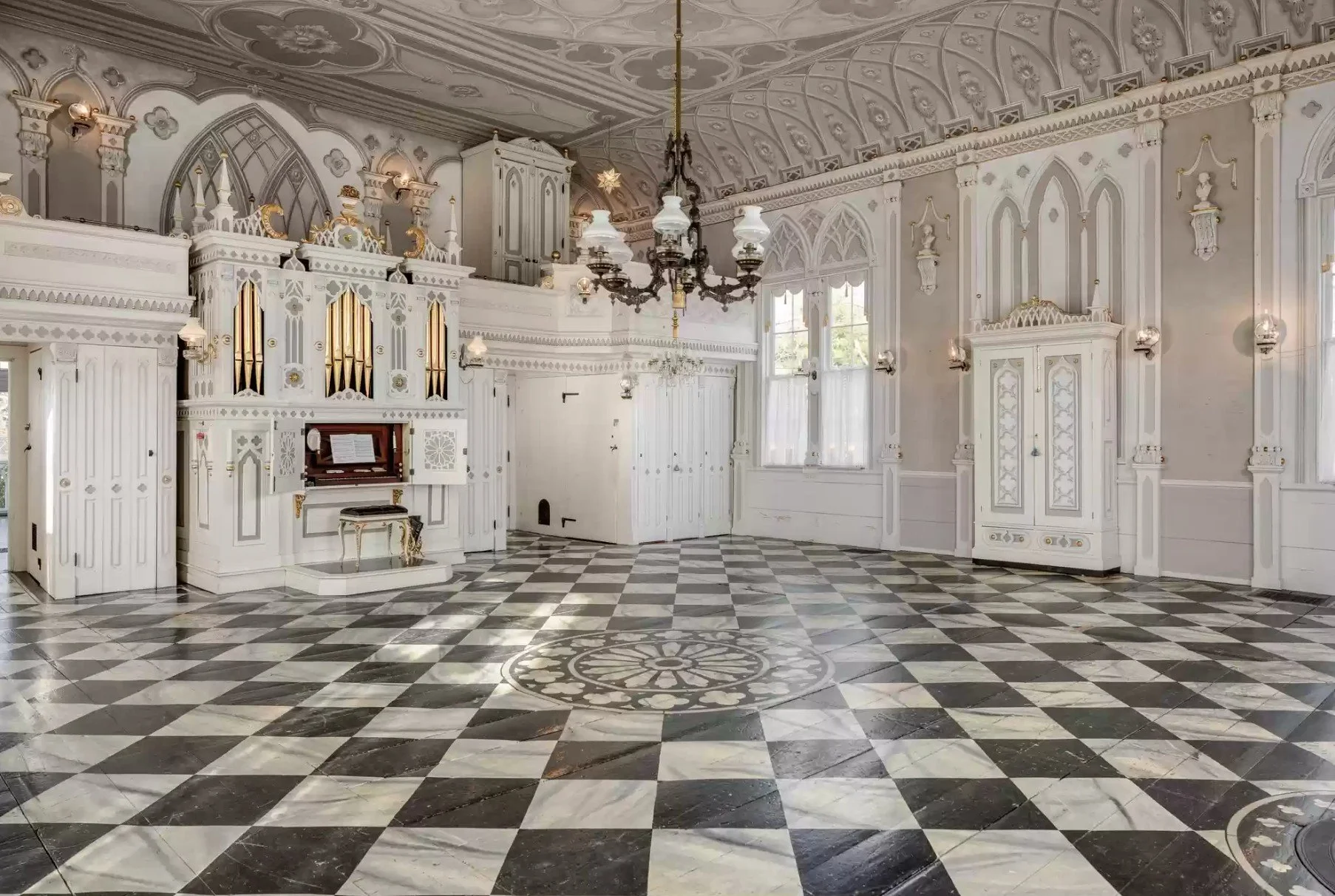
Another early congregation in Yarmouth Port was the Universalist society, which built a church, also known as the Strawberry Hill Meetinghouse, in 1836 at the corner of Church Street and Thacher Shore Road. The church was active into the 1960s when, like the New Church, the number of parishioners dwindled and the church was abandoned. In a fortunate and unlikely turn, two set designers from New York, Herbert Senn and Helen Pond, found and purchased the building in 1973 and began transforming it into a beautiful and unique home. They painted the once plain church floors, ceilings and walls, making for a very striking interior. Herbert and Helen often opened their home to parties and even hosted a well remembered tea party fundraiser for HSOY. They have since passed away but the church/home lives on in the hands of new owners.
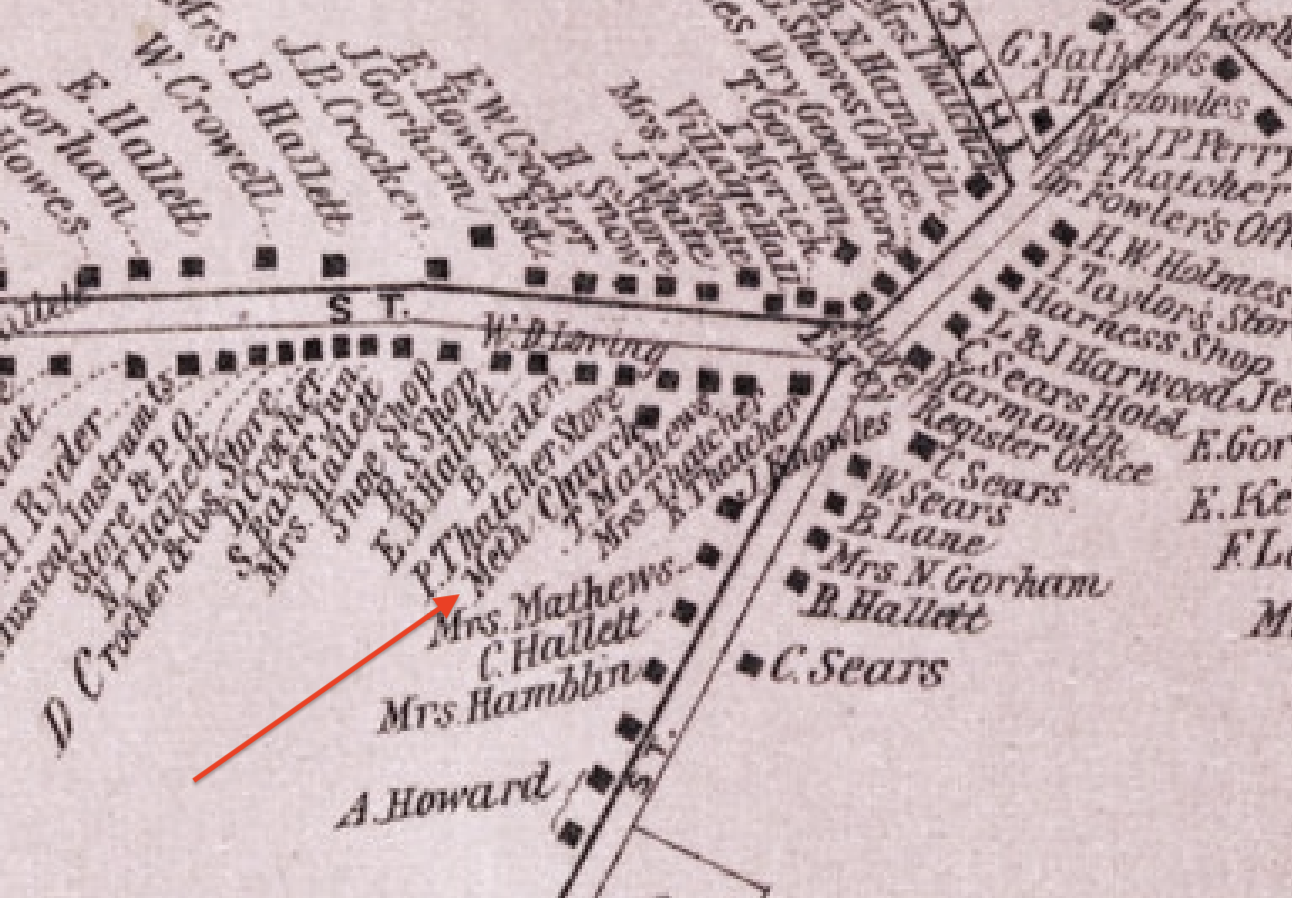
Did you know Yarmouth Port once had a Methodist congregation? We know very little about this church which stood off of Summer Street behind a row of houses on 6A. You can see the location on this 1858 map of Yarmouth Port. When it began, what kind of building was there, and when it ended is a bit of a mystery but by 1910 it no longer appears on the village map.
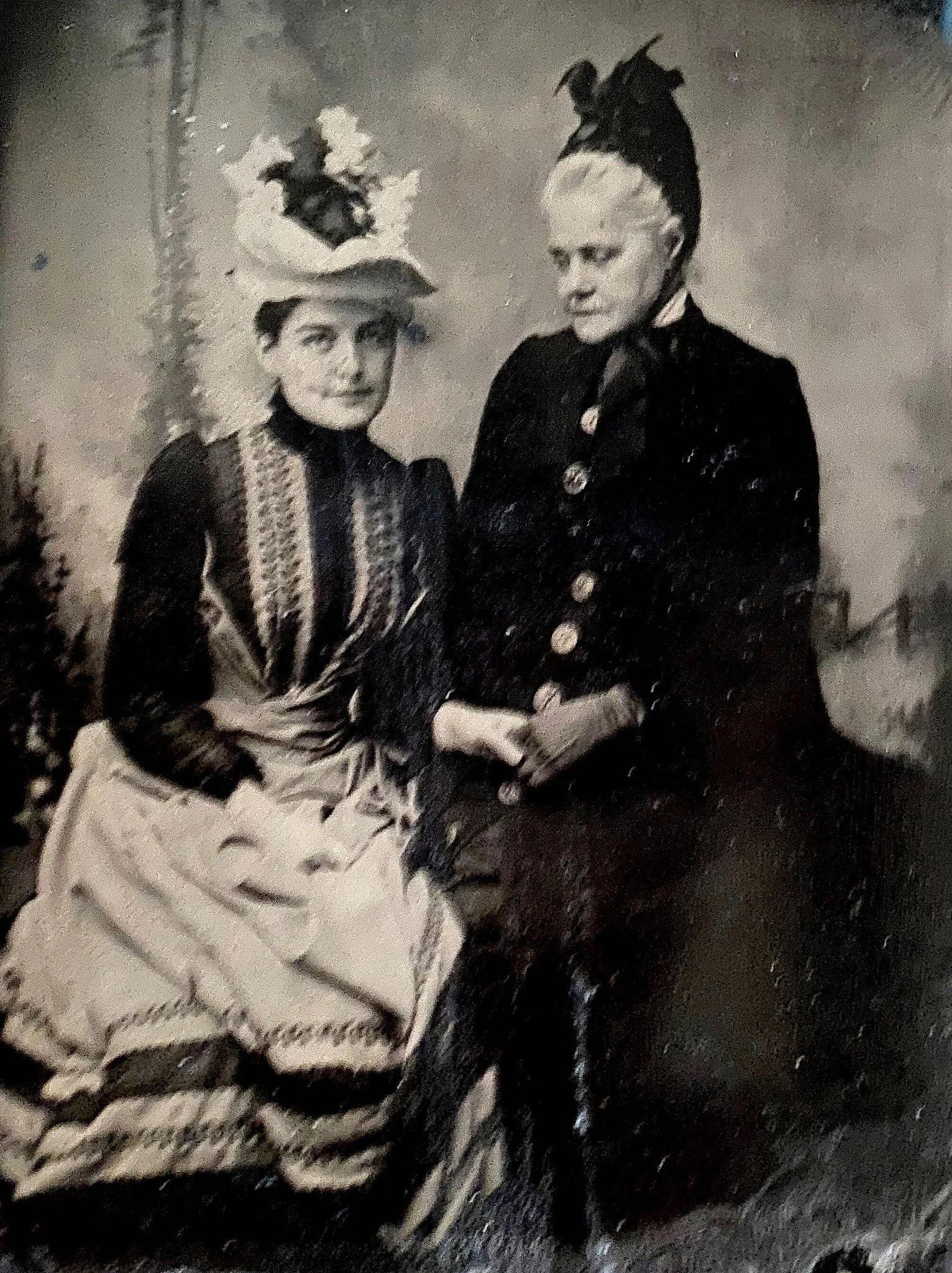
A young Ruth Simpkins with her nurse, Jane Byrne.
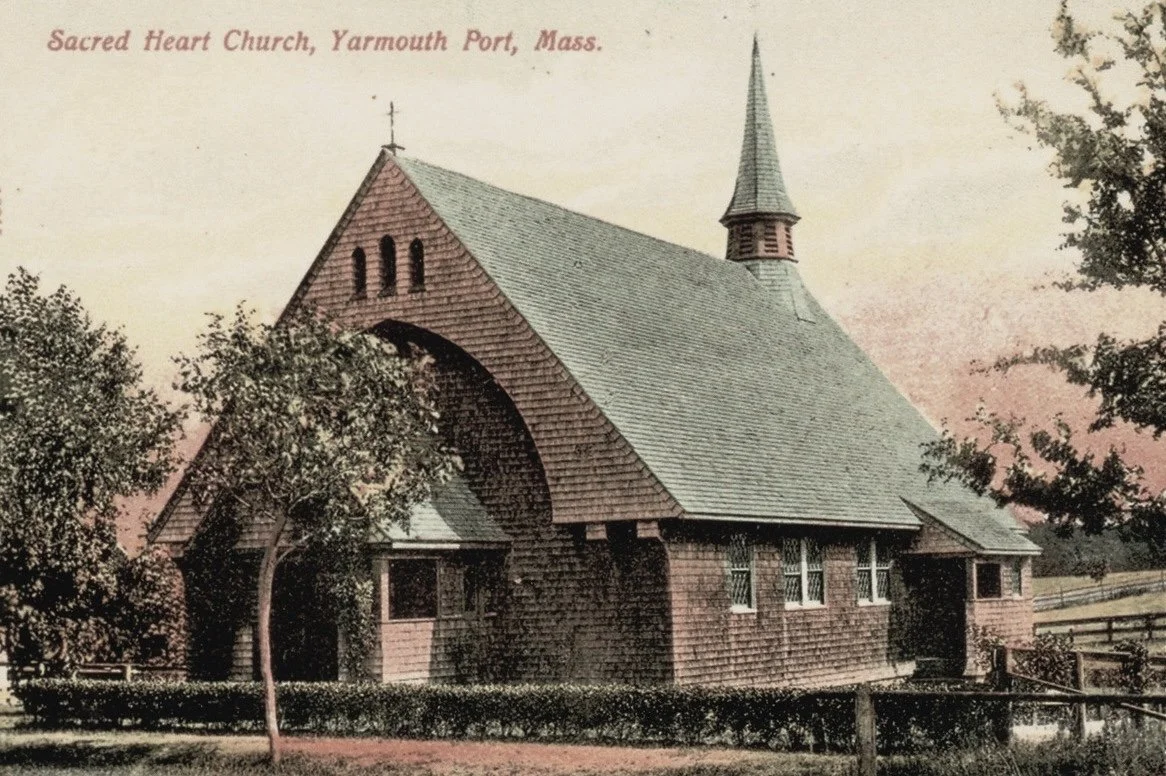
The fifth church in Yarmouth Port is the most recent. In 1870, while living in New York City, John Simpkins was diagnosed with a terminal illness. He told his wife that when he was gone she should take their seven children, all under the age of ten, together with their Irish-born nurse, Jane Byrne, back to Yarmouth to live. When her husband passed away, Mrs. Simpkins followed her husband’s wish and returned to Yarmouth. Mrs. Simpkins herself died twelve years later in 1882. To the young Simpkins family, Jane Byrne, a devout Catholic, was now the living presence of parental love in their home. When the eldest son, John, a United States Congressman, died in 1898, his siblings asked Jane what they could do for her, to thank her for all of her years of devoted service to their brother and their family. She replied that she would like to have a chapel built in the vicinity where her small number of fellow Catholics could attend Mass regularly. Although not Catholics themselves, the Simpkins family responded by providing the land and the funds to construct a small chapel on Summer Street. On the night of November 27, 1898, with the chapel near completion, a ferocious blizzard hit the Cape, and the building collapsed. During that storm the steamer Portland was sunk off Provincetown, with all hands lost. With great generosity, the Simpkins family and their builders, Ira Ryder and Elbridge Taylor, began again and the chapel was completed in 1899. Jane died in 1911 and is buried near her chapel in Woodside Cemetery.