A Reflection by Lisa True Grady
Noticeably absent when we purchased our Yarmouth Port home nine years ago was the unmistakable clipper ship denoting that a sea captain once lived here.
So, we set about sorting through a chain of deeds at the Barnstable Registry, and to our surprise we found not one, but two, sea captains who once owned our place, Nathaniel Matthews and Henry Bray. In presenting our research to the late Duncan Oliver, then the HSOY's coPresident, we earned our Captain's Mile plaque and bolted it securely by our front door.
But behind our door and many others in our village was another story: the quiet strength of the widows and wives that many of our sea captains left behind.
Henry Bray, born in 1821, was from the large Yarmouth family of Eben Bray and Phoebe Crosby. Deborah Custis was the granddaughter of Captain John Custis, of good Virginia stock and claiming ties to Martha Washington's first husband. On November 7, 1844, when Henry was 24 and Deborah 22, they were married at the Universalist Church on Church Street, a stone's throw from her grandmother's home in the vicinity of Church Street and Thacher Shore Road. Three years later they welcomed their first and only child, Sarah Etta.
In 1850, Captain Henry Bray purchased our circa 1800 half Cape on thirty acres from another sea captain, Nathaniel Matthews. Within a year of the purchase, in June of 1851, news reached home that Henry had died in Port Au Prince, Haiti, of yellow fever. He was buried at sea, one month past his thirtieth birthday. At the time, Deborah was 29 and their daughter was only 4 or 5.
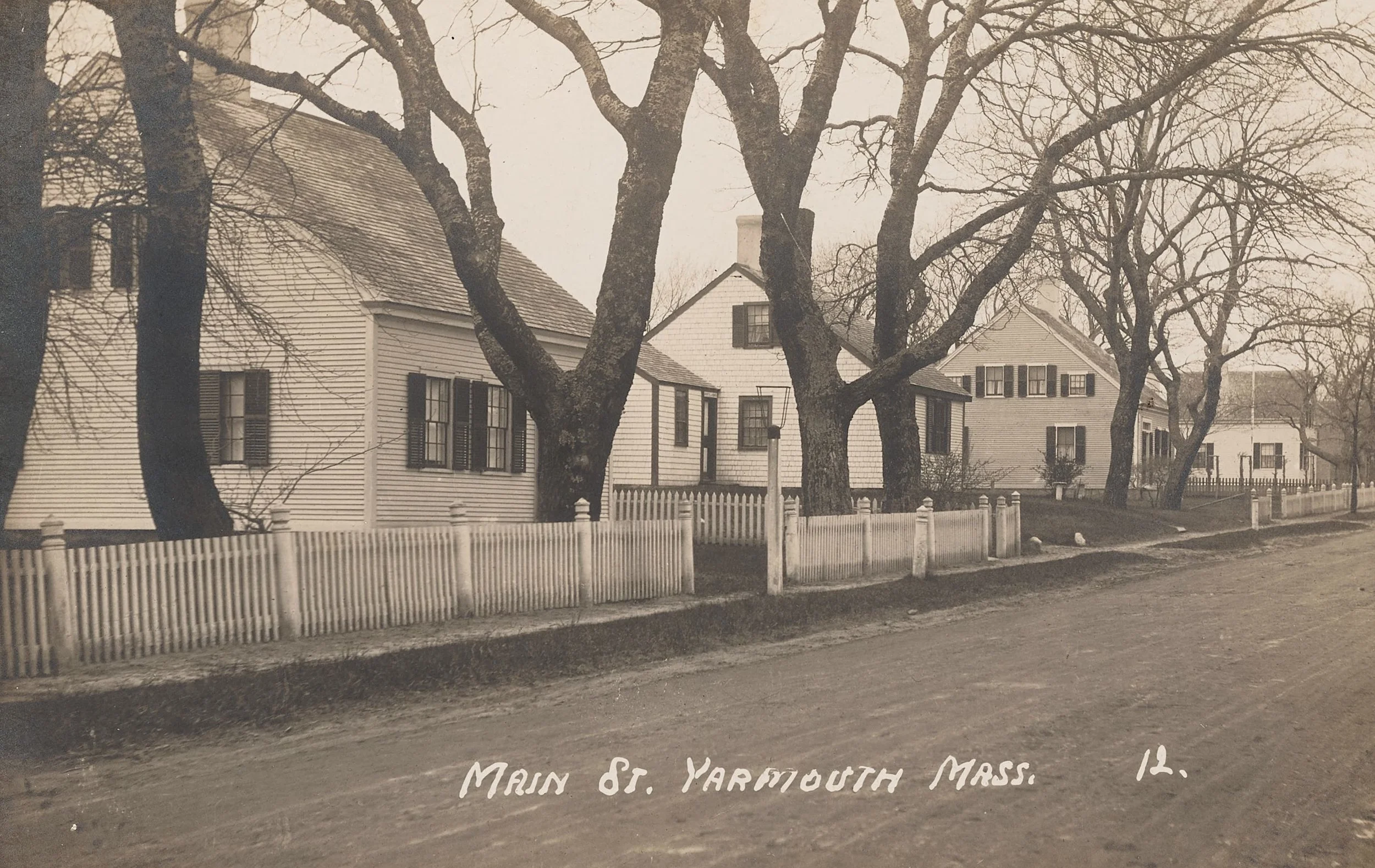
Henry & Deborah’s home, far left.
With hundreds of mariners calling Yarmouth home during the 18th and 19th century, the loss of life at sea was both a tragic and familiar occurrence. In their absence, their wives ran a tight ship of their own. They tended to finances, day-to-day chores, the schooling of their children and were active in our community. Together they formed support connections that became the backbone of our village.
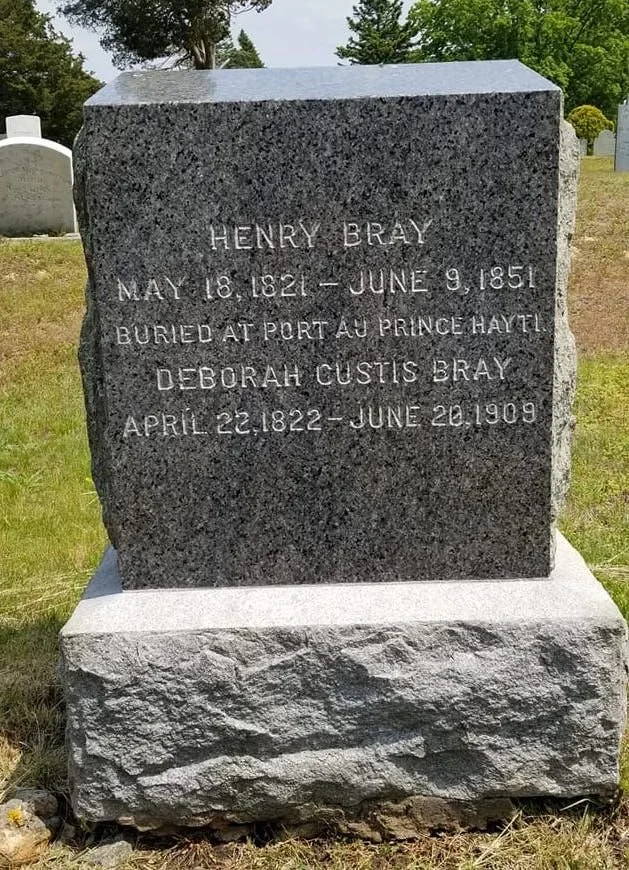
A gravestone for Captain Henry Bray and wife Deborah at Ancient Cemetery, Yarmouth Port.
Newly widowed, Deborah may have been protected financially by Henry's estate from having to leave their home. She was also fortunate to have the support of family and of other seafaring neighbors with names like Hamblin, Matthews and Whelden living close by. At the time, charitable organizations such as the Seaman's Widow and Orphan Association or the Boston Marine Society may have provided some compensation to surviving spouses, but many widows who did not have independent means often moved in together, or with family, to bear the cost of living. They took in work to make ends meet or sent their young sons to sea for their income. Some remarried either out of love or convenience. Whether another marriage was ever an option for Deborah, I can only guess, but she did not marry again. I imagine that there might have been slim pickings among available Yarmouth men, as many were off to sea, or by 1860, were beginning to enlist in the Civil War. Or, just maybe, as a strong, self-sufficient woman, she made a choice to remain independent.
Through the diary of Lizzie Taylor (who was the sister-in-law by marriage of Deborah's daughter, Sara Etta), I learned that Deborah found strength in her association with the Universalist Church and was a liberal patron of their benevolent society called "King's Daughters," still in operation today. She held "basket" socials (picnics) in her pine groves, visited friends, hosted Thanksgiving gatherings in our dining room and defended her home from flames during a great fire that endangered Yarmouth.

The Universalist Church, 27 Church St, Yarmouth Port. The building is now a private home.
If a home truly has a soul, then, as the only owner in a long chain of title to have spent over half a century in this house, Deborah Bray has left her presence here. On cold nights, I look across to the Rumford fireplace in our bedroom, knowing that it was their only source of heat and imagine Sarah Etta curling against her mother for warmth. I have run my hands along the worn wood banister leading to the second floor feeling Deborah's weariness after a long day of necessary chores. And during the pandemic, when life dramatically changed for all of us and our world became smaller, I reminded myself that if Deborah could adapt to life's challenges, so could I. This home was her solace and refuge and would provide the same for us.
Deborah continued to live in her/our home until her passing at the "old age" of 87 in 1909. I have no photos of either Deborah or Henry, but have seen their dark-haired, wide-eyed daughter Sarah Etta, in an 1860s photo of “Yarmouth Women."
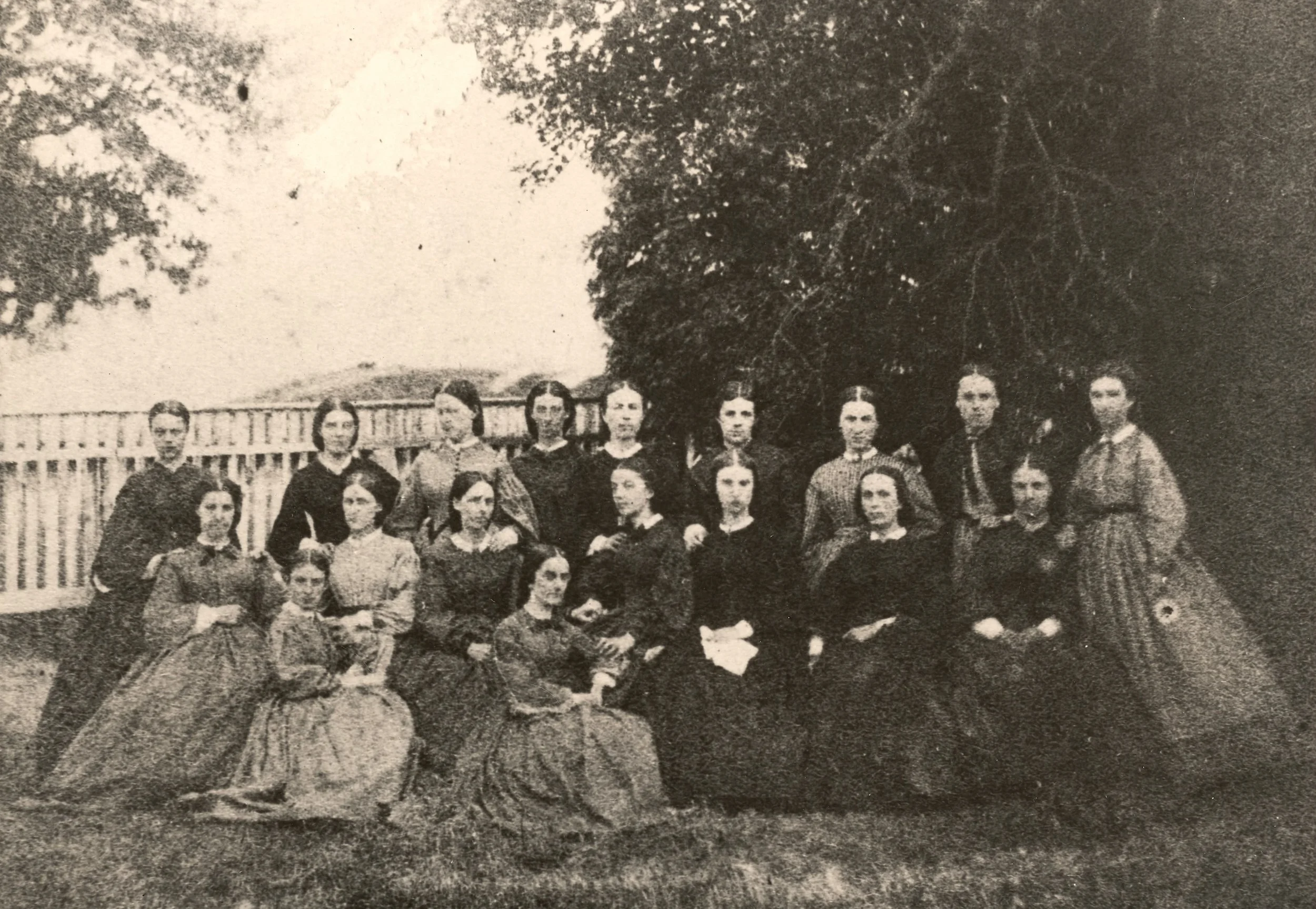
Sarah Etta Bray is second from the left in the back row. This photo was taken in the latter half of the 1860s.
Sarah married George Ryder of Yarmouth Port and along with her daughter Flora, tended to Deborah in her mother's later years. Her obituary notes that Deborah was a woman of "generous impulses of public spirit," a good neighbor and friend who found consolation in the companionship of her relatives, especially her grandchildren, to whom she left most of her estate. She was buried in Ancient Cemetery, not far from her home. In her will, Deborah left her home and twenty-six acres to her granddaughter Flora Ryder Williams. The remaining four acres, including a cabin on Perch Pond, were left to her grandson Charles Myron Ryder. As a side note, the home passed through many hands over the years. In 1946, it was purchased by Gordon Clark who later subdivided the acreage, thus creating Clark Road and allowing the development of a large neighborhood of homes bordered by White Rock Road and West Yarmouth Road.
I love that we now have our sea captain's plaque and that through the knowledge and information shared by members of our historical society, we now know the rest of the story. Long before the country granted their independence, the women of Yarmouth Port showed they could balance support for their husbands and families with the needs of a village and each other. Their quiet strength held up more than half the sky. Isn't it time we give voices to their stories?
**Note - since Lisa wrote this article she was delighted to find that a photo of Deborah existed and had been donated to the Historical Society of Old Yarmouth several years ago. It had no notations, but recently we noticed the house looked just like Lisa’s, then noticed two other photos in the same collection that included Deborah, Sarah Etta, or Sarah’s daughter Lena.
Deborah Bray in front of her home with granddaughter Lena Ryder.